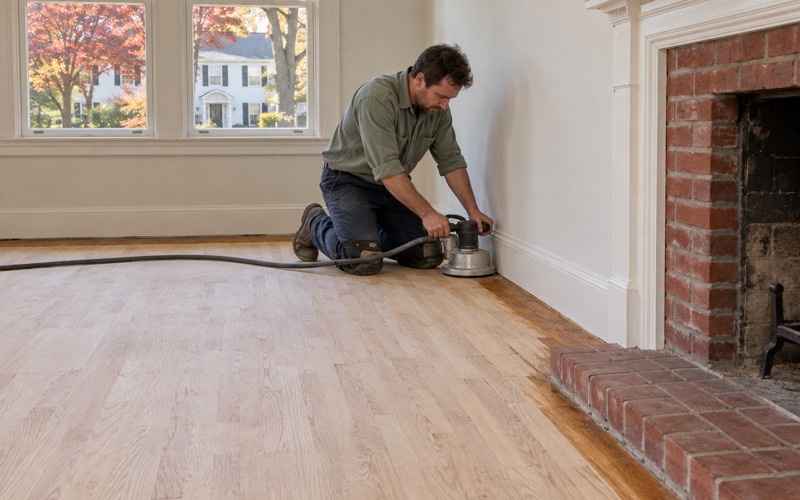
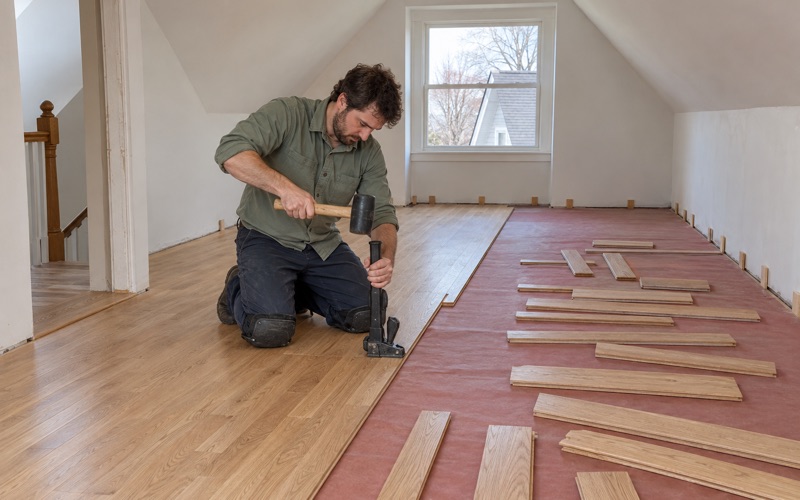
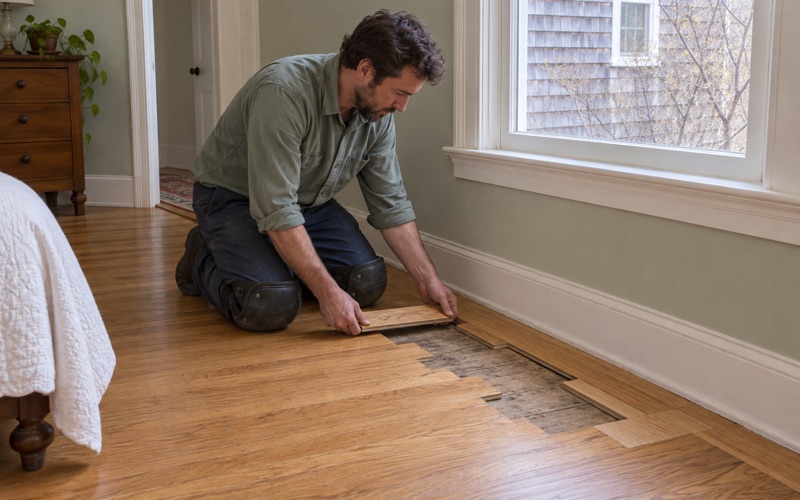
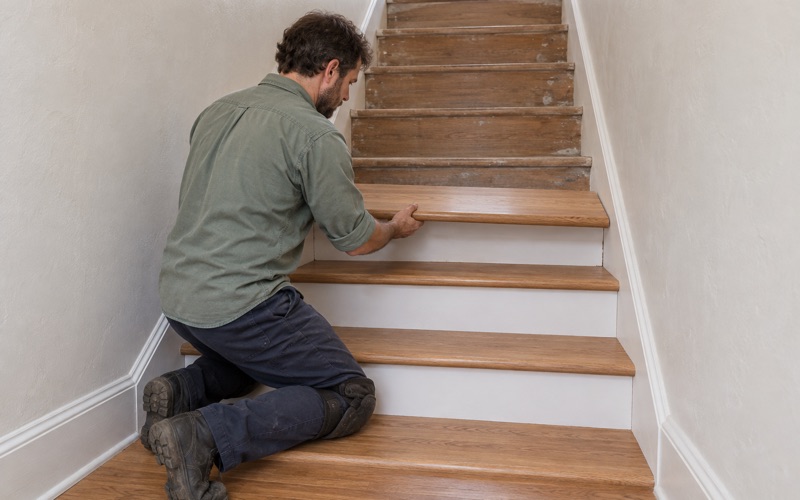
Brookline Wood Flooring brings more than 20 years of wood-flooring work to Arlington, and most of what we do here is sanding, repairing and refinishing boards that have already given decades of service. We start every job by reading the floor itself: the species, the board width, how the boards were fastened and how much wood is left above the tongue. That reading decides whether a room gets a full sanding, a screen and recoat, or a board-by-board repair.
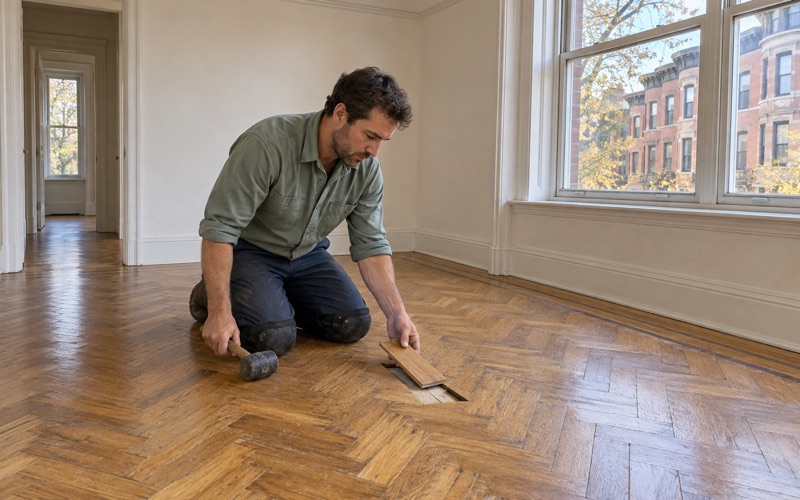
Replacement is on the table when a floor has truly failed, but it is rarely our first answer. Original oak, maple and pine can usually be patched with matched boards woven into the field, and old parquet can be lifted, re-glued and refinished one piece at a time instead of being covered over. We would rather keep a sound floor working than tear it out and start again.
Every project begins with a walk-through of the rooms and a written scope that names each step. We note the condition of every room, flag anything that needs a closer look, and price the job line by line so nothing is folded into a vague total. What follows covers what changes about that work in Arlington’s houses in particular.
Floors Inside Arlington’s Historic Districts
Arlington has seven local historic districts: Avon Place, Broadway, Central Street, Jason/Gray, Mount Gilboa/Crescent Hill, Pleasant Street and Russell. According to the design guidelines of the Arlington Historic District Commissions, together they include over 300 properties. Owners in those districts often ask us, before anything else, whether refinishing a floor will bring them in front of a commission.
What the Commissions Review and What They Leave Alone
Under Title VII of the town bylaws, the commissions shall not consider interior arrangements or architectural features not subject to public view. Their review is aimed at exterior features visible from a public way, while interior changes and features that cannot be seen from the street fall outside it. A floor sanding or refinish inside a district house sits on the interior side of that line.
That does not answer every question a project can raise, and permit questions for floor work belong with Town of Arlington Inspectional Services rather than with us. What it does mean is that the floor decisions inside a district house are made between the owner and us. Where a job reaches past the floor to something visible from the street, such as a porch deck or an entry, the owner should confirm the rules with the commissions directly.
Treating District Floors as Original Material
An owner who bought into a district usually values what is original, and that often extends to the floors even though no commission reviews them. We approach those rooms the way that owner would want: repair before replacement, matched boards before new ones, and a finish that suits the age of the house. A damaged board is replaced with wood of the same species and width, cut in so the joints stagger like the rest of the field.
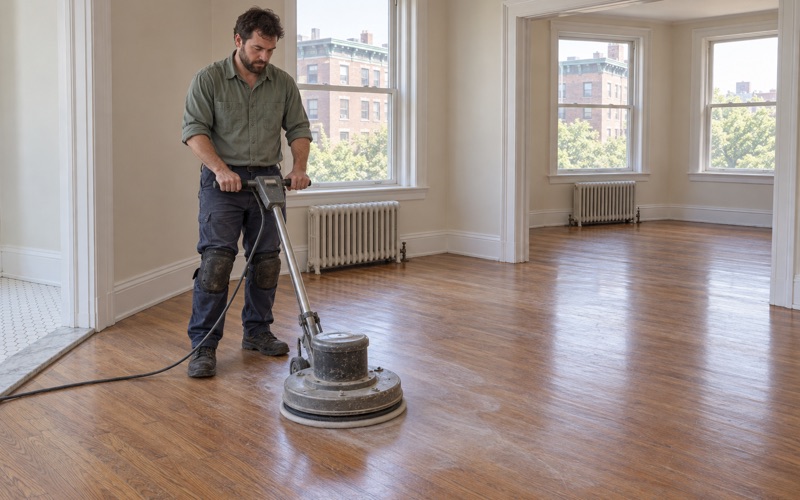
Where a floor has been sanded many times, we check how much wood remains above the tongue before promising another full sanding. Some old floors have room for one more careful cut with a fine grit sequence; others are better served by a screen and recoat that renews the finish without removing any wood. We explain which treatment the floor can take and why, with the measurements in front of the owner.
Looking for wood-flooring closer to Waltham? See Wood-Flooring Services in Waltham.
Prewar Houses Across Arlington
The housing numbers explain why so much of our Arlington work is restoration. Of the town’s 20,746 housing units, 9,774, or 47.1 percent, were built in 1939 or earlier, according to the ACS 2024 five-year estimates. Nearly half the housing stock predates 1940, so a large share of the floors we are called to were laid before the Second World War.
The town’s own story runs deeper still. Arlington was settled in 1635 as Menotomy, incorporated as West Cambridge on February 27, 1807, and renamed Arlington on April 30, 1867. A town with that long a record tends to hold floors from many different decades, sometimes in the same house, and we treat each layer on its own terms.
Reading an Old Floor Before Sanding
Older floors hide their history under several coats of finish. We look for face nails, patched sections, earlier repairs and signs of past water damage before we set a grit sequence. Hollow spots underfoot can point to loose boards or a gap between the flooring and the subfloor, and we find them by walking the room before the drum sander ever touches it.
Board gapping is normal in an old house, especially the winter gaps that open when heating dries the air and close again in the humid months. We explain which gaps will come and go with the seasons and which ones call for filler or a strip of matched wood. Packing a seasonal gap with rigid wood filler usually means it cracks back out by spring, so we do not promise that fix.
Lead Paint, Dust and Finish Choices
Every prewar house was built long before 1978, and Massachusetts runs its own lead-safe renovation rules for homes of that age. On every one of these jobs we confirm the build year and look for painted surfaces before sanding starts, because paint on baseboards, stair risers or a painted floor border changes how the room is prepared and cleaned. Our dustless sanding equipment runs into HEPA vacuums, and the work area is closed off from the rest of the house.
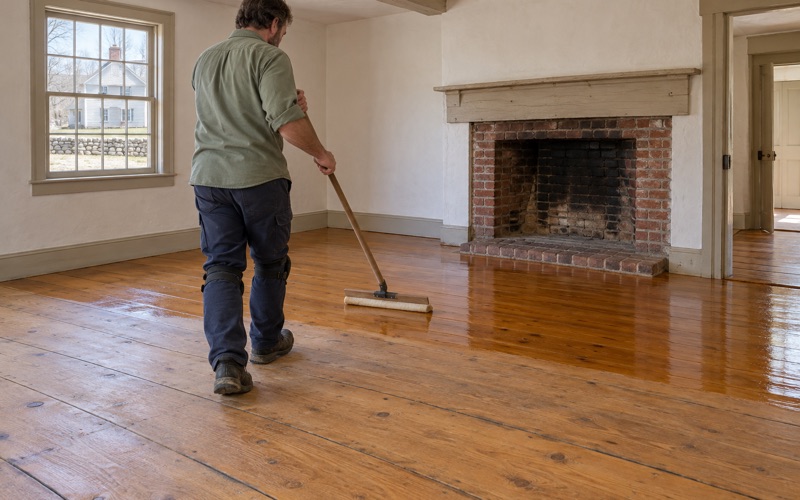
Finish choice matters in an occupied house too. Massachusetts limits the VOC content of wood coatings more strictly than the federal rules do, and we select a waterborne polyurethane, an oil-modified polyurethane or a hardwax oil that fits those limits. A written cure schedule then tells the household when socks, shoes, rugs and furniture can each return to the room.
Radiators, Moisture and Matched Repairs
In houses heated by steam radiators, the floor around a valve is a common place for water stains and cupping. A slow drip can soak the boards for months before anyone notices it. We find the source, dry the area and read the boards with a moisture meter before deciding whether anything needs replacing.
The same meter readings guide acclimation for any new boards we bring in for a repair. Wood that goes into an old floor at the wrong moisture content will shrink or swell against its neighbors, and cupping or crowning follows. Matching the moisture level first is what lets a weave-in repair disappear into the field once it is sanded and finished.
Mid-Century Houses and Two-Family Homes
Another 3,813 units, or 18.4 percent of Arlington’s housing, were built between 1940 and 1959, according to the same census tables. Together with the prewar stock, that places 65.5 percent of the town’s units before 1960. Houses from these decades bring their own set of floor problems, and they call for a slightly different approach from the oldest homes.
What Carpet and Tile Leave Behind
When carpet comes up in a house of this age, the floor underneath tells us how it was treated. Tack strip holes along the walls, staples from the pad and stains from pets are all common findings, and each needs a different fix. Pet urine stains that have soaked deep into the grain often call for board replacement, because no amount of sanding reaches them.
Tile or sheet flooring laid over wood can leave black mastic behind. Older black mastic may contain asbestos, so we do not sand or grind it without knowing what it is, and we tell the owner when testing should come first. Once the adhesive question is settled, the wood below can often be sanded and finished like any other floor in the house.
Two-Family Houses and the Unit Below
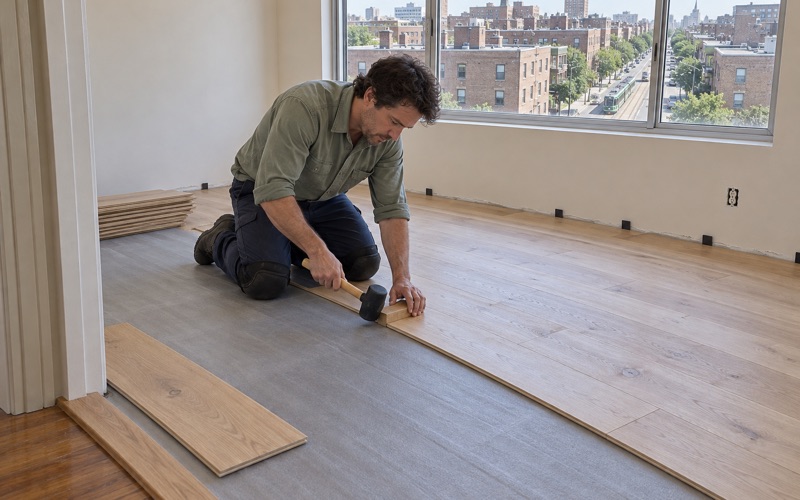
Two-unit buildings account for 4,957 units, or 23.9 percent of Arlington’s housing. In a two-family house the floor of one unit is often the ceiling of the other, so we plan sound and scheduling around both households. When a new floor sits over a neighbor, we choose the acoustic underlayment with any building sound or rug-coverage rules in mind.
If the building is organized as a condominium, the association’s flooring rules, permitted work hours and any shared-space use are confirmed before a unit’s floor goes on the calendar. That check comes before the quote is final, not after the sanders arrive. It keeps a project from stalling halfway because of a rule nobody read.
Planning a Floor Project in Arlington
Arlington’s households are 61.6 percent owner-occupied, and most of our work here is for people who stay in the house while the floors are done. That shapes how we plan: rooms in sequence, a clear dust boundary and a schedule the family can work around. Landlords preparing a unit between tenants get the same process on a tighter calendar.
Stairs and Engineered Floors
Stairs are quoted by the tread and riser, not buried in a square-foot price, because each step takes its own sanding, edge work and nosing detail. For engineered floors, we measure the wear layer before promising a sanding. A thin engineered wear layer may only take a screen and recoat, and we say so at the estimate rather than after the damage is done.
Water Damage and Insurance Claims
When a floor is damaged by a leak from an upstairs unit, a plumbing line or an appliance, we document the damage room by room for the adjuster. Photos, moisture readings and notes on each affected area go into that record. The boards are dried and read with a meter before any are replaced, so the claim reflects what actually failed.
Seasons and the Written Schedule
Arlington sits in National Weather Service forecast zone MAZ014, Southeast Middlesex. Winter heating dries the air inside the house and summer brings humid stretches, and both affect how boards move and how finishes cure. We time acclimation and finish coats with the season in mind, and we tell owners in advance when a humid spell may add a day to the cure.
Once a job is booked, the plan is written down: which rooms close and in what order, when pets need to be elsewhere, and when each coat goes down. Owners in Arlington Heights, East Arlington, Arlington Center, Morningside and Jason Heights all get the same written plan. The aim is a finished floor and a household that knew what was coming at every step.
- 20+ Years on Wood Floors
- Free In-Home Estimates
- Dust-Contained Sanding