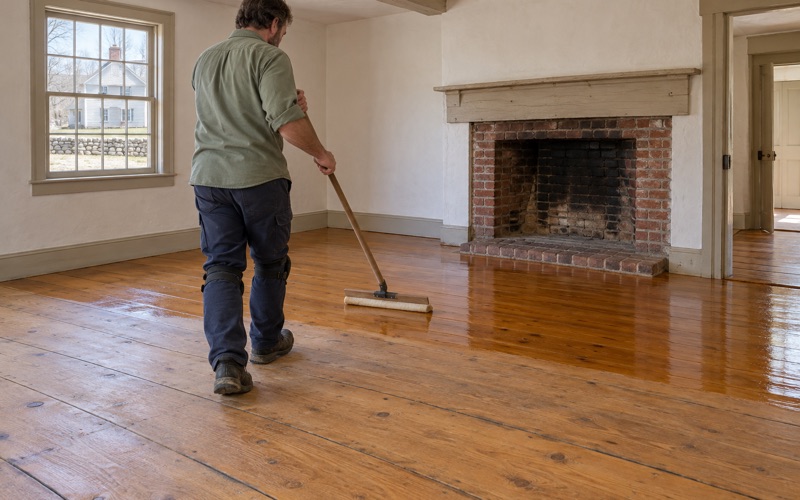
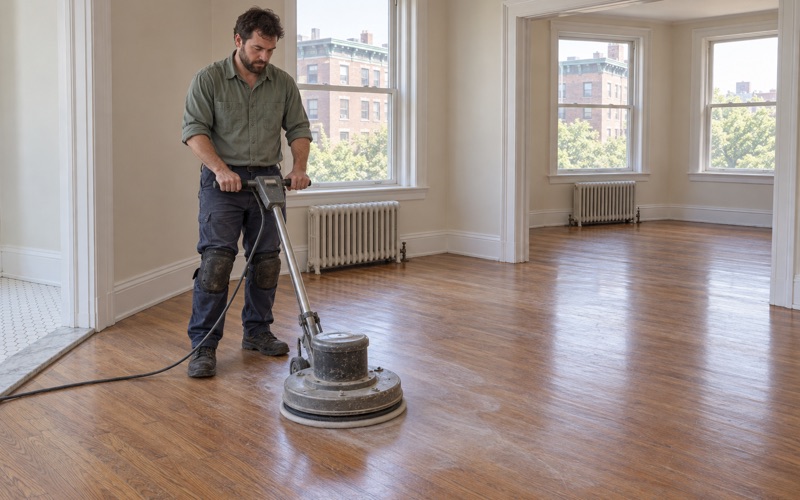
Brookline Wood Flooring has spent more than 20 years on wood flooring in Braintree Town, sanding, repairing and laying hardwood in single-family houses and apartment units alike. We work on red oak, white oak, maple, eastern white pine and engineered planks, and every job starts with reading what the floor is actually built from.
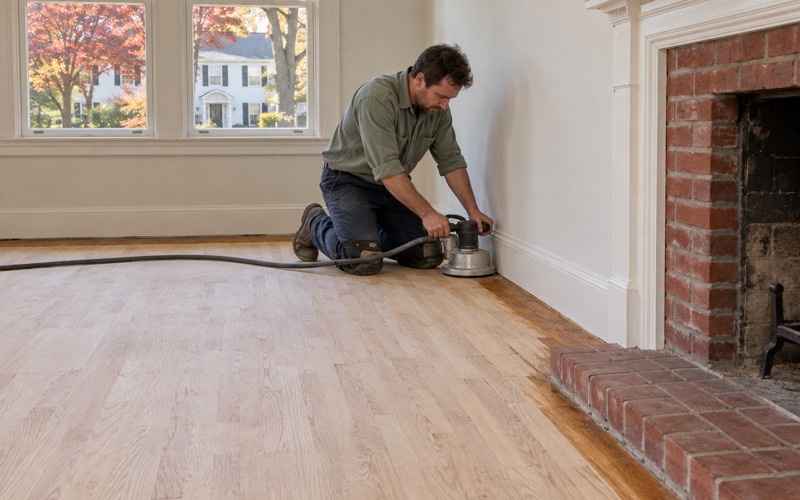
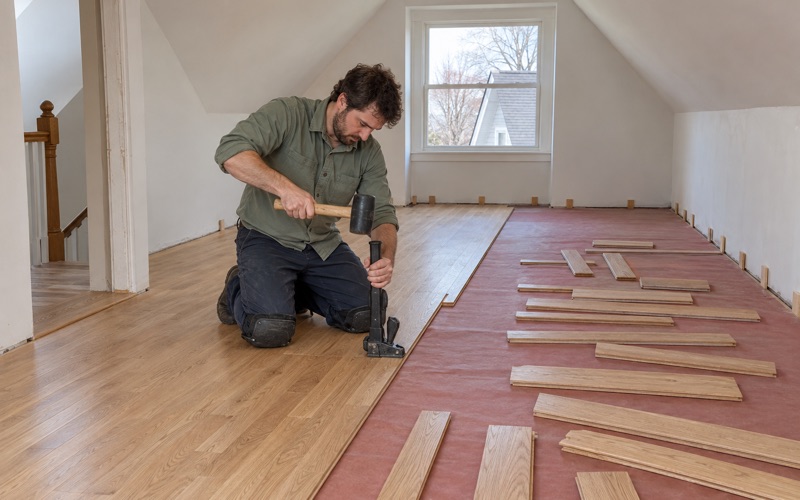
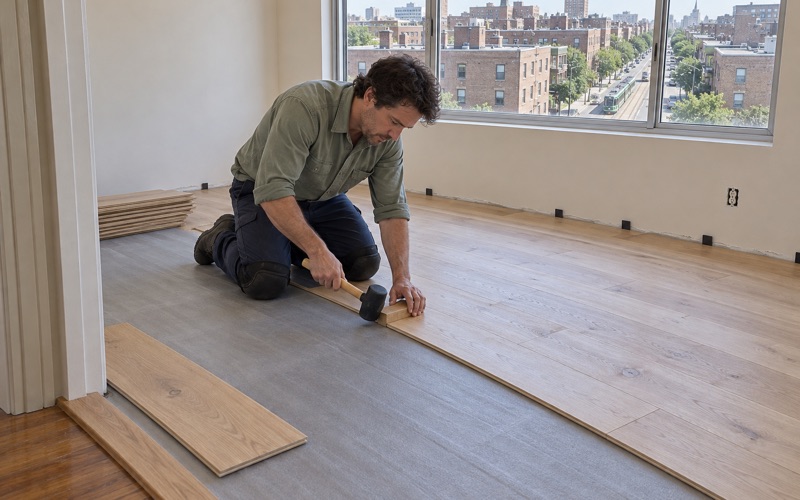
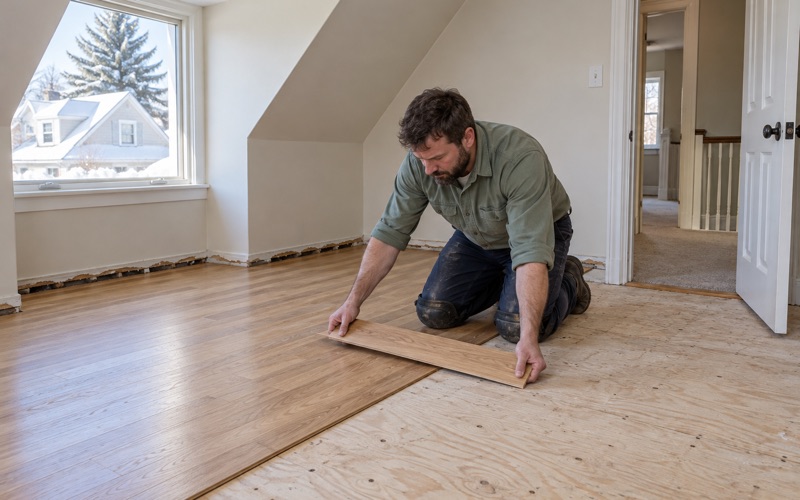
Most requests fall into three kinds of work. Refinishing takes a worn floor back to bare wood and a new finish, repair deals with cupping, water stains, pet urine stains and damaged boards, and installation lays new solid hardwood or engineered planks over a sound subfloor. Plenty of projects mix all three in one visit.
Before any sanding, we check the build year and look for painted surfaces, because Massachusetts sets its own lead-safe renovation rules for homes built before 1978. Finishes are picked to stay inside the state’s VOC limits for wood coatings, which run tighter than the federal ones. You also get a written cure schedule so the household knows when each room is usable again.
Floors in Owner-Occupied Braintree Apartments
Braintree is officially a town, settled in 1625 and incorporated in 1640, yet it is governed by a mayor and council and counts as a city under Massachusetts law. Its housing reflects that mix of scales. Some 3,339 units, 22.0 percent of the housing stock, sit in buildings of five or more units, and that share shapes a good part of our schedule here.
Owners Living in Larger Buildings
The 2024 American Community Survey five-year estimates count 1,238 of Braintree’s 11,199 owner households, or 11.1 percent, in buildings of five or more units. Those owners are spread across buildings of every size, from 212 households in five-to-nine unit buildings to 318 in buildings of fifty or more.
For us, that means a real share of Braintree floor work happens in units the owners live in, not rentals turned over between tenants. The owner is making a long-term decision about the floor and usually wants it done once and done right. Those floors range from original hardwood to newer engineered planks, and each calls for a different plan.
Confirming Building Rules Before We Schedule
Before a unit’s floor goes on the calendar, we confirm the association’s flooring rules, the allowed work hours and any elevator booking with the owner and the manager. We read those rules building by building rather than assuming them, since they vary from one association to the next.
Dust containment matters more with neighbors on the other side of a wall. We seal doorways, run HEPA vacuums on the sanders and keep the common hallway clean between passes, and dustless sanding keeps most of the fine dust out of the air.
Underlayment Over a Neighbor’s Ceiling
When the floor sits above another unit, the underlayment is chosen with the building’s rug-coverage or sound rules in mind. An acoustic underlayment under a floating or glue-down installation behaves very differently from a nail-down solid hardwood floor, and we explain the tradeoff before anything is ordered.
On engineered floors in these buildings, we measure the engineered wear layer before promising a sanding. A thin wear layer over a plywood core may take a screen and recoat but not a full sand, and knowing that early keeps the quote honest.
Looking for wood-flooring closer to Woburn? See Woburn Wood-Flooring.
Braintree Houses Built Before 1940
The largest single group of Braintree homes is also the oldest. Census data counts 4,172 of 15,163 housing units, 27.5 percent, built 1939 or earlier, more than any other build period. In 1888 the villages of Braintree and South Braintree were still separate communities, and prewar houses in both of those older centers are a steady part of our work.
Original Boards Worth Keeping
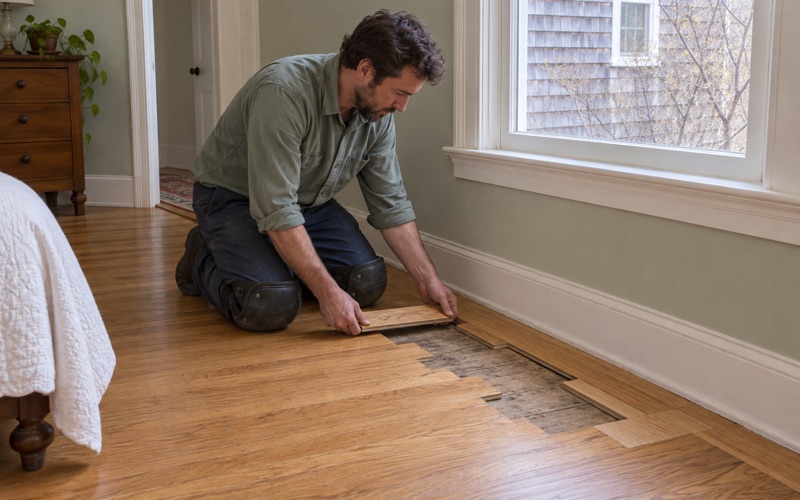
Older houses often carry oak, maple or pine boards that can take another sanding, and we repair and match them rather than tear them out. A weave-in repair ties new tongue and groove boards into the old field so the patch disappears under stain and finish.
Wide plank pine and eastern white pine sit lower than oak on the Janka hardness scale, so we run a gentler grit sequence and keep the drum sander moving. The goal is to remove the old finish and the worst wear while leaving as much wood as possible for the next refinishing.
Parquet, Hollow Spots and Loose Boards
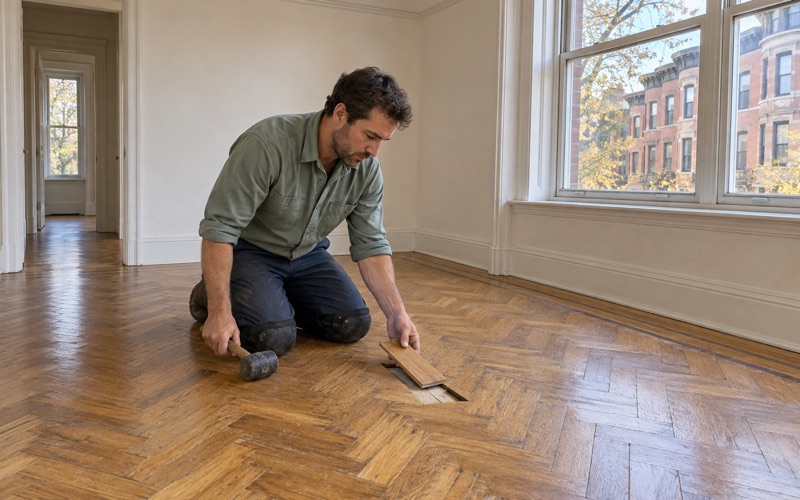
Prewar parquet tends to loosen block by block as the old adhesive gives up. We re-glue and refinish it piece by piece instead of covering it with a new floor, and we check for black mastic before any scraping so it is handled correctly.
Hollow spots, squeaks and board gapping in older houses usually trace back to the plank subfloor or the floor joists below. We find the cause first, because refinishing over a loose floor only hides the problem for a season.
Lead Checks and Radiator Leaks
A house built before 1940 predates 1978 by decades, so the build year and painted surfaces are checked before sanding begins. Painted baseboard, quarter round and stair risers get particular attention, and the Massachusetts Lead Law and 454 CMR 22.00 shape how that work is set up.
Steam radiators can leak slowly, and the damage shows up as cupping or dark water stains around the radiator feet. We find the leak, dry the boards and read them with a moisture meter before replacing anything, since boards that dry flat can often be kept.
The 1950s Houses and Braintree Rental Buildings
After the prewar layer, the 1950s are Braintree’s next largest decade, with 2,685 homes, or 17.7 percent of the stock. After World War II, Irish American and Italian American families from lower-income parts of Boston moved to Braintree, and the town’s history also names East Braintree and Braintree Highlands.
Finding Out What Is Under the Carpet
Postwar houses often come to us with wood hidden under carpet, and the first job is finding out what is there. Pulling the carpet exposes tack strip holes, staples and sometimes pet urine stains, and each changes how much sanding the floor can take.
We use a moisture meter and a close look at the board edges to decide between refinishing, board replacement or a new floor. Where the boards are sound, water popping before the floor stain helps an even color take across old and new wood.
Replacing a Floor That Cannot Be Saved
When a floor is beyond saving, we choose between nail-down solid hardwood and engineered planks based on the subfloor, the room and how the house is heated. Quartersawn white oak holds its shape well through seasonal change, while prefinished planks shorten the time a room is out of use.
A new floor starts on a flat, dry subfloor checked with a moisture meter, and we follow the NWFA Installation Guidelines for fastening and spacing. The old flooring, tack strip and loose staples come out first so nothing telegraphs through the new boards.
Stairs and Transitions
Stairs get their own line in the quote, priced by the tread and riser rather than folded into a square-foot price. Worn stair nosing, loose stair treads and mismatched risers take hand work that a floor price cannot cover.
At the edges, we reset or replace baseboard, quarter round, reducers and thresholds so the new floor meets tile and carpet cleanly. These small pieces decide whether a refinished room actually looks finished.
Rental Apartment Buildings
Braintree’s rental stock leans toward larger buildings. Of 3,233 renter households, 58.7 percent live in buildings of five or more units, a far higher share than among owners.
In rental buildings, we work around turnover dates and coordinate access and hours with the manager. A screen and recoat between tenants can often buy years before a full sanding is needed, and prefinished or site-finished replacement boards are matched to what is already down.
Planning a Floor Project in Braintree
About 77.6 percent of Braintree’s occupied homes are owner-occupied, so most of our local calls come from people planning floors they will live on for years. A little planning at the start saves days at the end. Every project begins with a walk-through, moisture readings and a look at how the existing floor was installed.
Seasonal Moisture and Acclimation
Braintree sits in National Weather Service forecast zone MAZ016, Eastern Norfolk, and seasonal swings in indoor humidity show up in wood. Winter gaps open when heating dries the boards, while cupping or crowning tends to follow humid summers or a leak. Seasonal winter gaps usually close again as spring humidity returns.
New boards acclimate in the house before installation, and we leave the right expansion gap at walls and thresholds. Radiant heat under a floor narrows the choice of species and method, so we raise it at the first visit.
Choosing a Finish
Waterborne polyurethane dries clear, cures faster and keeps odor down, while oil-modified polyurethane ambers over time and needs longer before furniture returns. Hardwax oil gives a low sheen level and can be spot-repaired in busy kitchens and halls. We bring sample boards so the sheen and color can be judged in your own light.
Every finish we offer sits within the state VOC limits mentioned above. We write out the cure schedule by room so the household can plan where to sleep, eat and keep the dog.
Surprises Found During Sanding
Sanding occasionally turns up damage a carpet hid, such as powderpost beetle exit holes or soft wood where carpenter ants worked near a damp spot. We stop, show you what we found and price the board replacement before going further.
Flooring cleats and staples from an earlier repair can also change the plan, since loose fasteners let boards squeak and lift. A flooring nailer and a few new cleats usually settle them before the sanding resumes.
Insurance Claims and Town Records
When water damage leads to a claim, we document the floor room by room for the adjuster, with moisture readings and photos of cupping, buckling and stains. That record helps separate what needs replacement from what only needs drying and refinishing.
For permit questions, the Braintree Building Division at Town Hall keeps permit and inspection records and offers online permitting. We point owners there so the answer comes from the office that issues it.
- 20+ Years on Wood Floors
- Free In-Home Estimates
- Dust-Contained Sanding