Brookline Wood Flooring brings more than 20 years of sanding, repair and refinishing to wood-flooring in Chelsea, and a large part of that work is timed to the calendar of a rental unit. Before a sander touches the boards, we check the building’s age and every painted surface near the floor, because Massachusetts runs its own lead-safe renovation rules for homes built before 1978. That check shapes the containment, the cleanup and the schedule we hand the owner.
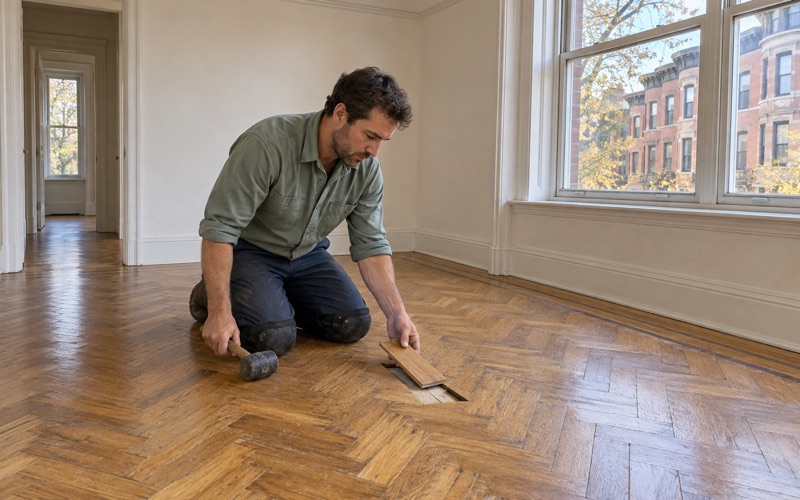
Owners call us about solid hardwood of every kind, from red oak and white oak to maple and eastern white pine, along with engineered planks and the occasional parquet room. Worn traffic lanes, pet urine stains, water stains beside a radiator and wide winter gaps are the usual list. We repair and match original boards rather than tearing them out, and old parquet gets re-glued and refinished piece by piece instead of being covered over.
Landlords, condo owners and owner-occupants each arrive with a different deadline. A landlord may need a finished floor before a lease begins, a condo owner has an association’s work hours and elevator booking to respect, and a family living in the home needs to know which rooms are out of use and for how long. We plan each job around those limits and put the cure schedule in writing.
Chelsea’s Certificate of Habitability and the Tenant Turnover
What the ordinance sets in motion
Chelsea’s Certificate of Habitability Ordinance took effect on April 15, 2014. Under it, a rental unit that is not owner-occupied must be inspected before new tenants move in, and every rental unit must be inspected at least every five years regardless of occupancy. The standard is Chapter II of the State Sanitary Code, and the initial inspection fee is $50.
The rule reaches further than many owners expect. Rented condominiums fall under it, as do units owned by a trust or an LLC, while units where the landlord lives in the home and holds the property in his or her own name are exempt. For a floor project, the practical effect is a fixed date that the owner is already planning around, and our work has to fit inside it.
A renter-majority city
The American Community Survey 2024 five-year estimates count 10,148 of Chelsea’s 13,716 occupied households as renters, or 74.0 percent. In a city where most households rent, the stretch when a unit sits empty between tenants is often the only chance to sand a floor without moving someone’s furniture and daily life out of the way. That is why so many of our Chelsea calls come from owners with a move-out date in hand.
We do not tell owners what an inspector will look for on a floor, and a fresh finish is no promise about any inspection result. What we can do is schedule the sanding, staining and finish coats so the unit is clean, cured and ready on the date the owner gives us. The ISD office at City Hall, 500 Broadway, is the place to ask about the inspection itself.
Refinishing between tenants
A turnover refinish starts with a walk-through of the empty unit. We look for cupping near the kitchen sink, water stains around a steam radiator, pet urine stains that have turned dark, and boards that deflect underfoot or sound hollow. Each of those changes the plan, because a stain that runs deep into the wood may call for board replacement rather than sanding.
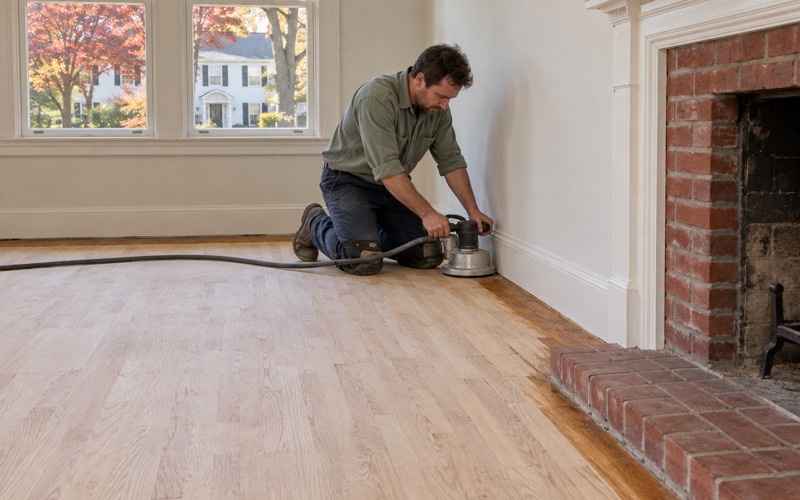
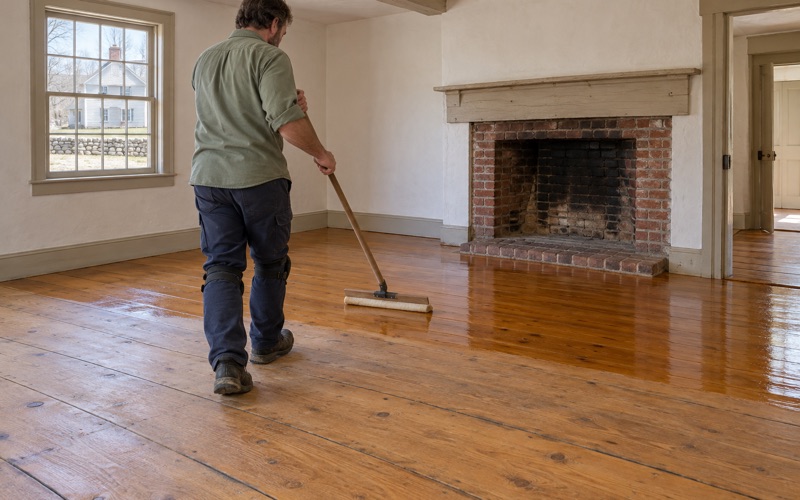
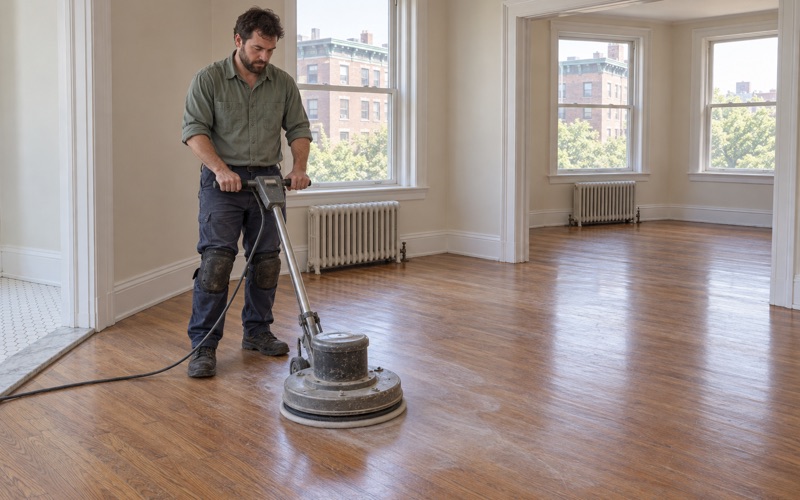
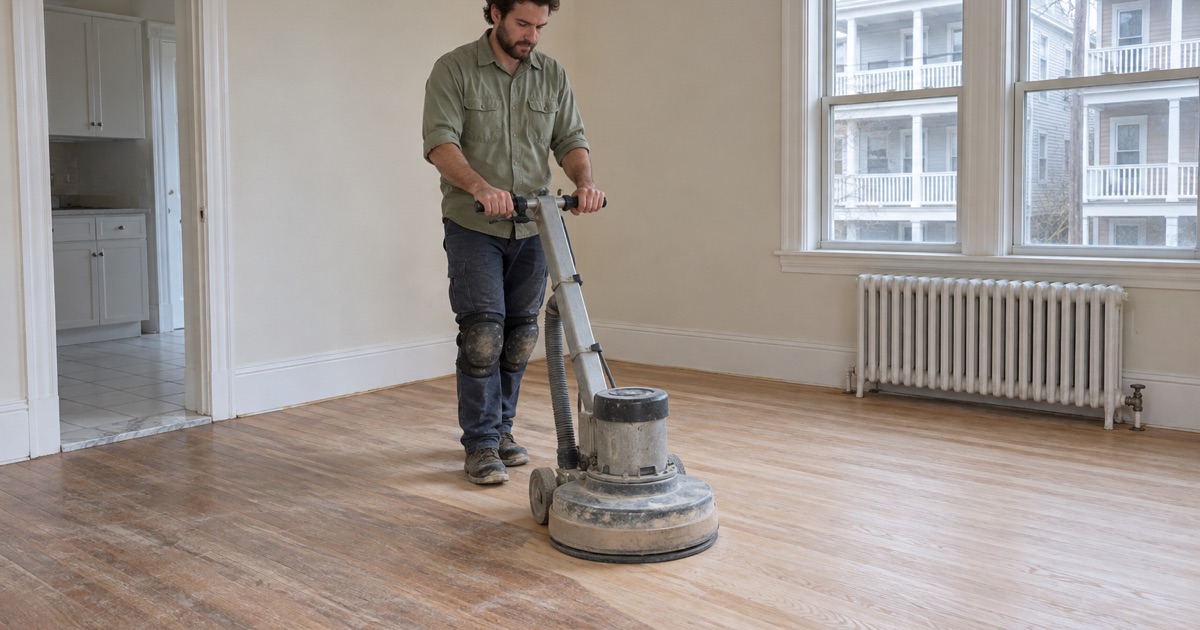
Where the wear is only in the finish, a screen and recoat can freshen a floor quickly and save the full sanding for a later turnover. Where the boards are bare in the traffic lanes, we run a full grit sequence with a drum sander and an orbital sander, vacuum with a HEPA vacuum, and apply a waterborne polyurethane that fits the Massachusetts limits on VOC content in wood coatings. The written cure schedule tells the owner when furniture and the next tenant can come back.
Looking for wood-flooring closer to Dover? See Dover Wood-Flooring.
Floors in Chelsea’s Three- and Four-Unit Buildings
The city’s largest housing type
Three-or-four-unit buildings hold 3,871 of Chelsea’s 14,165 housing units, or 27.3 percent, more than any other building size in the Census count. They are also where renters concentrate, with 3,217 renter households, 31.7 percent of the city’s renting households, living in buildings of that size. Chelsea covers only 2.21 square miles, the smallest city in Massachusetts by land area, so these buildings sit close together and a floor crew works with neighbors on every side.
The age of the stock matters as much as the size. The same survey counts 7,020 units, 49.6 percent, built in 1939 or earlier, and older floors have often been sanded more than once over the decades. We check how much wood remains above the tongue before we promise another full sanding, and we tell the owner plainly when a floor has one sanding left or none.
Working on one floor of a stacked building
In a building with households above and below, a refinish reaches past the unit being worked on. We seal doorways, run dust containment with HEPA extraction at the machine, and tell the owner when the loudest sanding will happen so the other households can plan. Finish fumes and cure times go into the written schedule as well.
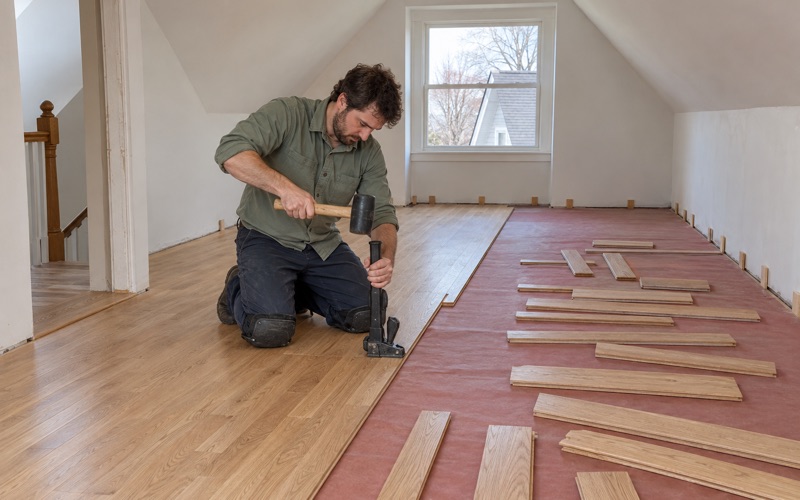
When a floor is replaced rather than refinished, the underlayment matters to the people downstairs. We choose acoustic underlayment with the building’s sound or rug-coverage rules in mind, and we do not quote sound ratings we cannot verify for the assembly. For a rented condominium, we confirm the association’s flooring rules, work hours and elevator booking before the job goes on the calendar.
Lead-era paint and old coverings
In a building from before 1978, painted baseboards, thresholds and stair risers can carry lead paint. We check the build year and each painted surface near the floor before any sanding begins, then plan the containment and cleanup around what we find. An owner with a tenant moving in soon needs that answer on day one, not halfway through the job.
Old coverings bring their own questions. Tack strip left from wall-to-wall carpet, black mastic under old tile, and layers of wax or dark floor stain all have to come off before the wood will take a new finish evenly. We price that removal separately so the owner can see where the time goes.
Large Apartment Buildings and Newer Units
Buildings of fifty units or more
Chelsea also has 2,759 housing units in buildings of fifty or more units, and 2,397 renter households, 23.6 percent of the city’s renters, live in them. Work in buildings that size usually comes with management rules on work hours, elevator reservations and protection for common hallways. We get those rules in writing before we bring a drum sander through the lobby.
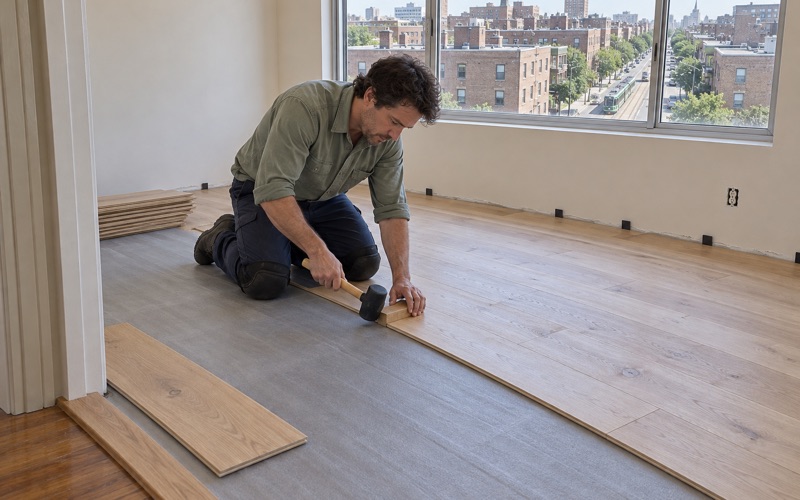
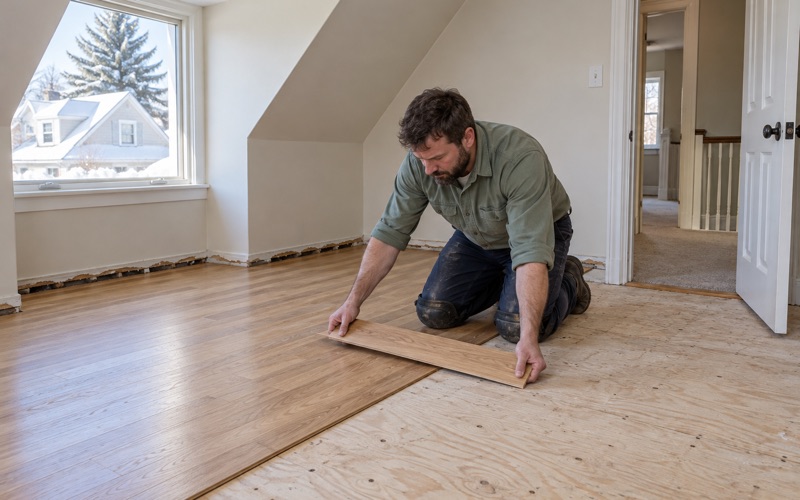
Engineered and floating floors are common in newer construction, and they need a different first step than solid hardwood nailed over a plank subfloor. Before we promise a sanding on an engineered floor, we measure the wear layer, because a thin veneer may only allow a screen and recoat or a single light pass. If the wear layer is gone, we say so and price a replacement instead.
Units built since 2000
The Census count puts 18.6 percent of Chelsea’s housing units at 2000 or later, including 1,388 built between 2010 and 2019 and 109 from 2020 on. Many newer units carry prefinished flooring, and a prefinished surface with factory bevels on every board takes different handling than a site-finished floor. Sanding it flat erases those bevels and changes how the room looks.
For a prefinished floor with light wear, we clean and abrade the surface and apply a compatible coat rather than cutting into the bevels. Where a section has cupped from a dishwasher leak or a plumbing failure upstairs, we find the source, dry the boards and read them with a moisture meter before anything is replaced. Matching a discontinued prefinished plank takes some searching, so we start that early.
Water damage between floors
Stacked housing means a leak rarely stays in one unit. When water comes through a ceiling or seeps from under a radiator, we document the damage room by room for the adjuster, with photos and moisture readings, so the owner and the insurer work from the same record. That record also helps settle which unit the repair belongs to.
Cupped boards that are sanded flat before they dry can crown later, and buckled sections sometimes settle back once the moisture leaves. We wait for the meter readings to come down before choosing between drying in place, a weave-in repair and a full replacement. Rushing that decision is the most common way a water repair turns into a second repair.
Planning a Floor Project in Chelsea
Timing around the lease
For a landlord, the best time to call us is as soon as the move-out date is known. That gives us time to look at the floor, order matching boards or stair treads, and book the sanding for the first days of the vacancy. A floor finished early in the gap leaves room for painting and cleaning before the next tenant arrives.
Owner-occupants in exempt units have more freedom to choose their season. Chelsea sits in National Weather Service forecast zone MAZ015, Suffolk, and the swing between dry heated winters and humid summers opens winter gaps and closes them again. We let new boards acclimate and leave the proper expansion gap at walls and thresholds so the floor can move without buckling.
Stairs, thresholds and trim
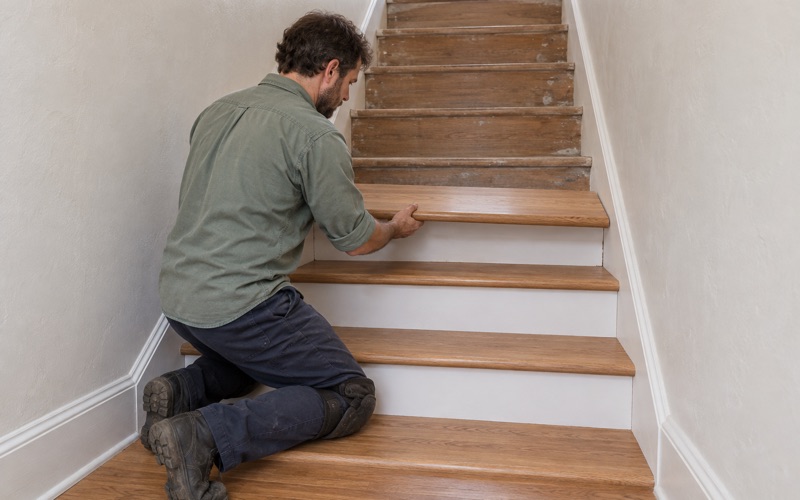
Common stairs in a multi-unit building take hard daily wear, and worn stair nosing is often the first thing a new tenant notices. We quote stairs by the tread and riser rather than folding them into a square-foot price, so an owner can see what the stairs cost on their own. That makes it easier to refinish the unit now and schedule the stairs for another turnover.
Thresholds, reducers and quarter round are where a refinished floor meets a hallway or a tiled bathroom. We reset or replace them so the transition sits flush and the baseboard line stays clean. Small details like these are what a walk-through shows first.
When a refinish becomes a replacement
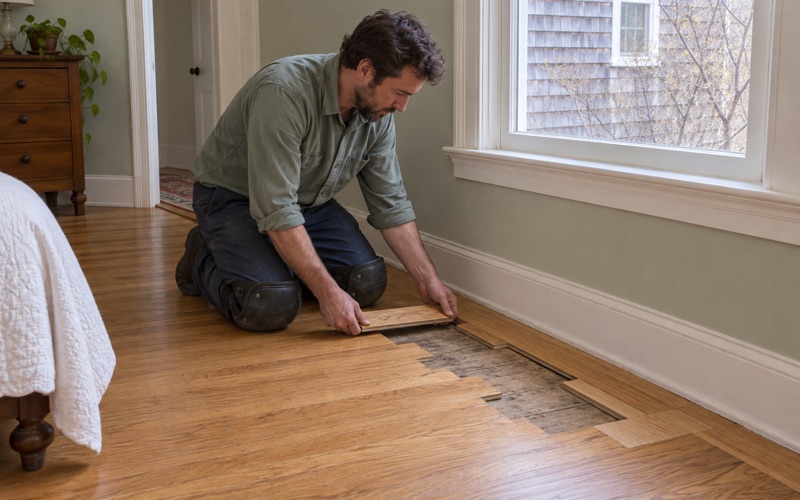
A few signs tell us a floor is past sanding. The tongue shows through the face, powderpost beetle or carpenter ant damage has weakened the boards, or the fasteners have let go of the floor joists. In those cases we replace the affected section with tongue and groove boards matched for species, width and grain, and weave them into the existing floor.
Every project starts with an estimate on site. We walk the unit, check the build year and painted surfaces, take moisture readings, and give the owner a written scope with a cure schedule. Whether the deadline is a new lease, an association work window or a family’s own plans, the schedule is built to meet it.
- 20+ Years on Wood Floors
- Free In-Home Estimates
- Dust-Contained Sanding