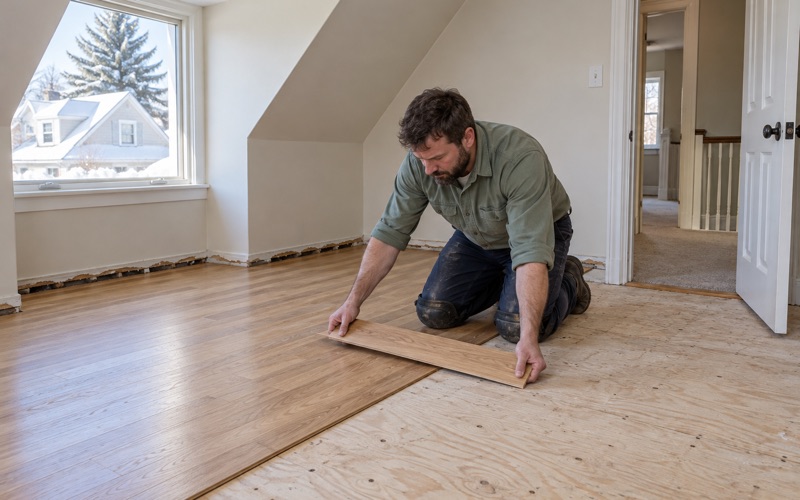
Brookline Wood Flooring brings more than 20 years in business to wood-flooring in Dorchester, sanding, repairing and installing floors in homes where one level of a building is rarely the whole story. Most of what we do here is apartment-scale work: a full floor of connected rooms, a hall that runs front to back, and a staircase every household in the building shares.
Before a sander touches anything, we check the build year and look for painted surfaces, because Massachusetts sets its own lead-safe renovation rules for homes built before 1978. We also choose finishes that stay inside the state’s VOC limits for wood coatings, which are tighter than the federal ones, and every household gets a written cure schedule.
The work itself runs the full range. We repair and match original boards rather than tearing them out, dry and meter water-damaged floors before replacing anything, and measure the wear layer on engineered planks before promising a sanding. Dust containment comes standard, so a family upstairs or down can keep living around the job.
Floors in Dorchester Three-Deckers
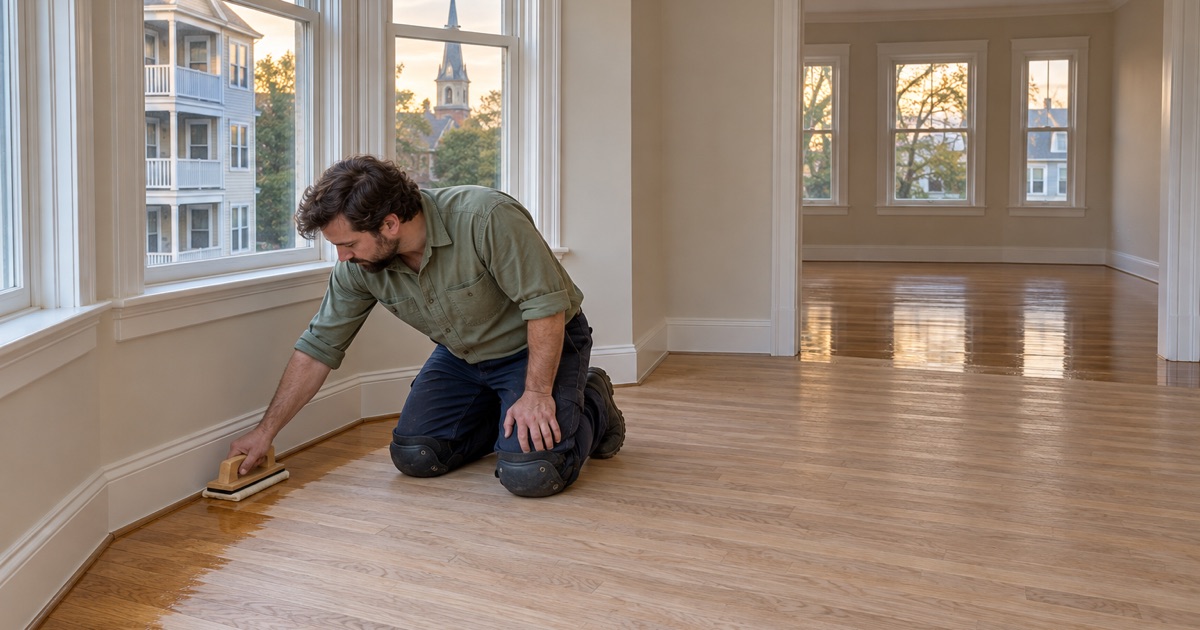
Dorchester is three-decker country, and that shapes nearly every floor job we quote here. Across the neighborhood’s four main ZIP codes, 39.5 percent of housing units sit in three-or-four-unit buildings, based on 2024 American Community Survey five-year figures we use as a ZIP-code proxy for the neighborhood. Most projects mean one apartment floor with neighbors above, below or both.
Five or Six Rooms on a 20-by-40 Footprint
The Dorchester Reporter has described the standard three-decker footprint as 20 by 40 feet, with five and six rooms per floor. In practice that gives a long run of connected space: front parlor, dining room, bedrooms off a side hall, and a kitchen at the back. Boards often run continuously through several of those rooms.
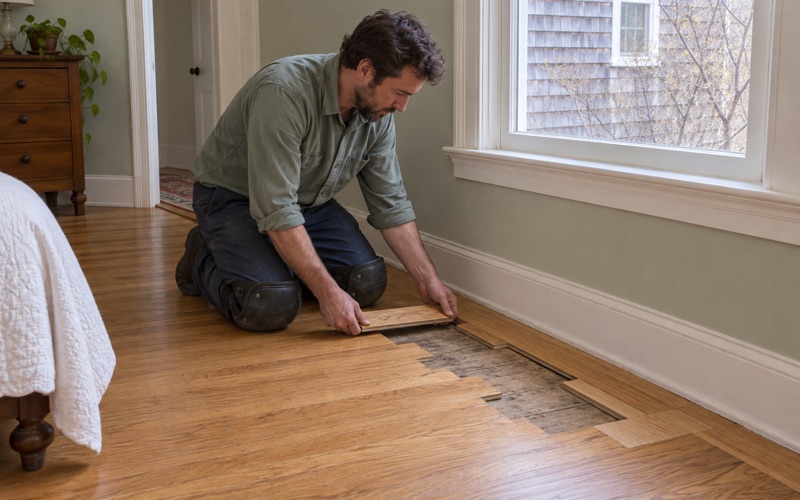
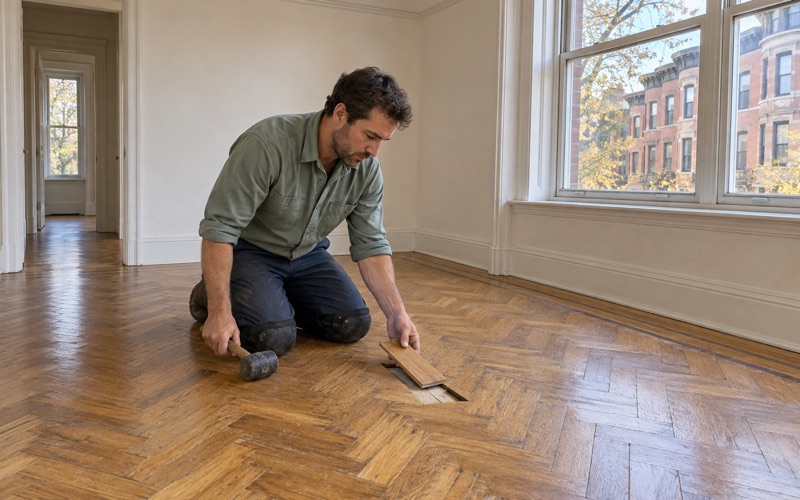
That continuous run is why we favor weave-in repair and board replacement over patching a square. Dropping a rectangle of new stock into an old floor leaves a visible outline, especially down a long hall. Weaving replacement boards into the existing tongue and groove, then sanding the whole field, lets the repair disappear into the floor around it.
Refinishing One Level at a Time
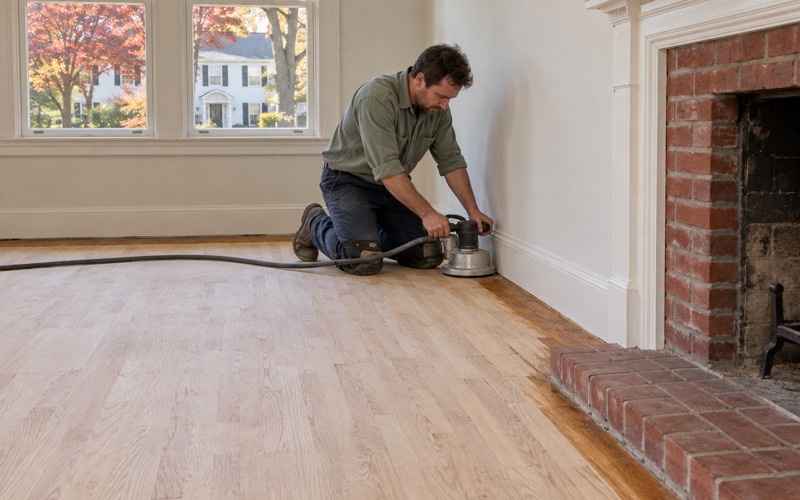
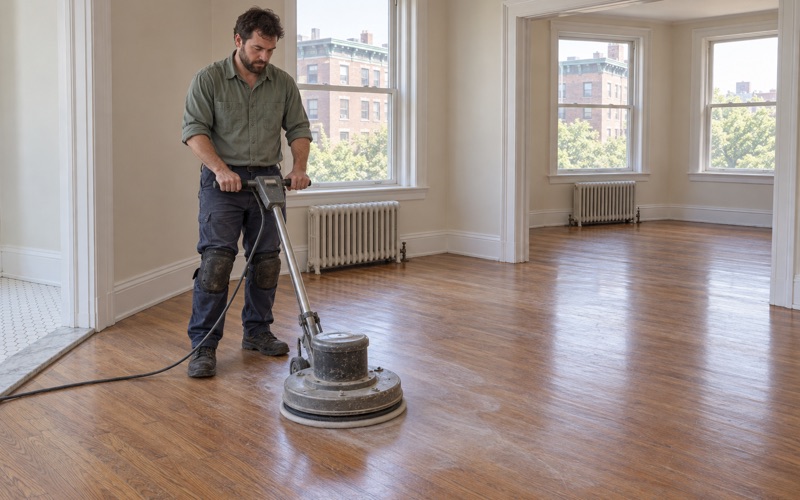
Because each apartment is its own household, we usually treat one level as a single project. We seal doorways, run HEPA vacuums on the sanding equipment, and keep the grit sequence consistent from room to room so the sheen level reads evenly from parlor to kitchen. Neighbors upstairs should notice little more than noise during working hours.
Sequencing matters on a floor this long. We plan drum sander passes and orbital sander detail work so the household keeps a path to the kitchen and bathroom as long as possible, then time the finish coats around when those rooms can close. The cure schedule tells everyone when furniture, rugs and pets can return.
Three Bedrooms and More
The Boston Planning Department’s 2025 figures show 24,772 of Dorchester’s occupied units, or 50.0 percent, with three or more bedrooms. Those are large floors for apartments, and bedrooms often hold the best-preserved wood in a unit, because rugs and furniture protected it for decades while the hall took the traffic.
Bedrooms also collect the problems we get called about most: pet urine stains near a bed, water stains under a window, and board gapping where a radiator dries the floor all winter. We test whether a stain will sand out or needs board replacement before we quote, so the number holds once the work starts.
Looking for wood-flooring closer to Belmont? See Wood-Flooring Services in Belmont.
Queen Anne and Colonial Revival Three-Deckers
The Boston Preservation Alliance counts about 15,000 triple-deckers built between 1880 and 1930 in Boston and surrounding areas, and says Dorchester, Roxbury and South Boston housed the majority. They were simple wood-frame buildings with three stacked apartments, and their kitchens and bathrooms stacked too. That stacking explains a lot of what we find under old finish.
Two Eras, Two Sets of Details
The Alliance dates the Queen Anne and Victorian three-deckers to the 1880s through 1900, and the Colonial Revival buildings, with their two-story porches, to the 1900s through the 1920s. The difference shows up in trim profiles, stair details and how many times a floor has already been sanded over the past century.
We do not assume what species a building started with. We identify the wood in each room, whether red oak, white oak, maple or pine, and check how much material remains above the tongue before committing to a full sanding. A floor that has been sanded too many times may call for a screen and recoat instead.
Floors Older Than 1940
The same Census proxy shows 52.9 percent of units in those four ZIP codes were built in 1939 or earlier. That puts most Dorchester apartments well inside the pre-1978 window the Massachusetts Lead Law covers, and many carry painted baseboards, painted stair risers or old paint that once ran right to the edge of the floor.
So our first visit includes a look at every painted surface near the work. We keep the sanders off painted trim, protect baseboard and quarter round where we can, and contain dust with sealed openings and HEPA vacuums. That inspection decides how the rest of the job is set up, so it always comes first.
Stacked Kitchens and Bathrooms
When kitchens and bathrooms sit directly above one another, a single leak can travel down through three households. We see cupping near a sink, crowning after a floor was sanded while still wet, and hollow spots where the boards pulled away from the subfloor. Steam radiators add slow drips of their own, often hidden under the valve for years.
Before replacing anything, we find the source, dry the boards and read them with a moisture meter until they settle. When an insurance claim is involved, we document the damage room by room for the adjuster, so each household’s loss is recorded on its own terms rather than as one vague building-wide estimate.
Dorchester’s Prewar Houses Beyond the Three-Decker
Not every Dorchester floor sits in a three-decker. The same ZIP-code figures count 9,352 two-unit homes and 7,210 detached houses, alongside 8,152 units built in 2000 or later. Dorchester was a separate town until it officially became part of Boston on January 3, 1870, and streetcar lines pushed its population to 150,000 by 1920, so the housing comes in layers.
Italianate Houses in Harrison Square
The Harrison Square Historic District in Clam Point is noted for its Italianate mansard residences. Houses like these call for a different eye than the three-deckers around them, and their original floors reward careful repair far more than replacement does.
There is no Boston Landmarks Commission local district in Dorchester, but we still treat original flooring in these houses as something worth keeping. Loose boards get re-secured, damaged sections get matched with similar stock, and prewar parquet is re-glued and refinished piece by piece rather than covered with something new.
Savin Hill, Ashmont and Lower Mills
We work regularly on the streets around Savin Hill, Ashmont and Lower Mills, where two-family homes and single houses mix in with three-deckers. Each building type raises its own questions about the subfloor, the floor joists and whatever earlier owners laid on top of the original wood.
Old carpet usually leaves a line of tack strip holes along every wall, and older tile or sheet flooring can leave black mastic behind. We identify each layer before sanding, because some of them need a different approach than a straight pass with the drum sander, and guessing wrong can damage the boards underneath.
Newer Units and Engineered Floors
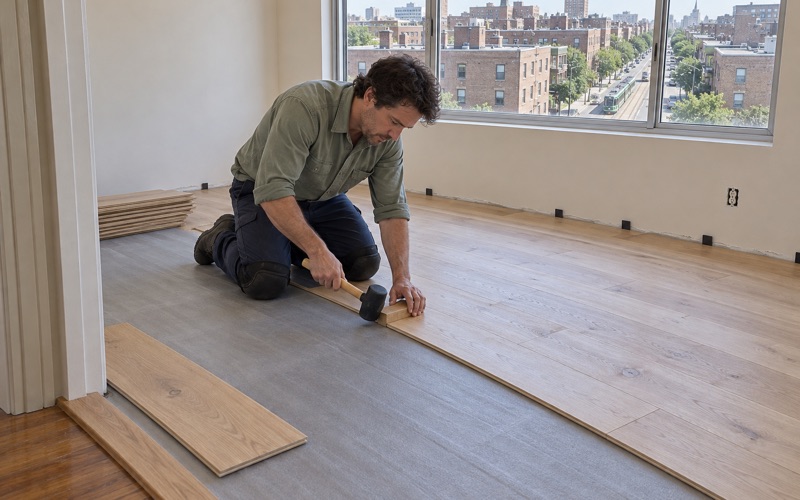
Units built since 2000 often have engineered flooring over a plywood core, some floated and some glued down. Those floors can pass for solid hardwood at a glance and still carry only a thin wear layer, which limits how much sanding they can take.
We measure the engineered wear layer before anyone is promised a full refinish. When the layer is thin, a screen and recoat or targeted board replacement is the honest answer. In a condo, we also confirm the association’s flooring rules, work hours and elevator booking before the floor goes on the calendar.
Planning a Floor Project in Dorchester
The Boston Planning Department puts owner-occupancy at 38.4 percent of Dorchester’s occupied units, so many floors we refinish belong to landlords working between tenants, while others belong to owners living in one unit of their own building. Either way, the building sets the calendar.
Rental Registration and Turnover
Boston requires rental units to be registered each year by July 1 and runs a five-year rental inspection. A building of six or fewer units where the owner lives in one of them is exempt from that inspection, though it still registers. Many landlords plan floor work around lease turnover and that annual calendar.
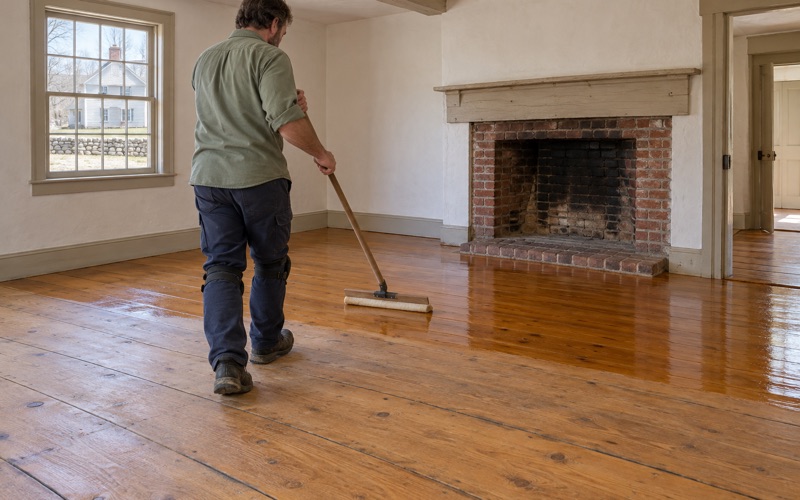
We schedule turnover work tightly: sanding, floor stain and finish coats between one lease and the next, with a cure schedule the owner can hand to the incoming tenant. Waterborne polyurethane dries faster than oil-modified polyurethane, which often makes it the practical choice for a short vacancy.
Seasons and Moisture
Dorchester sits in the National Weather Service’s Suffolk forecast zone, MAZ015. Steam heat dries floors through the winter and humid summers swell them again, so winter gaps and summer cupping are both familiar in these buildings.
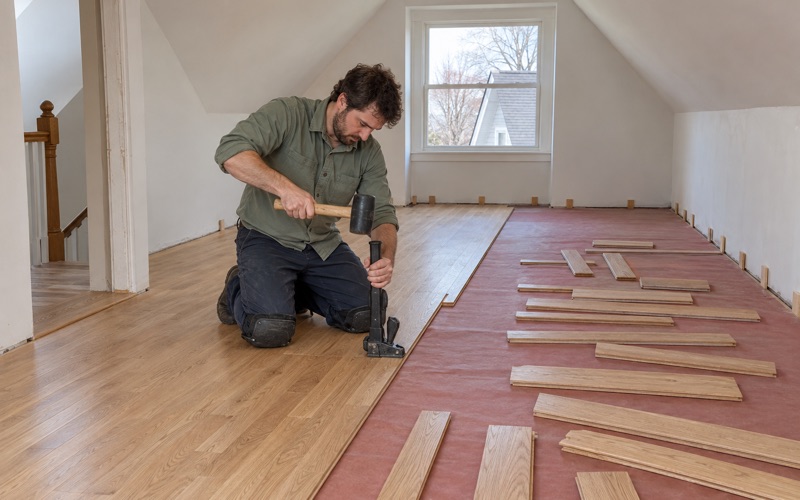
We take moisture readings, give new boards time for acclimation before installation, and leave a proper expansion gap at walls and thresholds. Those steps keep a new floor from buckling in August or opening wide gaps in February, whatever floor of the building it sits on.
Stairs, Sound and Finish Choices
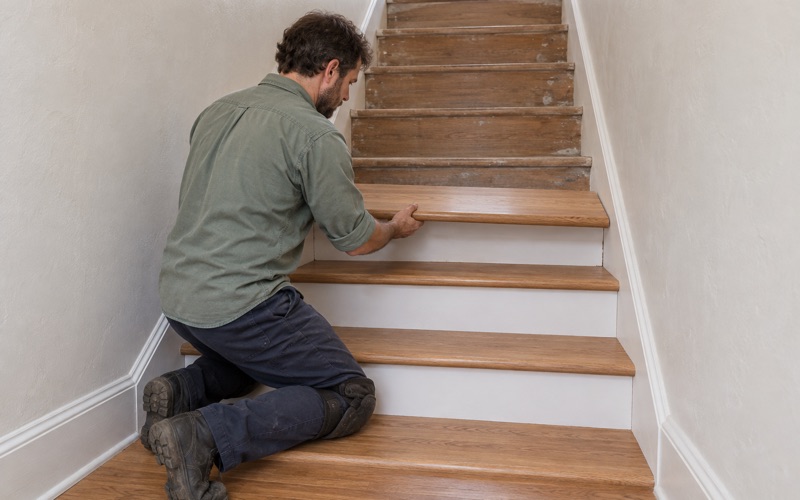
Three-decker stairs take heavy wear, and we quote them by the tread and riser rather than folding them into a square-foot price. Worn stair nosing, loose stair treads and painted stair risers each get their own line on the estimate.
When a new floor goes in over a neighbor’s ceiling, we choose acoustic underlayment with the building’s rug-coverage or sound rules in mind. For the finish, we walk through the tradeoffs among waterborne polyurethane, oil-modified polyurethane and hardwax oil, and help pick a sheen level that suits how each room is used.
- 20+ Years on Wood Floors
- Free In-Home Estimates
- Dust-Contained Sanding