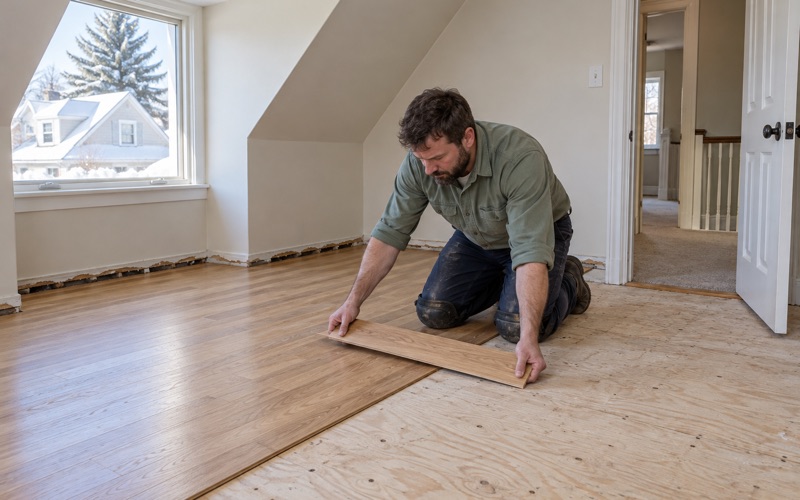
Brookline Wood Flooring brings more than 20 years of wood-flooring work to Dover, sanding, repairing and installing floors in houses where one family has often walked the same boards for a long time. Most of what we are called for here is a refinish on a floor that has absorbed years of the same traffic lanes, furniture feet and pet claws. That shapes what we look at first: worn paths in front of the kitchen sink, gray boards by the back door, and the patch under an old rug that faded differently from the rest of the room.
Before a sander comes off the truck, we find out how much the floor has left to give. On solid hardwood that means checking how much wood still sits above the tongue and groove, and on an engineered floor it means measuring the wear layer before we promise any sanding at all. A floor that can take one more full sand gets a different plan than one that should only be screened and recoated.
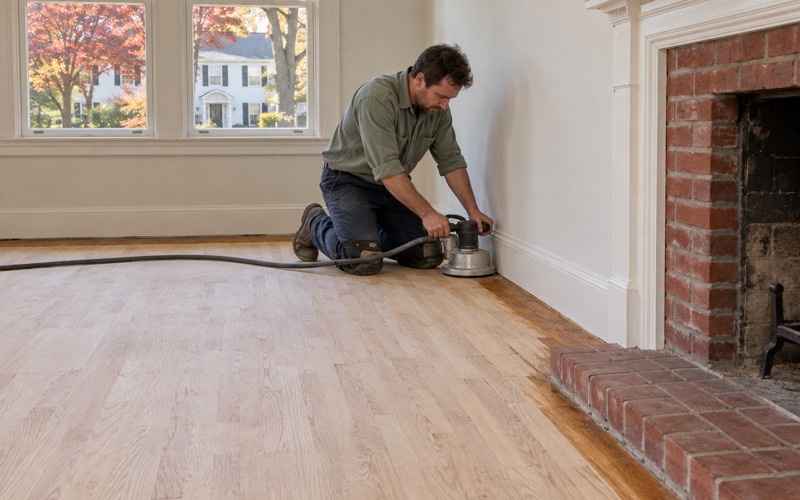
We also plan the job around the people who live in the house. Sanders connected to HEPA vacuums, dust containment at doorways and a written cure schedule showing when each room can take socks, furniture and rugs again let a household decide whether to stay home, shift rooms or step out for a few days.
Floors in Dover’s 1960s Houses
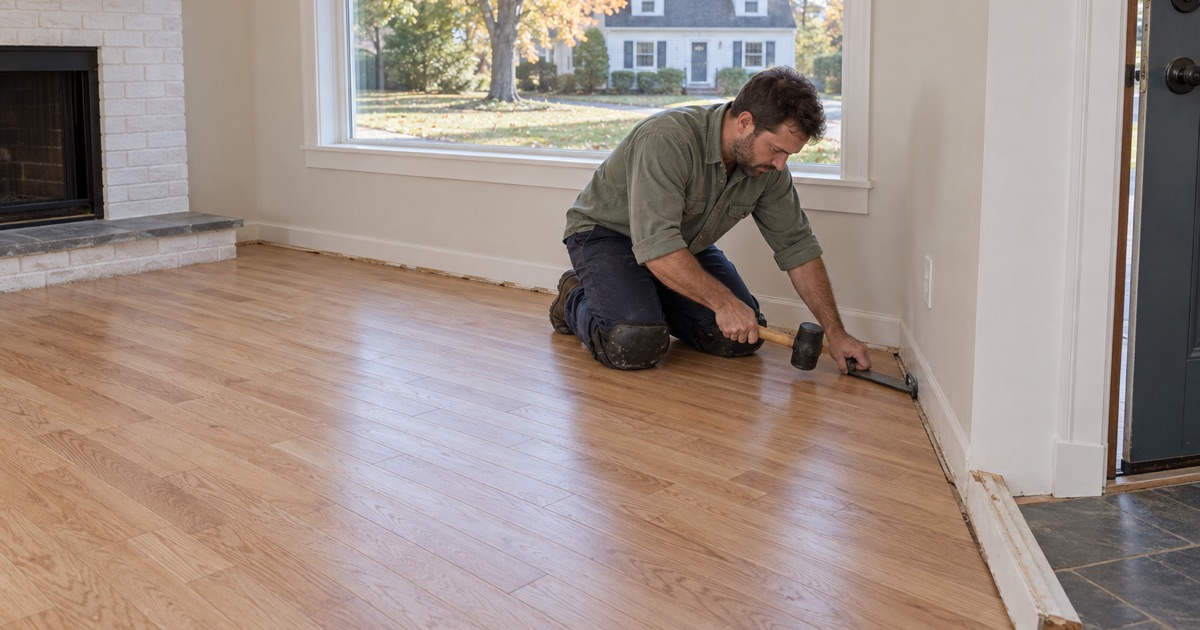
The 1960s were Dover’s biggest building decade. Of the town’s 1,998 housing units, 547 were built between 1960 and 1969, which is 27.4 percent and the largest single bucket in the Census count. Counting every decade before that, 61.1 percent of the housing stock went up before 1980, so a large share of the floors we refinish here have already seen several decades of daily use.
Reading a floor that has been sanded before
A floor laid in the 1960s has often been refinished at least once, and some have been sanded several times. Each full sanding takes wood off the face of the board, and on solid strip flooring the practical limit is the distance down to the tongue. Where we can, we lift a floor register or look at a threshold edge to see how much wood remains.
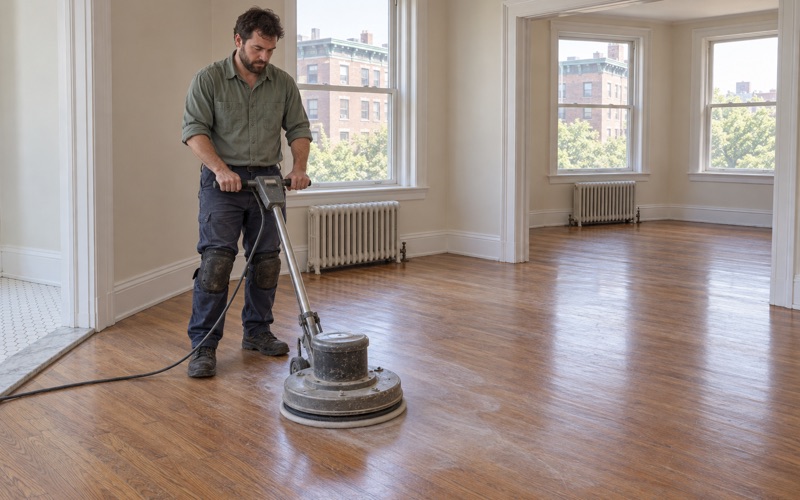
When the wear is only in the finish, a screen and recoat restores the sheen without cutting into fresh wood. When boards show exposed nail heads, deep gray traffic lanes or finish worn through to bare wood, a full sand with a proper grit sequence is the honest answer. We say which one your floor needs before we price it, not after the first pass.
Lead-safe checks before sanding
A Dover house built in the 1960s or 1970s predates 1978, the year Massachusetts uses as the line for its own lead-safe renovation rules. We confirm the build year and look at every painted surface the job will touch before sanding starts. Painted stair risers, baseboard and quarter round are the usual places where that question comes up on a floor job.
The floor finish is only part of the picture, because the trim beside it and the dust from removing that trim matter too. Settling this at the estimate keeps the schedule honest and keeps the work plan clear. It also means nothing gets pried loose on day one before anyone has looked at what is painted on it.
Seasonal gaps, cupping and crowning
Dover sits in National Weather Service forecast zone MAZ013, Western Norfolk, and its houses move from dry, heated winter air to humid summers. Wood floors swell and shrink along with that swing. Winter gaps between boards that close again by early summer are normal seasonal movement rather than a defect.
Cupping or crowning that stays put through the seasons is different, and it usually points to moisture from below or an old leak. We read those boards with a moisture meter before recommending a sand, because sanding a cupped floor before it dries can leave it crowned once it settles. Buckling boards get the same check before any board replacement is quoted.
Looking for wood-flooring closer to Winchester? See Wood-Flooring in Winchester.
Refinishing a Long-Held Single-Family House
Dover is almost entirely owner-held houses. The Census counts 1,877 of 1,917 occupied homes as owner-occupied, or 97.9 percent, and 1,914 of the town’s 1,998 units, 95.8 percent, are one-unit detached houses. For floor work that means we are nearly always talking with the people who own the floor and will live on the result, in a house with no shared walls and no neighbor underneath.
Repairing original boards instead of replacing them
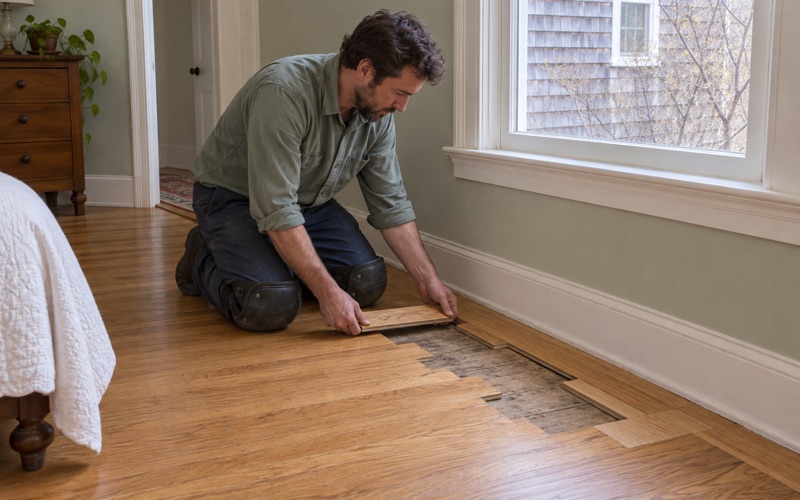
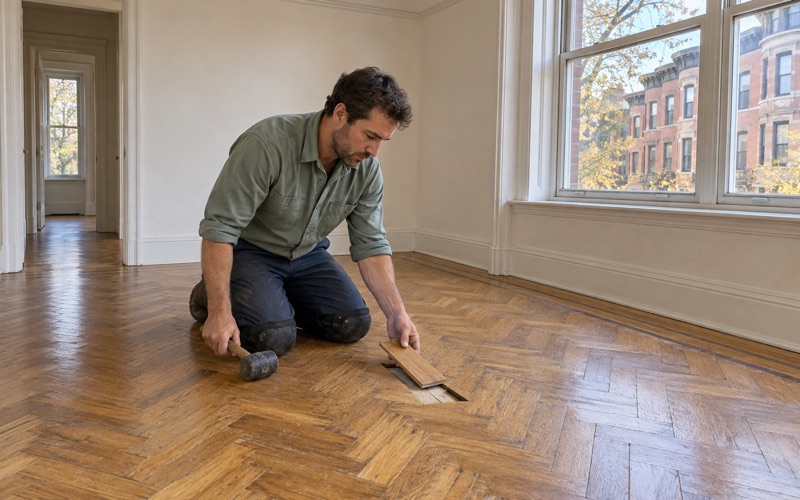
When a room has a burned spot, pet urine stains or a run of boards darkened by an old leak, we cut those boards out and weave in replacements rather than tearing out the whole floor. Original oak, maple and pine can be matched for species, width and grain. Done carefully, the weave-in repair disappears once the room is sanded and finished as one surface.
Hollow spots get the same treatment. We find the loose run, refasten it with flooring cleats or staples into the subfloor, and look at the floor joists where they can be reached if the bounce suggests the problem sits deeper than the boards. Water stains that have gone black get tested with a sample sanding before we decide between sanding them out and replacing the board.
Choosing a finish you will live with
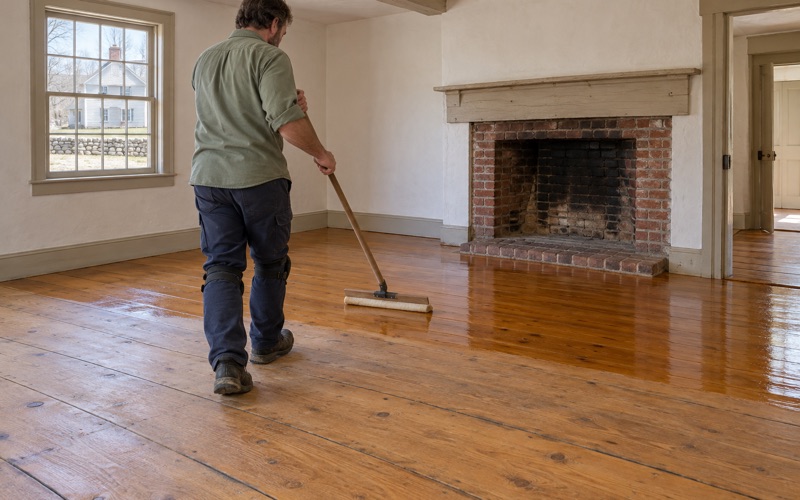
In a house you own and plan to keep walking on, the finish choice matters as much as the stain color. Waterborne polyurethane dries clear and fast, oil-modified polyurethane ambers over time, and hardwax oil can be spot-repaired without sanding the whole room. Each one wears, cleans and ages differently.
Every coating we use is picked to meet the Massachusetts limits on VOC content in wood coatings, which are tighter than the federal ones. We also talk through sheen level with you, since a satin finish hides everyday scuffs in a busy kitchen far better than a gloss. If you want a stain, water popping before it goes on helps the color take evenly.
Stairs, thresholds and trim
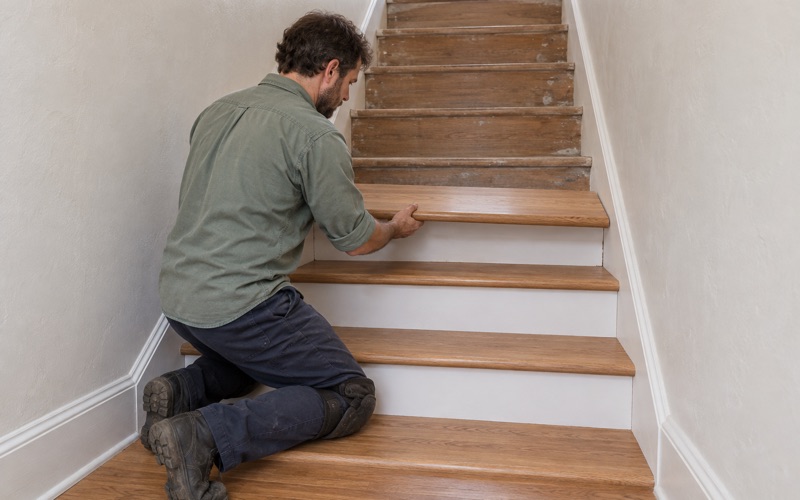
Stairs get their own line on the quote, priced by the tread and the riser rather than folded into a square-foot price. Stair treads take the hardest wear in most houses, and the stair nosing usually needs hand work that a drum sander or orbital sander cannot reach.
Where a refinished floor meets tile or carpet, we check that the reducer or threshold still sits flush after sanding lowers the wood surface. We reset quarter round and baseboard so the edge of the room looks finished, and fill gaps with wood filler only where it will hold rather than across seasonal gaps that need to move.
Floors in Dover Houses Built Since 2000
Not every Dover house dates from the 1960s. The Census counts 355 units, or 17.8 percent, built in 2000 or later, including 217 from 2010 to 2019 and 12 from 2020 onward. Newer houses can carry prefinished or engineered floors, and those products change what a refinish can and cannot do.
Engineered floors and the wear layer
An engineered floor has a hardwood top bonded to a plywood core, and the thickness of that top layer decides everything. Some wear layers can be sanded more than once, while thin ones cannot be sanded at all without breaking through to the core.
We measure the engineered wear layer at a floor vent or an exposed edge before agreeing to a sanding. If the layer is too thin, a screen and recoat or a board replacement is the better route, and we tell you that before any work is scheduled. A sanding that cuts through the veneer cannot be undone.
Prefinished floors that have lost their sheen
Prefinished boards arrive with a hard factory coating and small beveled edges between boards. Sanding them flat removes both the bevel and that factory finish, so we often suggest a deep cleaning and a recoat with a compatible product as the first step.
When a prefinished floor is scratched through in the traffic lanes, a full sand and a site-finished coating can give it one even surface again. The trade-off is a new look, with the bevels gone, so we finish a sample section before committing the whole room.
Radiant heat and new installations
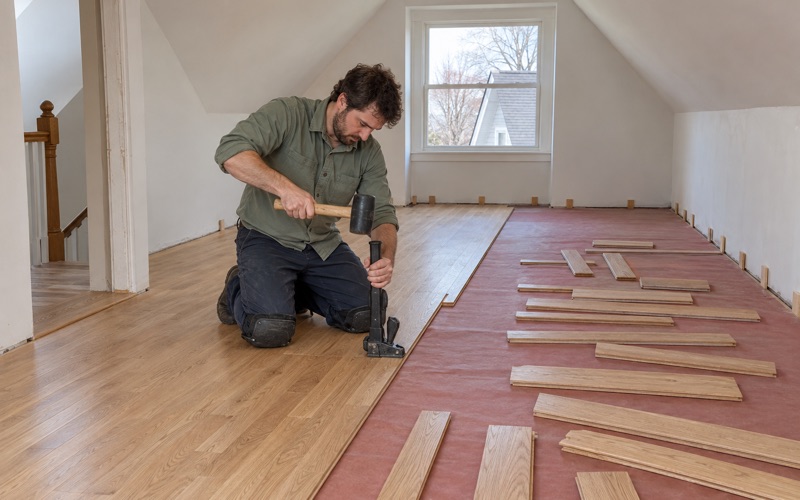
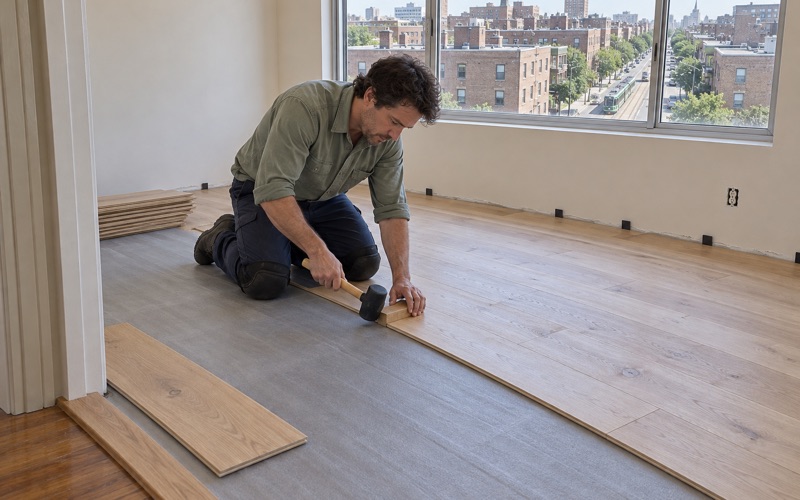
Some newer houses run radiant heat under the floor, which narrows the species, board widths and installation methods that stay stable over it. For those floors we confirm the heating system and read the subfloor with a moisture meter before anything is installed, and a floating installation or glue-down installation is often a better fit than nail-down.
Acclimation matters here more than anywhere. We let new boards sit in the conditioned house until they read within range of the subfloor, then install with the expansion gap the NWFA Installation Guidelines call for. Skipping that step is how a new floor opens winter gaps in its first season.
Planning a Floor Project in Dover
Dover is a Norfolk County town on the southern banks of the Charles River, settled in 1640, made a district in 1784 and a town in 1836. It is still governed by open town meeting. Its residential zoning sets lots at half an acre, one acre and two acres, with the R-2 district requiring two acres and 200 feet of frontage.
What the house and lot mean on work days
A detached house on its own lot gives us room to stage the work outside the rooms being finished. We can set the cutting station and the dust extraction away from living space, so saw noise and sawdust stay out of the rest of the house.
The oldest houses in town need their own planning. About 10.2 percent of Dover’s units predate 1940, and in a house that old we inspect each room for earlier patches, face nails and past repairs before a sanding plan is set. What looks like one floor can turn out to be several generations of repair work.
Water damage and insurance claims
When a floor has been soaked by a burst pipe, an overflowing tub or a failed appliance line, we find the source, dry the boards and read them with a meter before replacing anything. Many cupped floors flatten once dry, and replacing them too early wastes wood that could have been saved.
If an insurance claim is involved, we document the damage room by room, with moisture readings and photos, so the adjuster sees the same picture we do. That record also shows which boards recovered and which ones truly need replacing.
Scheduling around the household
A typical refinish runs through sanding, stain if you want one, and several finish coats, each with its own drying time. We put that sequence in writing, room by room, so you know when furniture can go back and when rugs can go down.
Before the first day, we agree on which rooms close off, where the containment goes and which entrance our crew uses. The rest of the house stays livable, and nobody is guessing which hallway is off limits on a given afternoon.
- 20+ Years on Wood Floors
- Free In-Home Estimates
- Dust-Contained Sanding