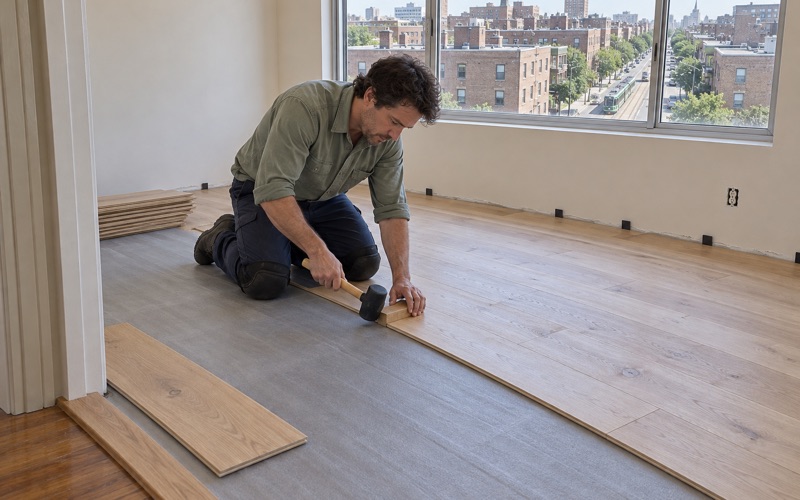
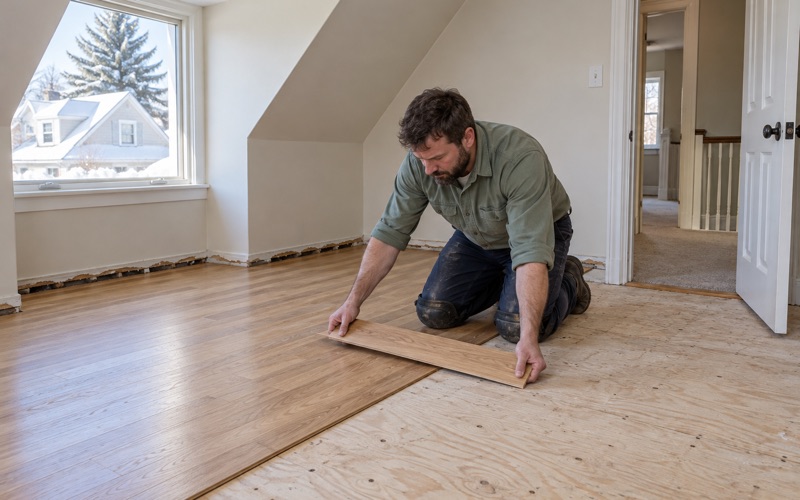
Brookline Wood Flooring has spent more than 20 years on wood flooring in East Boston and the neighborhoods around it, sanding, repairing and installing floors in rentals, owner-occupied units and new condominiums. Most of our work here happens inside buildings where other households live above, below or beside the room we are working in, and we plan every job with that in mind.
We start by reading the floor rather than quoting it blind. That means checking the species and the remaining thickness of the boards, looking for cupping, crowning or hollow spots, and taking moisture meter readings before we suggest a sanding, a screen and recoat, or new boards. The answer decides the price, the schedule and how long a unit sits empty.
Owners, landlords and tenants all call us, and each needs something different from the same floor. A landlord wants a durable finish and a firm turnover date, while an owner in a new building wants the association satisfied. A family in an older house wants the original boards kept. This page explains how those jobs play out in East Boston specifically.
Floors in East Boston’s Three- and Four-Unit Rentals
East Boston is a renters’ neighborhood. The Boston Planning Department counted 19,747 housing units in 2025, and 13,377 of the 18,266 occupied units were renter-occupied, or 73.2 percent. That tenure shapes floor work more than any other single fact, because most jobs are scheduled around a lease, a move-out or a tenant who is still living in the apartment.
The building type matters just as much. Census estimates for ZIP 02128, which we use as a labeled proxy for the neighborhood, put 7,673 of 19,193 units, or 40.0 percent, in three- or four-unit buildings. Among renter households, 42.4 percent live in buildings of that size. A typical job here is one floor of a stacked wood-frame house, not a detached single-family home.
Turning a Unit Over Between Tenants
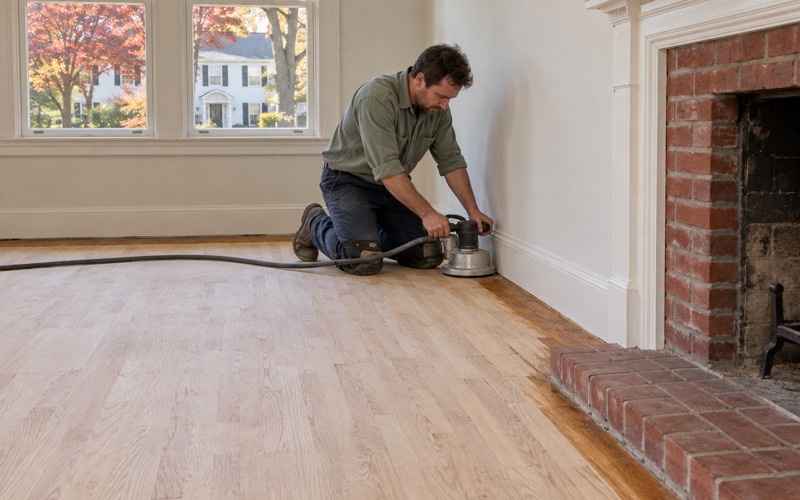
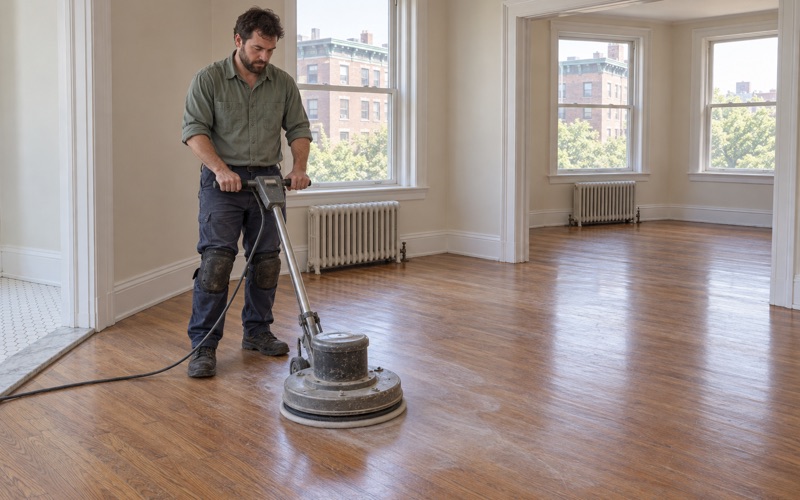
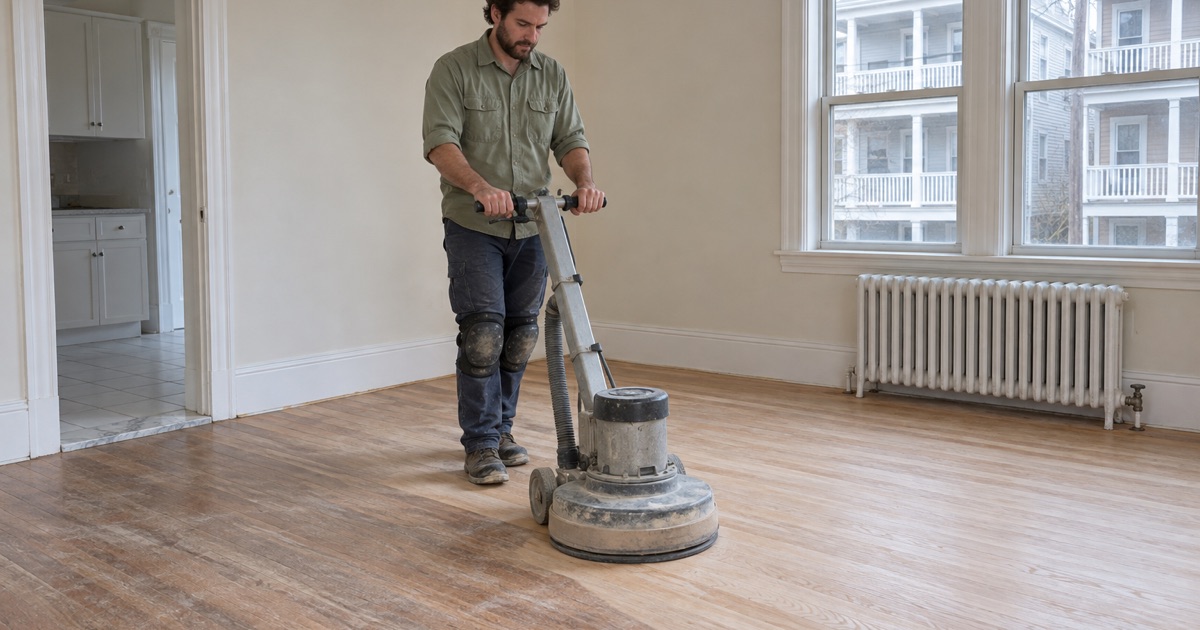
The window between leases is short, so we build the schedule backward from the move-in date. A screen and recoat can often refresh a worn but intact finish in far less time than a full sanding. Where pet urine stains, water stains or deep scratches have gone through the finish, we sand with a drum sander and orbital sander through a full grit sequence instead.
Landlords also face the City of Boston rental registration each year and the five-year rental inspection, though owner-occupied buildings of six or fewer units are exempt from the inspection. We do not answer inspection questions for the city, but a sound, cleanable floor with tight boards and intact thresholds is one less item to worry about when the unit changes hands.
Working Over and Under a Neighbor
In a three- or four-unit building, the floor we sand is someone else’s ceiling. We use dust containment and HEPA vacuums, keep machines to reasonable hours, and hand every household a written cure schedule so the tenants above and below know when the smell and the noise will end and when furniture can go back.
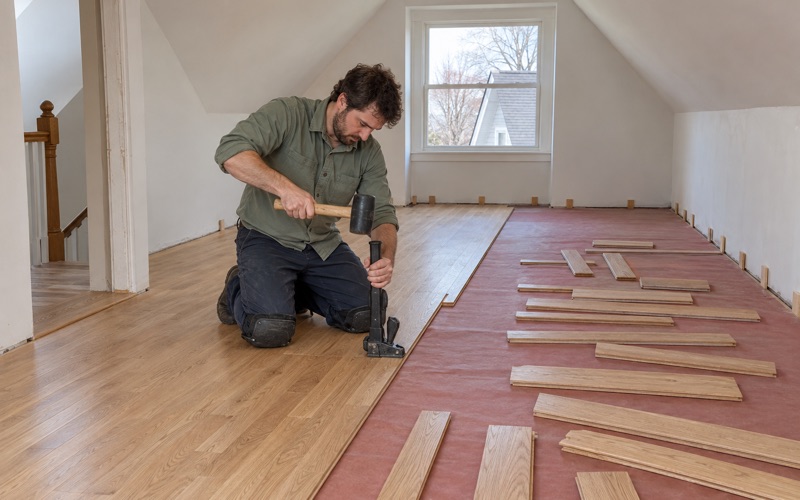
When a new floor goes in over an occupied unit, we choose the acoustic underlayment with the building’s rug-coverage or sound rules in mind before anything is ordered. A floating installation, a glue-down installation and a nail-down installation each carry sound differently, and the right one depends on the subfloor, whether plank subfloor or plywood, and what the building has agreed to.
Pre-1940 Boards and Painted Surfaces
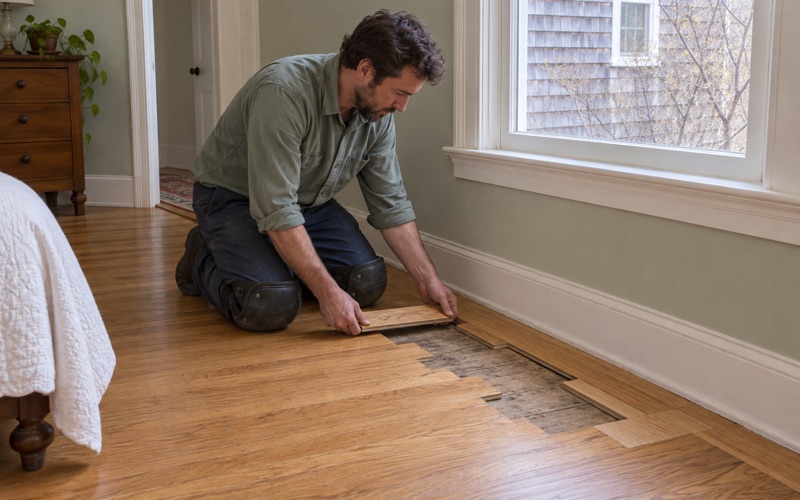
Housing age runs old here. In ZIP 02128, 10,217 units, or 53.2 percent, were built in 1939 or earlier. Many of those apartments still have their original red oak, maple or eastern white pine under later carpet, sometimes with black mastic and tack strip left behind. Original boards are worth saving, and we repair and match them with board replacement and weave-in repair rather than tearing them out.
Age also brings lead. Massachusetts runs its own lead-safe renovation rules for homes built before 1978, so we confirm the build year and check painted baseboard, quarter round and stair parts before any sanding starts. On an older rental that check comes first, before the machines are unloaded.
Looking for wood-flooring closer to Boston? See Boston Wood-Flooring.
Floors Near the Border Street and Marginal Street Flood Pathways
Much of East Boston sits on filled harbor land. Its final outline, Logan International Airport included, was created in the 1940s by connecting five of the inner harbor islands with fill. The City of Boston has studied where coastal flooding would travel across that land, and it has named specific flood pathways along the waterfront.
What the City Has Named
For the Resilient Border Street Waterfront Project, the city writes that with sea level rise anticipated around 2030, flooding during a storm would flow across waterfront properties and Border Street and spread into low-lying areas of the neighborhood. The city also describes the Marginal Street flood pathway as at risk of flooding today, with a deployable flood wall in the East Boston Greenway and elevated open space at Piers Park II.
Climate Ready East Boston Phase I, completed in 2017, covered Jeffries Point, Maverick, Central Square and Lower Eagle Hill, and Phase II followed in 2022. We point to this planning so owners near the water understand why we ask about water exposure. We cannot tell anyone how their own building is mapped, and we never guess at it.
Reading a Floor After Water Gets In
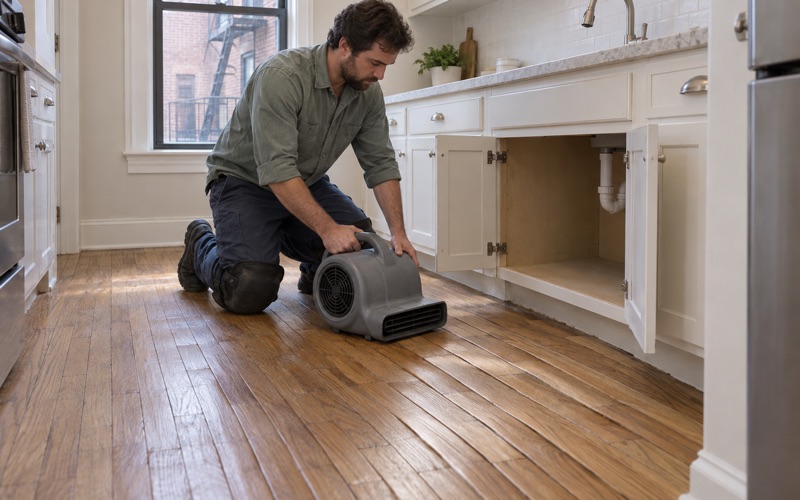
Water does not only come from the harbor. A leak under a steam radiator or from an upstairs unit is far more common in a stacked building, and it produces the same signs: cupping, crowning, buckling and dark water stains along the board edges. We find the source first, then dry the boards and read them with a moisture meter before deciding what to replace.
Many floors that look ruined come back once they are dry. Solid hardwood that has cupped can often flatten as moisture leaves, and a sanding after that recovers a level surface. Replacing boards before the readings settle risks installing new wood over a subfloor that is still wet, which simply moves the problem into the new floor.
Documenting Damage for the Adjuster
When a claim is involved, we document the damage room by room, with photos, moisture readings and the extent of affected boards, so the adjuster sees what we saw. That record also helps a landlord and a tenant agree on what happened in a unit and what the repair actually covered.
Newer Buildings and Eagle Hill’s 19th-Century Houses
East Boston’s housing is split between very old and quite new. Alongside the pre-1940 stock, 16.3 percent of units in ZIP 02128, 3,123 of them, were built in 2010 or later. The floors in those two groups call for different work, and we treat each on its own terms rather than applying one method across the neighborhood.
Buildings Completed Since 2010
Many newer condominiums carry prefinished engineered flooring with a plywood core. Before we promise a sanding, we measure the engineered wear layer, because a thin veneer may take one light pass or none at all. Where sanding is not safe, a screen and recoat or targeted board replacement is the honest recommendation.
Newer buildings also tend to have condominium associations with written flooring rules. Before a unit’s floor is scheduled, we confirm those rules, the permitted work hours and the elevator booking with the manager, and we match the underlayment to any sound requirement. That keeps the job from stopping halfway because a rule was missed.
Eagle Hill’s Wood-Frame Houses
The Eagle Hill Historic District, added to the National Register on February 26, 1998, is roughly bounded by Meridian, Princeton and White streets at Prescott Square. It was developed roughly 1834 to 1900, with Italianate, Second Empire and earlier Greek Revival houses, mostly two to three stories of single- and multiple-family wood-frame housing set narrow end to the street.
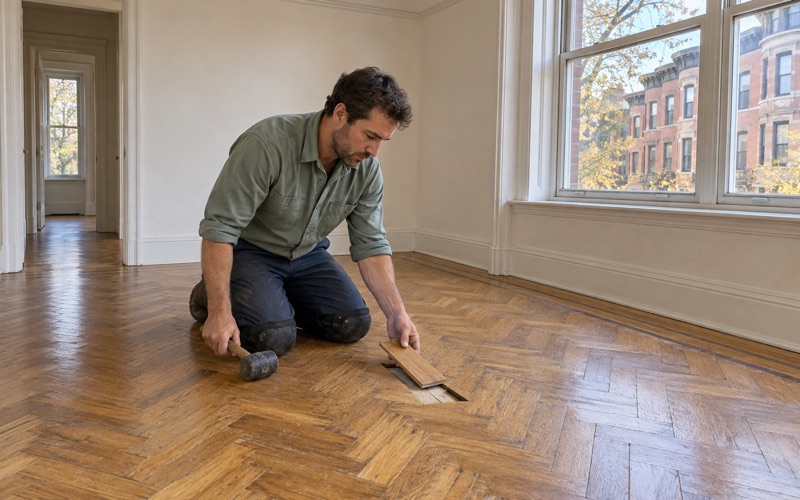
Floors in houses of that age can be wide plank pine, heart pine or oak, laid tongue and groove on floor joists that have carried them for more than a century. We re-glue and refinish prewar parquet and herringbone piece by piece instead of covering it, and we patch old boards with matched wood rather than replacing a room to hide a few damaged pieces.
Jeffries Point, Maverick and Orient Heights
Jeffries Point was the earliest-settled part of East Boston, and like Maverick it falls within the Climate Ready planning area. Orient Heights, Day Square and Central Square round out the neighborhood’s mix of housing. In older boards anywhere here, we check for powderpost beetle and carpenter ant damage before committing to a refinish plan.
Planning a Floor Project in East Boston
Most East Boston jobs follow the same sequence: an inspection, a written scope, a schedule built around the household or the lease, and a cure period before furniture returns. The details below are the ones that most often change the plan once we are inside the unit.
Seasons, Acclimation and Winter Gaps
Homes heated by steam radiators dry out through the heating season, and board gapping, often called winter gaps, opens and closes with the humidity. We treat seasonal gaps as normal wood movement, not a defect, and we avoid packing them with wood filler that will crack out. New boards acclimate in the unit before installation, and we leave the correct expansion gap at walls and thresholds.
Finishes That Fit Massachusetts Rules
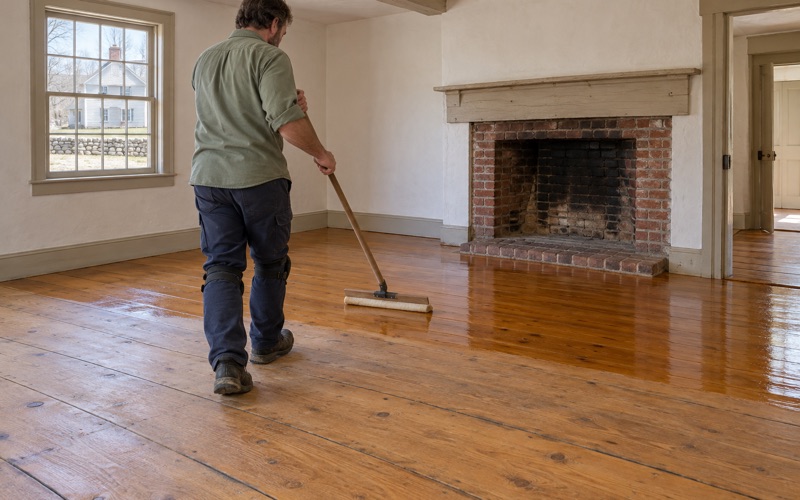
Massachusetts limits VOC content in wood coatings more tightly than the federal rules do, and we choose finishes that fit those limits. Waterborne polyurethane dries clear and cures quickly, oil-modified polyurethane warms the tone of red oak and white oak, and hardwax oil suits owners who prefer spot repair. We go over sheen level, floor stain and water popping before any color goes down.
Stairs, Trim and the Cure Schedule
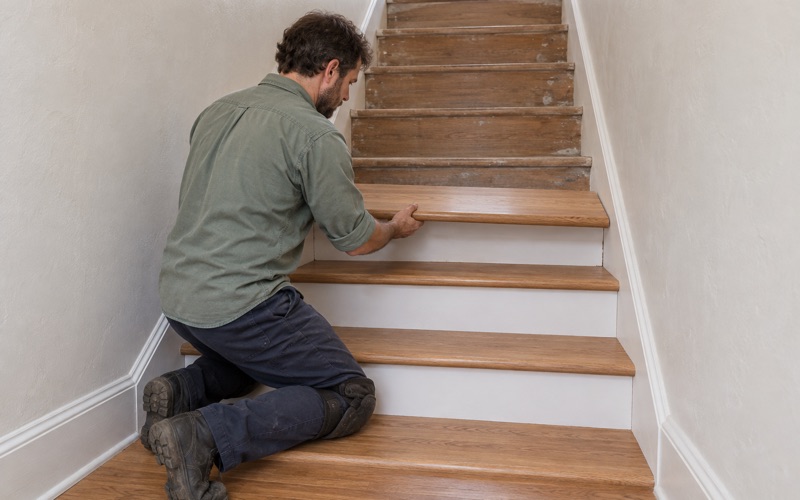
Stairs are quoted by the tread and riser, not buried in a square-foot price, because each stair tread, riser and stair nosing is handled separately. Reducers, thresholds, quarter round and baseboard are part of the written scope. Every job ends with a written cure schedule, so tenants, owners and neighbors know when the rooms can be walked on, when rugs can go down and when the unit is ready.
- 20+ Years on Wood Floors
- Free In-Home Estimates
- Dust-Contained Sanding