Brookline Wood Flooring takes on wood-flooring in Everett with more than 20 years in the trade, and the jobs here tend to share a shape. A unit empties, the owner has a short window before the next lease, and the floors need to go from worn to ready without holding up everything else. We plan around that window from the very first visit.
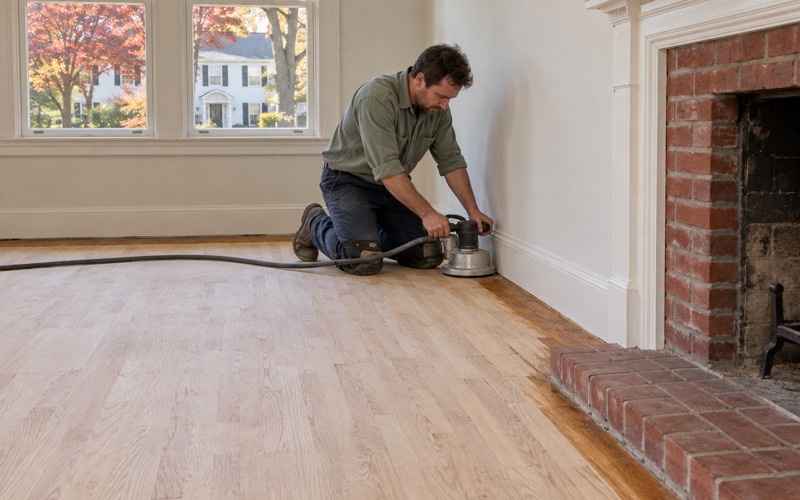
Most of our work in Everett is refinishing, board repair and the occasional new floor laid over an old subfloor. We sand, fill, stain and finish solid hardwood, measure the wear layer on an engineered floor before promising a sanding, and price stairs by the tread and riser. Every job comes with a written cure schedule, so an owner knows the day a unit can be shown.
Owners who live downstairs and rent the floors above get the same care as a single household. We keep dust contained with HEPA vacuums tied to the sanders, work within hours a shared building can live with, and say plainly what an old floor can take. The sections below cover what changes about the work in this city.
Floors in Everett’s Three- and Four-Unit Buildings
Everett is a city of small multi-unit houses. Of its 18,827 housing units, 9,888, or 52.5 percent, are in buildings with two, three or four units, according to the Census Bureau’s 2024 five-year American Community Survey. Buildings with three or four units are the single largest type, holding 5,049 units, or 26.8 percent of the total.
That count shapes almost every floor job we quote here. A unit in a three- or four-unit house shares walls, stairs and often a ceiling with its neighbors, so noise, dust and timing matter as much as the finish. We plan the work as one unit inside a building, not as a stand-alone house.
Working Above and Below Neighbors
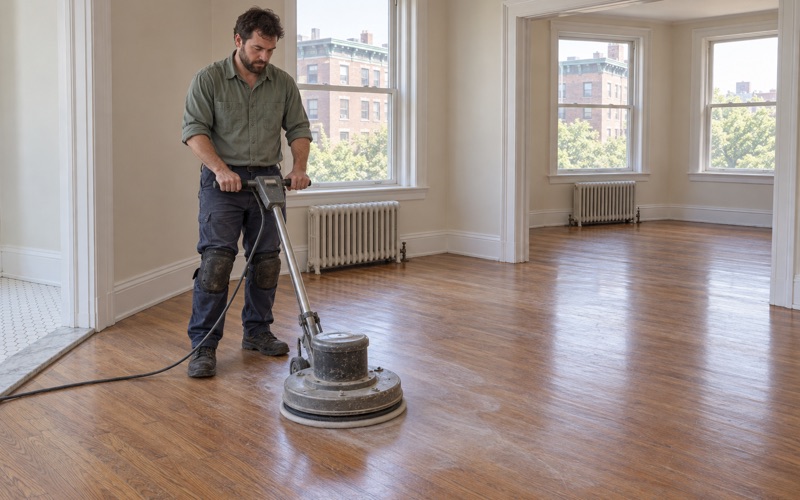
When a floor sits over another household, we sand with that household in mind. Drum sander and edger passes run during hours the building agrees to, and the loudest work is grouped rather than spread across several days. We tell the people on other floors what to expect before the first machine is carried up the stairs.
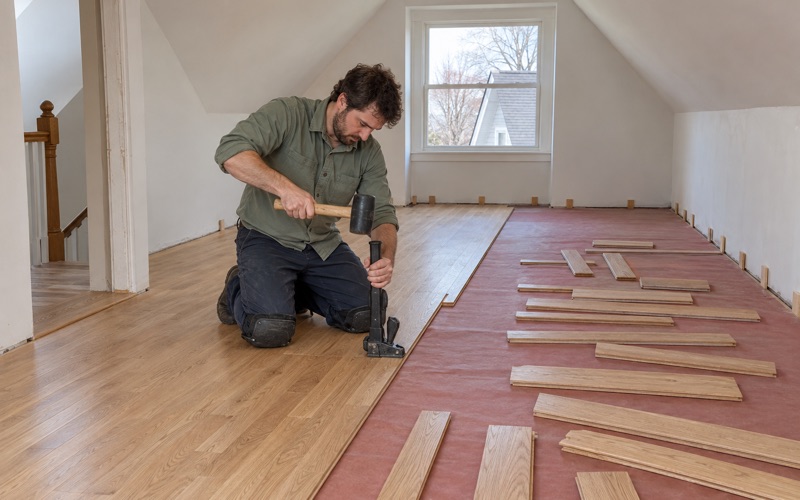
If a floor is being replaced rather than refinished, underlayment is chosen with the building’s own rug-coverage or sound expectations in mind. Acoustic underlayment under a floating or glue-down floor changes how footsteps carry to the unit below. We talk through those tradeoffs before an order is placed, not after the boards arrive.
Shared Stairs and Common Hallways
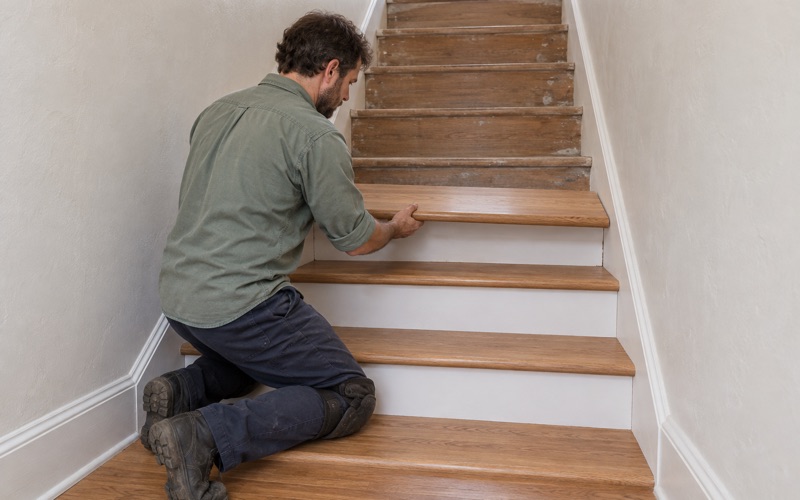
Stair treads in a multi-unit house take traffic from every household in the building, and they often wear faster than any floor inside a unit. We quote stairs by the tread and riser, because a flight with worn nosing and loose risers is a different job from an open room. Common stairs stay usable while we work, one side at a time where the width allows.
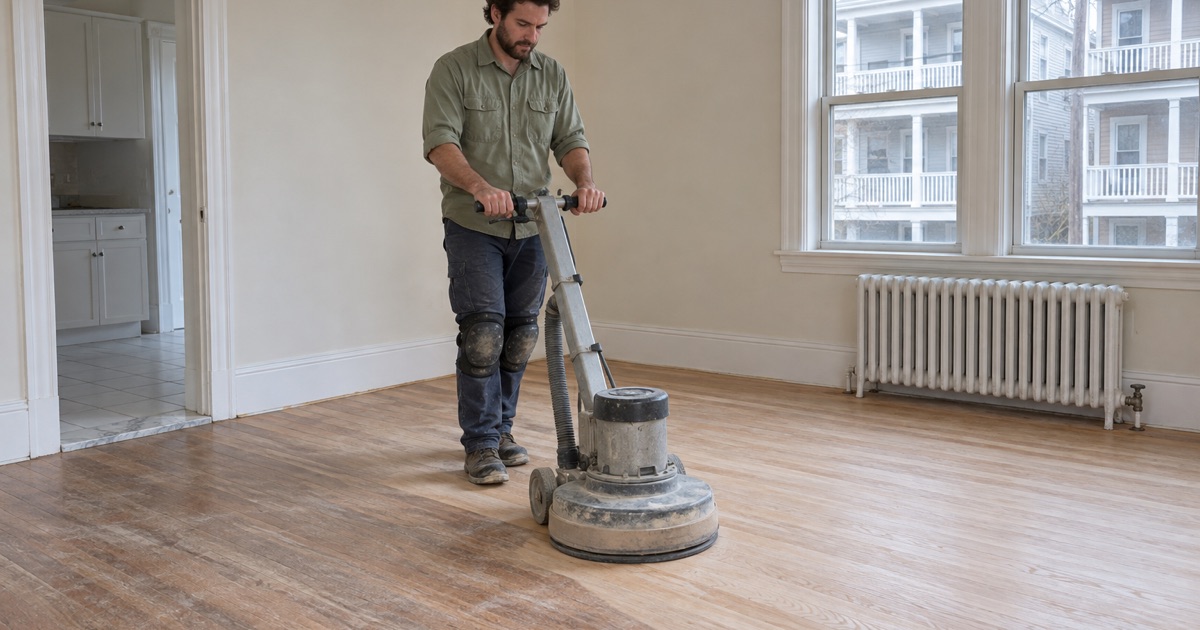
Dust containment matters more on a shared stairwell than anywhere else in the house. We seal doorways, run HEPA vacuums off the sanders and clean the hallway at the end of each day. Nobody coming home from work should track fresh sanding dust into their own apartment.
Finishes That Suit a Shared Building
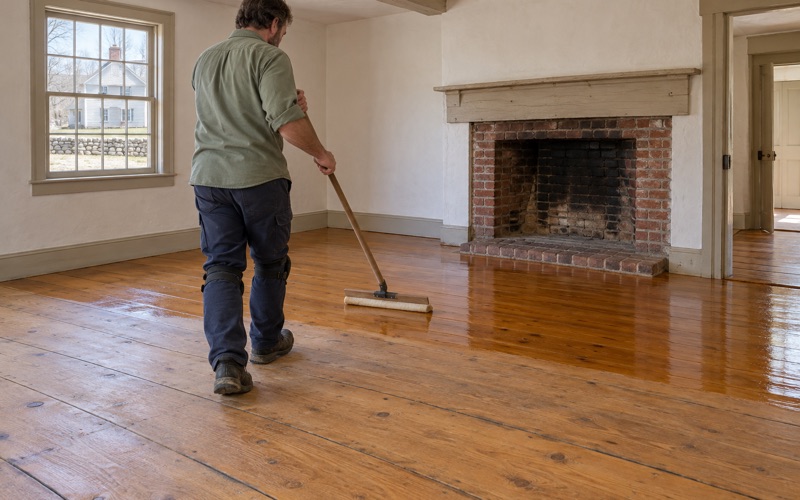
Finish choice in a shared building comes down to odor, cure time and how soon people can walk on the floor. Waterborne polyurethane dries faster and carries less smell through a stairwell than an oil-modified finish, which matters when a neighbor’s door is just across the landing. We pick finishes that fit the Massachusetts limits on VOC content in wood coatings, which are tighter than the federal rules.
Sheen level is the other choice owners make. Satin hides the scuffs of move-ins and move-outs better than gloss, which shows every scratch from a dragged dresser. For most rental floors we suggest satin with enough coats to last a few tenancies before a screen and recoat is due.
Looking for wood-flooring closer to Wellesley? See Wood-Flooring in Wellesley.
Refinishing a Rental Unit Between Tenants
Renting is the norm here. The same survey counts 17,466 occupied units, and 10,967 of them, 62.8 percent, are rented. Of those renter households, 4,186, or 38.2 percent, live in a three- or four-unit building, more than in any other building type. When we are called to an Everett floor, it is often a vacant apartment between one lease and the next.
The Certificate of Habitability
Everett’s Certificate of Habitability ordinance says the owner must request a legal use of status from the Building Department before renting a vacant dwelling unit. Occupying a unit without a certificate of fitness from the Health Department counts as a separate offense for each day it happens. The inspection covers the unit and all common areas, and a certificate is not issued until every violation is corrected.
Floor work has to fit around that step, and we make no promise about what the inspection reviews. What we can do is finish on a date you choose, so the unit is clean and cured before you book the inspection and before the next tenant arrives. Questions about the certificate itself belong with the city’s Inspectional Services Department at City Hall, 484 Broadway.
Planning the Turnover Window
A refinish on a vacant apartment runs as sanding, staining if chosen, and finish coats, followed by cure time before furniture goes back. We put that schedule in writing with the quote, including the day light foot traffic is fine and the day rugs can go down. Owners use it to line up painters, cleaners and the inspection in the right order.
Painting before the final coat, not after, saves a floor from drips and ladder scuffs. We usually suggest the painter finishes walls and trim first, and then we sand or screen and apply the last coats. Baseboard and quarter round come off only when a board replacement or a new floor calls for it.
Pet Stains, Water Stains and Worn Traffic Lanes
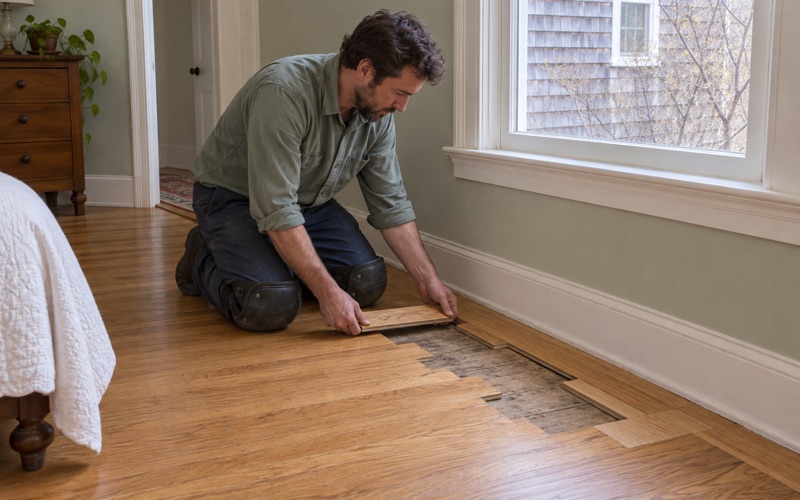
Vacant units show what the last tenancy did to a floor. Pet urine stains and water stains near radiators often run deeper than sanding can reach, and those boards come out and are woven in with matching stock. Worn traffic lanes between a kitchen and a door usually sand out, as long as the floor has enough thickness left.
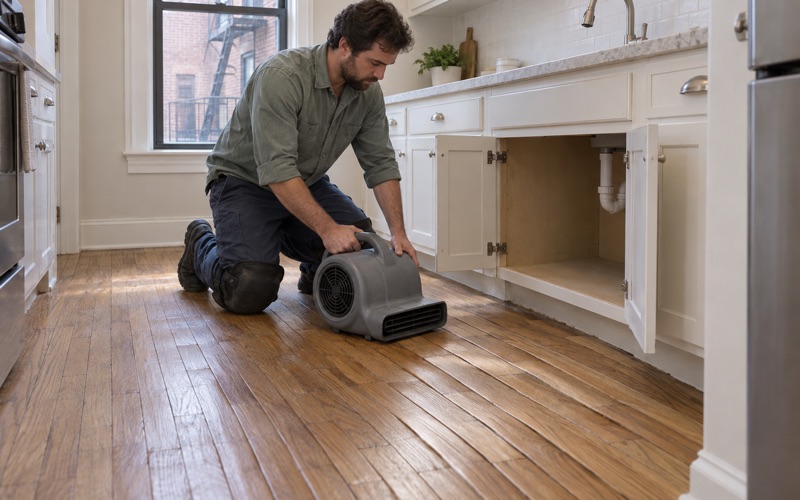
When a stain comes from a leak rather than a spill, we find the source first. A slow drip under a steam radiator or from an upstairs bathroom keeps soaking new boards, so we dry the area and read it with a moisture meter before replacing anything. If an insurance adjuster is involved, the water damage is documented room by room.
Two-Family Houses and Prewar Floors
The two-unit building is the next largest type in Everett, with 4,839 units. Households in those buildings split nearly evenly, 2,046 owners and 2,257 renters, so many two-families have an owner on one floor and a tenant on the other. That mix changes how a floor job is sequenced.
Owner Floor First or Tenant Floor First
When an owner lives in one unit of a two-family and rents the other, we often refinish the rented floor during a vacancy and the owner’s floor on a separate schedule. Doing both at once saves setup, but it can leave a household with nowhere to walk for several days. We lay out both options and the price difference before you choose.
What a Prewar Floor Can Take
Everett’s housing is old. The survey counts 10,035 units, 53.3 percent, built in 1939 or earlier. Floors of that age may have been sanded several times already, and some have little wood left above the tongue and groove.
We check thickness at a floor register or a removed threshold before recommending a full sanding. If a floor is thin, a screen and recoat or a gentler grit sequence with an orbital sander may be the right call instead of a drum sander. Where the boards are original oak, maple or pine, we repair and match them rather than tear them out.
Parquet, Wide Pine and Old Repairs
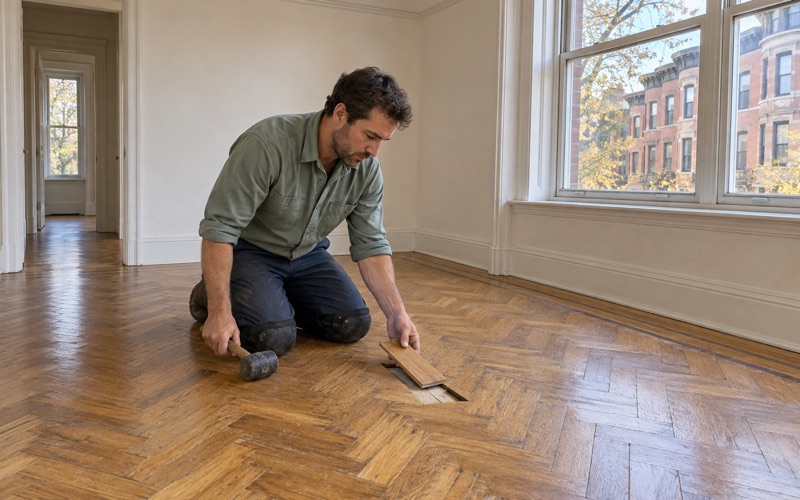
Older floors hidden under carpet sometimes turn out to be parquet, with loose pieces and black mastic along the edges. We re-glue parquet piece by piece and refinish it instead of covering it over. Old mastic is not something we sand through, since some older adhesives need special handling first.
Tack strip holes along the walls, patches from moved radiators and mismatched boards from past repairs are common too. We fill, weave in or replace boards so each repair reads as part of the floor. Cupping, crowning and hollow spots are diagnosed before sanding, because sanding a cupped floor flat can leave it crowned once the moisture settles.
Lead-Safe Work in Older Units
With so much of the city’s housing prewar, we check the build year and any painted surfaces before sanding starts. Massachusetts runs its own lead-safe renovation rules for homes built before 1978, and old paint on stair risers, baseboards and floor edges gets attention before a sander touches it. In a rental, that care matters for the next tenant as much as for the owner.
Planning a Floor Project in Everett
Everett separated from Malden in 1870 and became a city in 1892, and neighborhoods such as Glendale, Woodlawn, the Village and the Line hold much of the housing described above. We work across all of them, in single units and whole buildings. A few practical steps make any job here go faster.
Seasons and Board Gaps
Everett sits in the National Weather Service’s Southeast Middlesex forecast zone, MAZ014, and its floors move with the seasons like any in the region. Winter gaps open when steam radiators dry the air, and they close again in humid summer weather. We read the boards with a moisture meter and advise against filling seasonal gaps, which can crack or push up when the wood swells.
New flooring gets acclimation time in the unit before installation, with an expansion gap left at the walls. That step matters in a building where one unit is kept warmer than another. Skipping it is a common cause of buckling a season later.
Getting a Quote
A useful quote starts with a visit. We measure rooms, count stair treads and risers, check wear layer or board thickness and look for moisture, then send a written price with the schedule attached. For an owner managing several units, we can quote them together and stagger the work around each lease date.
Tell us whether the unit is vacant, occupied or owner-occupied, and whether other households share the stairs. Those answers shape the schedule more than square footage does. From there, we plan the work so the floor is finished and cured when you need it.
- 20+ Years on Wood Floors
- Free In-Home Estimates
- Dust-Contained Sanding