Brookline Wood Flooring brings more than 20 years of hands-on work to wood flooring in Forest Hills, from sanding and refinishing to board repair, stair rebuilding and new installation. No two floors age the same way, so we start every job by learning what the floor is made of and what sits beneath it before we quote a price.
Before any sanding begins, we confirm the year the house was built and look for painted surfaces, since Massachusetts runs its own lead-safe renovation rules for homes built before 1978. We also measure the wear layer on any engineered floor before promising that it can be sanded, because a thin top layer can only take so much.
Every project comes with dust containment and a written cure schedule, so a household knows which rooms are off limits and for how long. Finishes are chosen to meet the Massachusetts limits on VOC content in wood coatings, which are stricter than the federal ones. You also get a firm start date and a realistic finish date before we begin.
Woodbourne’s Cottages, Bungalows and Four-Squares
Woodbourne is where we most often begin by asking what can be saved. The Boston Dwelling House Company, organized in 1911, developed it as garden-city housing on a curving street plan, and the Woodbourne Historic District now covers about 30 acres along Walk Hill, Bourne, Florian and Wachusett streets and Goodway Road.
The district was listed on the National Register on June 4, 1999, and most of its houses were built between 1898 and 1945, in bungalow, four-square and cape forms, with architects Kilham and Hopkins and Charles Collens among its designers. There is no Boston Landmarks Commission local district here, and what the listing tells us is how much original material is still worth keeping.
Repairing Original Boards Instead of Replacing Them
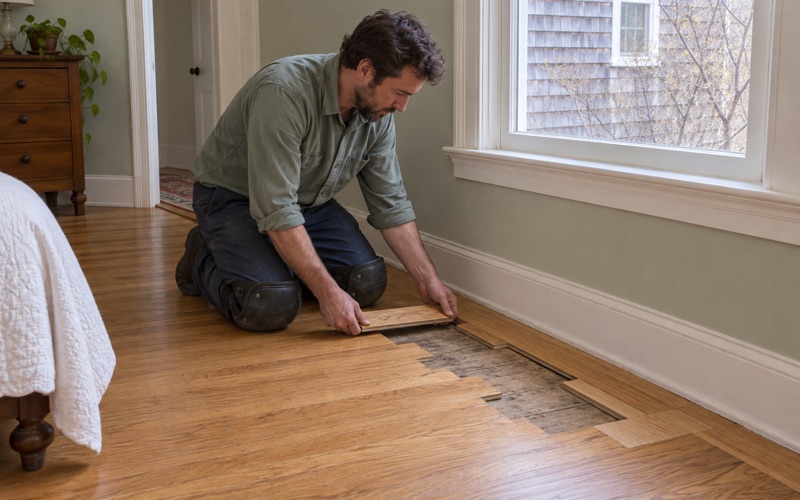
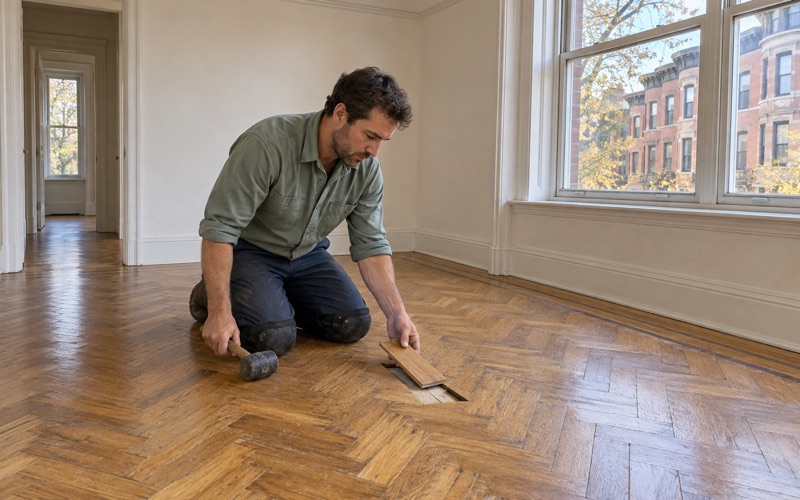
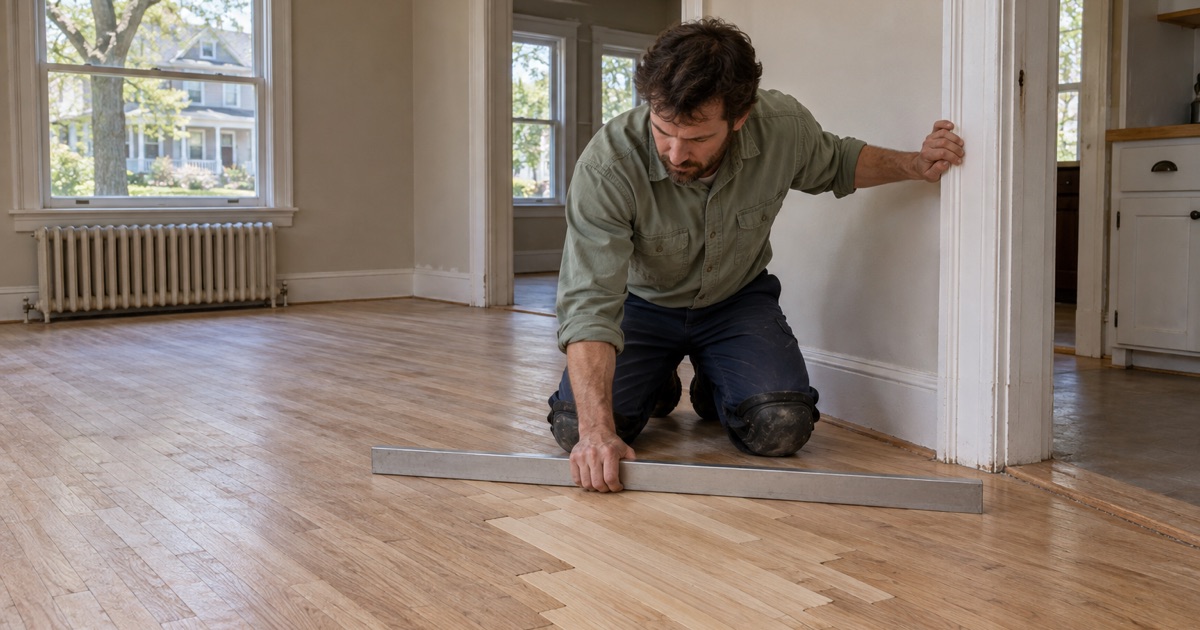
Floors in houses of this age are often red oak, white oak, maple or eastern white pine, and a damaged run rarely means the whole room has to go. We repair and match original boards with a weave-in repair, pulling the damaged pieces and toothing in replacements so the new boards stagger into the old tongue and groove pattern.
Matching matters as much as fitting. We look at species, board width, grain and whether the original was quartersawn, then source reclaimed or new stock that will take the same floor stain as its neighbors, so the patch disappears once the whole room is sanded and finished together.
Lead Checks Before the Sanders Start
With construction there mostly finished by 1945, the lead check comes first on every Woodbourne job. We confirm the build year and look closely at painted baseboard, quarter round, thresholds and stair parts before a drum sander or orbital sander touches the floor.
Painted trim that sits against the flooring gets planned around rather than sanded through, and the rest of the job runs under dust containment with a HEPA vacuum on the sanding equipment and in the cleanup. That same containment is what keeps fine oak dust out of the rest of the house during an ordinary refinish.
Stairs Priced by the Tread and Riser
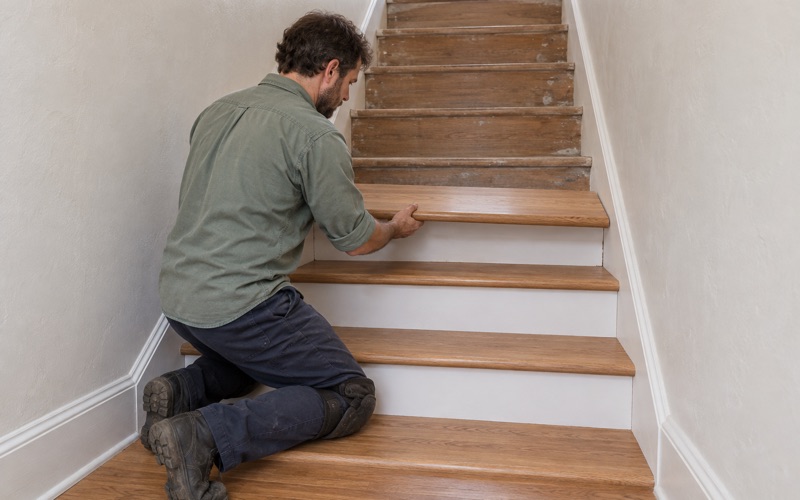
Bungalows and four-squares often have a main stair that has taken most of the house’s foot traffic for decades. We quote stairs by the tread and riser rather than folding them into a square-foot price, which lets you see what a worn stair nosing or a split tread actually costs to put right.
Looking for wood-flooring closer to West Roxbury? See West Roxbury Wood-Flooring.
New Apartments and Townhouses by Forest Hills Station
Right around the station, some of the housing is brand new. The Casey Overpass, built in the 1950s, came down in 2015, and new buildings have since risen near Forest Hills station, the southern terminus of the Orange Line and a stop on the Needham Line.
Parcel U, approved on December 19, 2014, added 124 homes on MBTA land in three phases from 2015 to 2017: row houses along Hyde Park Avenue and a 65-unit, five-story building at Ukraine Way. Nearby, The Commons at Forest Hills Station brought about 280 apartments to 3593-3615 Washington Street, the former Hughes Oil site.
Building Rules Confirmed Before We Schedule
Every association and management office writes its own rules, and they differ from building to building. Before a unit’s floor goes on the calendar, we confirm the flooring rules, the allowed work hours and the elevator booking, and we get those requirements in writing rather than assuming.
Owners of condominium units work within their association’s documents under M.G.L. c.183A, and those documents are where rug-coverage and sound rules usually live. Reading them first keeps a project from stalling halfway through with a notice on the door.
Underlayment When a Floor Sits Over a Neighbor
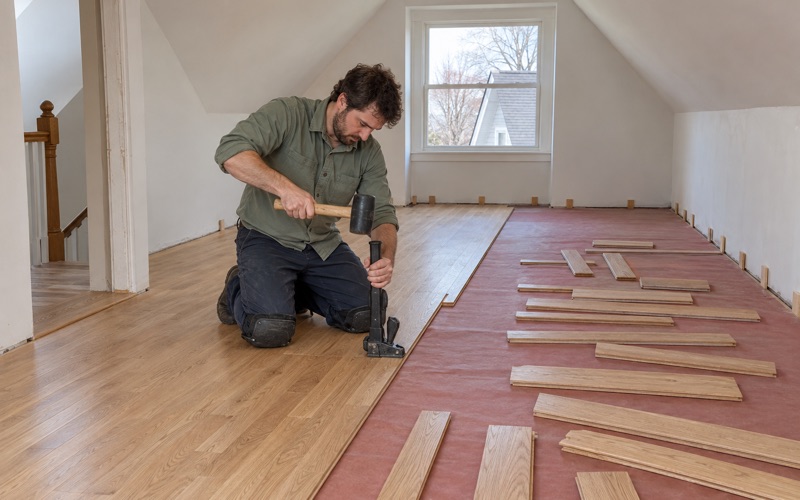
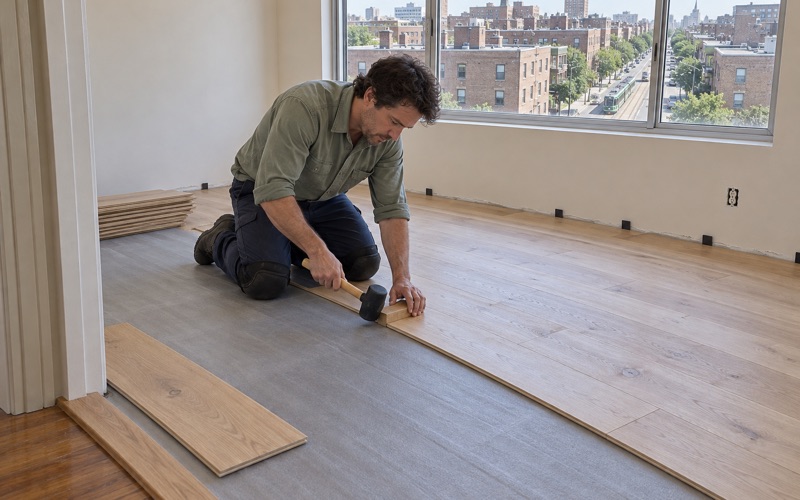
When a new floor goes in above another unit, we choose the acoustic underlayment with the building’s rug-coverage or sound rules in mind, not by habit. The right choice depends on whether the floor will be a glue-down installation, a nail-down installation over a plywood subfloor, or a floating installation.
We document what the association requires and match the product to it, then leave the paperwork with you. If the rules change later or a neighbor asks, you have a record of what was installed under the floor.
Engineered Floors and the Wear Layer
If your unit has engineered flooring, the question is how much wood sits above the plywood core. We measure the engineered wear layer before promising a sanding, and when the layer is too thin, a screen and recoat or a board replacement is the honest answer instead.
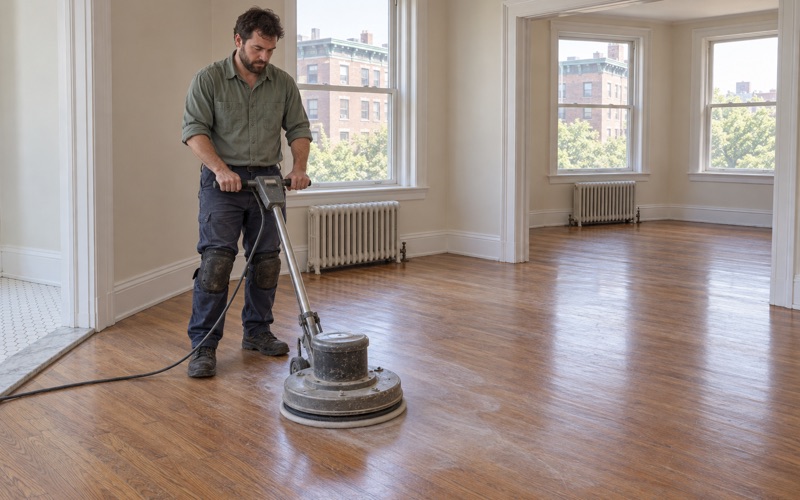
A screen and recoat uses a buffer to abrade the existing finish and lays down fresh coats without cutting into the wood. It restores sheen and protection on a floor that is dull but not damaged, and it is usually the lighter, quicker option for an occupied unit.
Single-Family Streets and Station-Side Triple-Deckers
Beyond the new buildings, the older housing splits along a clear line. Single-family homes predominate south of Walk Hill Street, while triple-deckers dominate near the train station, and the two call for different planning even when the floor itself is the same oak. The neighborhood’s styles run from Queen Anne and Victorian to Colonial Revival, Tudor Revival, Cape Cod and Arts and Crafts.
Whole-House Refinishing South of Walk Hill Street
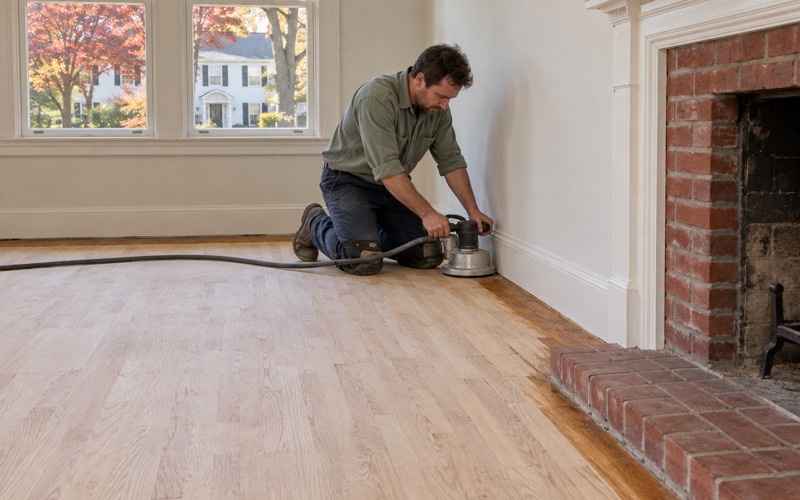
In a single-family house, we can usually sand and finish several rooms in one pass, working through a full grit sequence with the drum sander on the field and an edger and orbital sander at the walls. Water popping before stain opens the grain on oak so a darker color takes evenly.
The written cure schedule matters most here, because a family is often living around the work. It spells out when each room can take socks, then furniture, then rugs, so you can plan meals, pets and sleep around the job instead of guessing.
Triple-Decker Floors and Rental Timing
Triple-deckers near the station stack one flat on another, so a sanding on the second floor is heard and sometimes smelled on the first and third. We coordinate timing with every household in the building, and our finish choices under the state VOC limits help keep odor down for neighbors who stay home.
Owners who rent units should know that Boston requires annual rental registration, due July 1, along with a five-year rental inspection cycle, though owner-occupied buildings of six or fewer units are exempt from inspection. When a flat turns over between tenants, that window is often the best time to refinish, and we can plan the schedule around the move-out date.
Leaks From the Unit Above
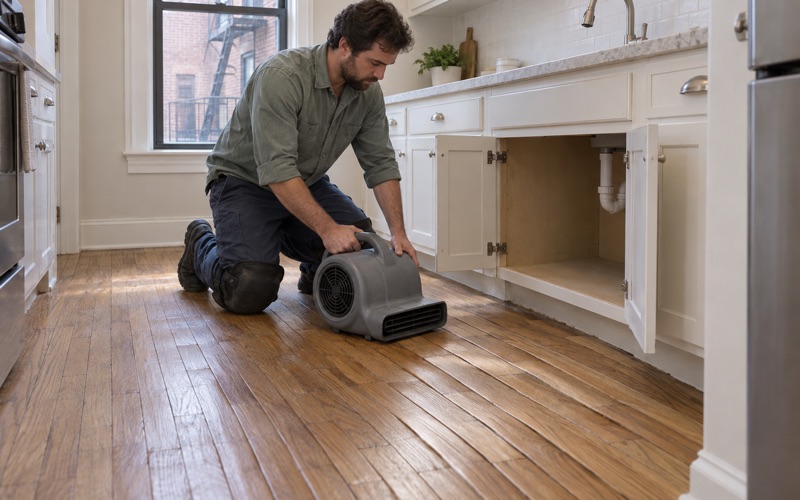
In a stacked building, water damage often starts somewhere other than where it shows. We find the leak, whether it is under a steam radiator or coming from the unit above, then dry the boards and read them with a moisture meter before anything is replaced.
Wet boards show it through cupping, crowning or outright buckling, and some of them flatten once the moisture is out. For an insurance claim, we document the water-damaged floor room by room for the adjuster, with photos and meter readings, so the claim reflects what actually happened to each space.
Planning a Floor Project in Forest Hills
Forest Hills sits in National Weather Service forecast zone MAZ015, Suffolk. Seasonal swings in indoor humidity are why wood floors open winter gaps during the heating season and close them again in summer, and they shape when we schedule installation and how long boards acclimate.
Acclimation and Moisture Readings
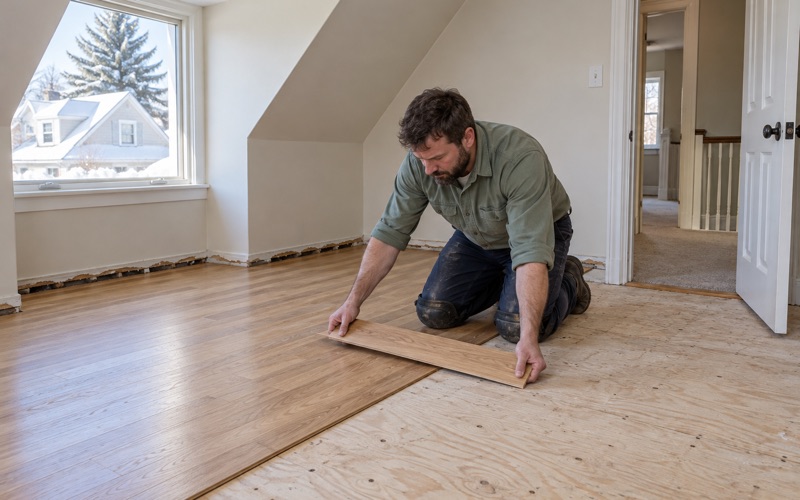
New boards go into the house ahead of installation so acclimation happens in the rooms they will live in. We check both the flooring and the subfloor with a moisture meter, and in older houses with a plank subfloor we look for hollow spots and loose boards over the floor joists before new flooring goes down.
We leave a proper expansion gap at the walls and hide it under baseboard or quarter round, following the NWFA Installation Guidelines. A floor installed tight to the walls is the one that buckles in a humid summer, and boards laid before they acclimate are the ones that open wide gaps once the heat comes on.
Parquet, Stains and Old-Floor Problems
If your house has prewar parquet or herringbone, we re-glue loose pieces and refinish the floor piece by piece rather than covering it over. When carpet is coming up, we pull the tack strip, fill the nail holes with wood filler matched to the species, and check what the old padding left behind.
Pet urine stains and old water stains often go deeper than a sanding can reach, and those boards get replaced and matched. We also look for signs of powderpost beetle or carpenter ants in older floors and subfloors, since damaged wood needs to come out before a new finish goes on.
Choosing a Finish and a Sheen
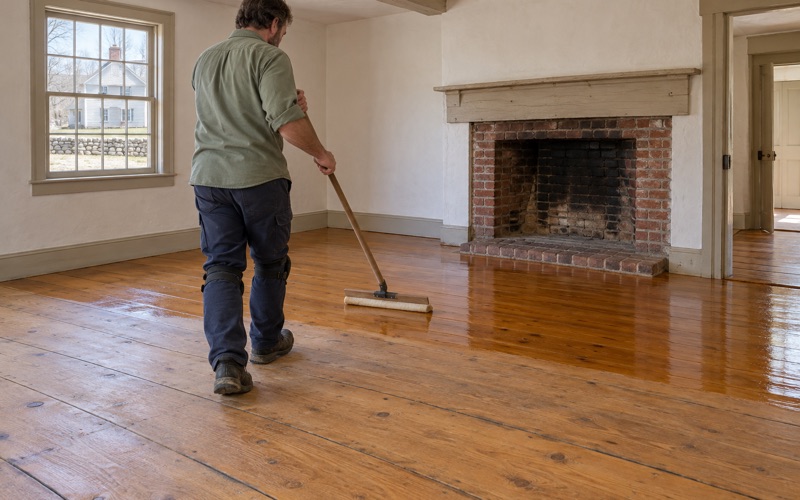
For site-finished floors, we walk you through waterborne polyurethane, oil-modified polyurethane and hardwax oil, and the sheen level that suits the room. A matte or satin sheen hides everyday scuffs on a busy stair or hallway, while a hardwax oil suits owners who would rather spot-repair than recoat.
Species, measured by Janka hardness, also affects how a finished floor wears: a softer eastern white pine or wide plank pine floor will show dents that red oak, white oak or maple resist. That is part of the character of an old pine floor, and we set expectations about it before the finish goes down.
- 20+ Years on Wood Floors
- Free In-Home Estimates
- Dust-Contained Sanding