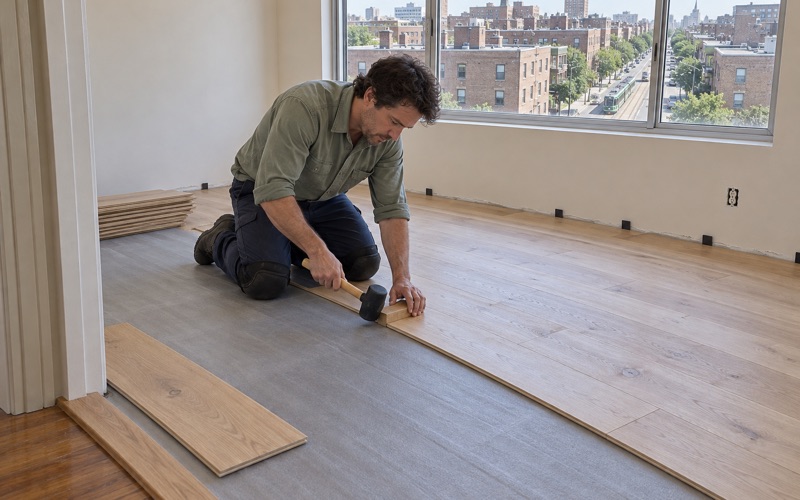
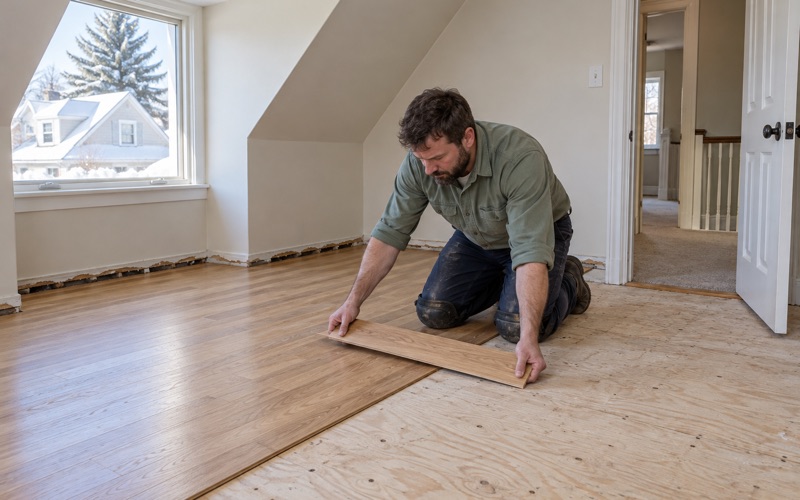
Brookline Wood Flooring handles wood-flooring in Framingham with more than 20 years of sanding, repairing and installing hardwood behind us. We refinish tired oak, patch damaged boards, rebuild stair runs and lay new solid or engineered floors in houses and apartments across the city. Every job starts with a look at the boards, the subfloor and the finish before any price is written.
Most of what we see here falls into two groups. One is the single-family house from the decades after the war, often with a short flight of stairs between levels and floors that have been covered, uncovered and refinished more than once. The other is the rental apartment that needs its floors brought back between one lease and the next, on a schedule the landlord can plan around.
The approach is the same for both. We measure what is there, including the wear layer on any engineered floor, before we promise a sanding, and we quote stairs by the tread and riser instead of folding them into a square-foot figure. Dust is contained, and every household or property manager gets a written cure schedule showing when rooms can be walked on and furnished again.
Split-Level and Ranch Floors From Framingham’s Postwar Boom
Three Decades That Built Most of the City
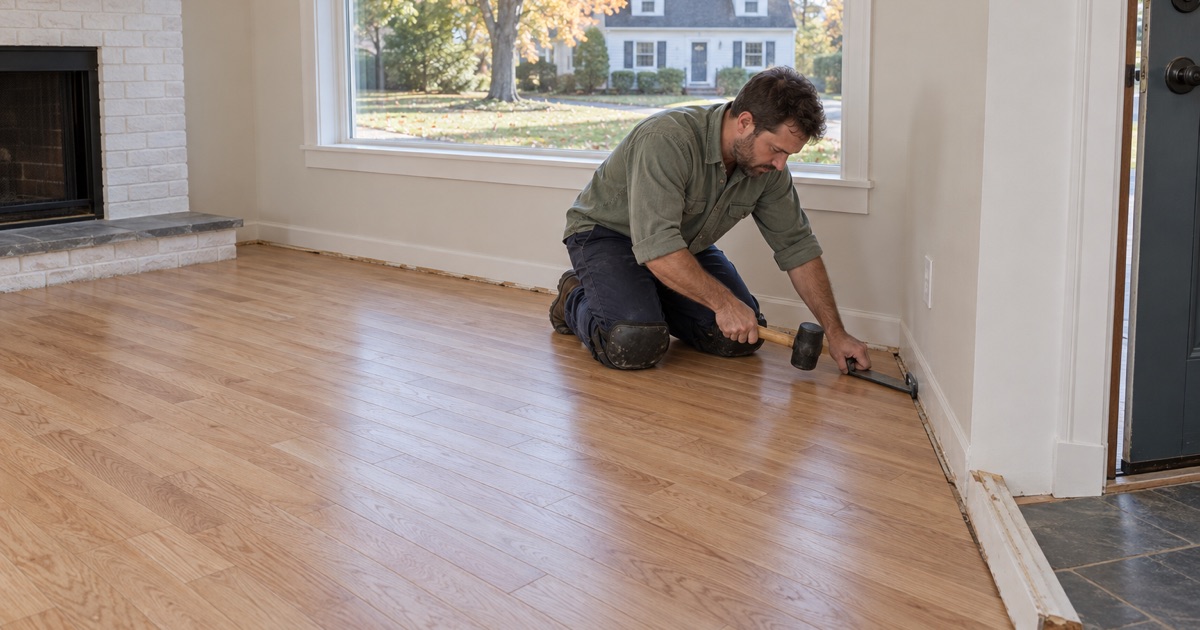
Framingham’s housing record explains the shape of our work here. ACS 2024 five-year figures count 5,402 units built in the 1950s, 5,008 in the 1960s and 4,204 in the 1970s, which together make 14,614 of the city’s 27,918 units, or 52.3 percent. More than half of the homes we could be called to were built in those three decades.
Wikipedia describes much of the housing built in that postwar stretch as split-level and ranch-style houses. That matches the layouts we plan around: long single-story runs of flooring in a ranch, and in a split-level, several short floor areas joined by half-flights. Each layout changes where we start sanding, where the transitions fall and how rooms are sequenced so the family can still move through the house.
Half-Flights, Landings and Transitions
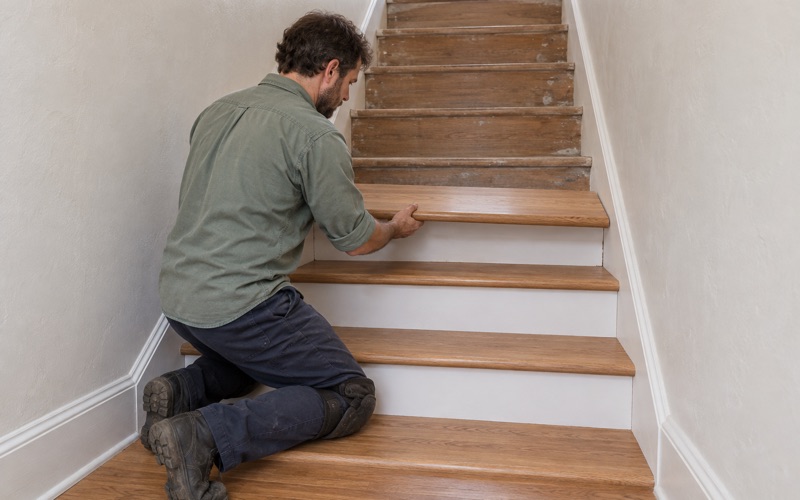
A split-level puts stairs in the middle of daily life, and those short flights take more wear than any room. Stair treads cup at the front edge, stair nosing splinters and risers carry decades of scuffs. We quote every tread and riser as its own line, because a flight of stairs takes far more hand work than an open room of the same area.
Where one level meets another, the reducer, threshold or quarter round often shows the history of the floor better than the open field does. We check whether the boards run continuous across a landing or break at a threshold, and we match the finish so that a refinished stair does not look newer than the hall it lands on. Baseboard is protected or pulled and reset as the job requires.
What Lies Under the Carpet
Many owners of 1950s through 1970s houses call us after pulling up wall-to-wall carpet and finding wood underneath. Before we promise a refinish, we look for tack strip holes, staple patterns, pet urine stains and water stains, and we check for hollow spots and loose boards over the subfloor. Some of that sands out, and some of it needs a board replacement.
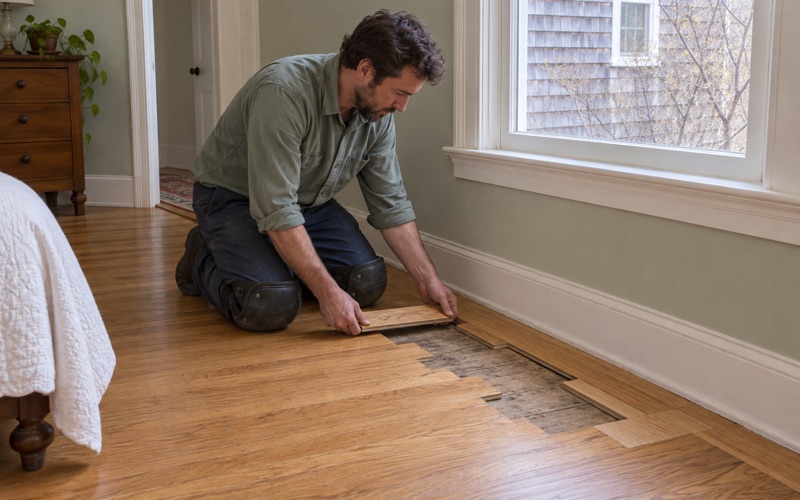
If an earlier owner glued down tile or another covering, black mastic can be left on the boards, and it has to be handled carefully rather than ground straight into the air. Where damage is local, we cut in a weave-in repair with boards matched for species, width and grain, so the patch disappears once the whole floor is sanded and finished together.
Looking for wood-flooring closer to Jamaica Plain? See Wood-Flooring in Jamaica Plain.
Refinishing Between Tenants in Framingham Apartments
A City Where Many Households Rent
Framingham has been a city only since January 1, 2018, after an April 2017 vote ended its long run as the largest town by population in Massachusetts. Of its 26,803 occupied units, 12,123 are renter-occupied, or 45.2 percent. That makes apartment turnover a steady part of our Framingham calendar, alongside the owner-occupied houses that make up the rest.
Those renters mostly live in larger buildings. Census table B25032 places 7,737 renter households, 63.8 percent, in buildings of five or more units, and 3,303 of the city’s units sit in buildings of fifty or more. A floor in those buildings is usually worked with occupied units on every side, so access, noise and dust matter as much as the finish itself.
Screen and Recoat or a Full Sand
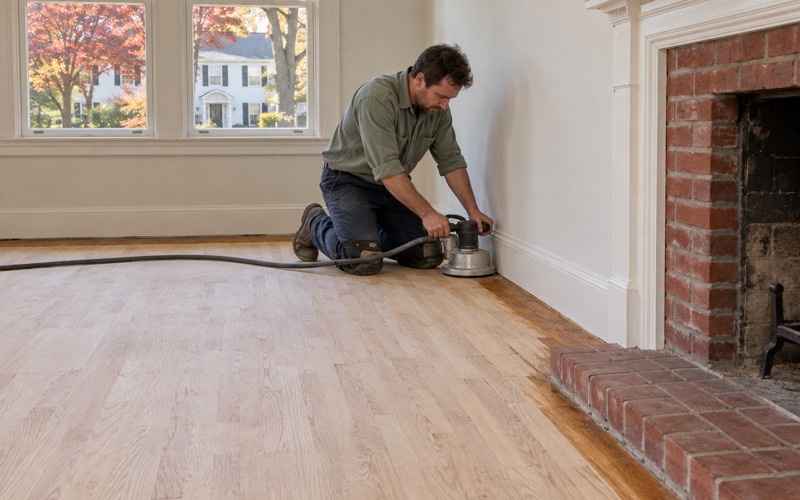
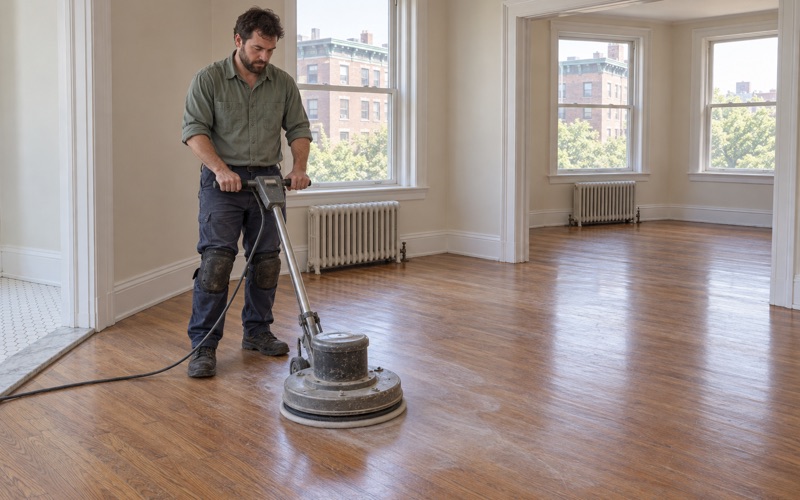
Between tenants, the question is how much the floor actually needs. If the finish is worn but the wood is sound, a screen and recoat with a buffer and a fresh coat of polyurethane can bring a unit back in a short window. If there are gray traffic lanes, deep scratches or water stains, the floor needs a full grit sequence with a drum sander and an orbital sander.
We tell the owner which one the floor needs before the unit is listed, not after the schedule slips. Dustless sanding with HEPA vacuum collection keeps the hallway and neighboring units clean, and the written cure schedule gives the manager a real date for furniture, cleaning crews and the next move-in. For an engineered floor, the wear layer measurement decides whether sanding is even an option.
Floors That Sit Over a Neighbor
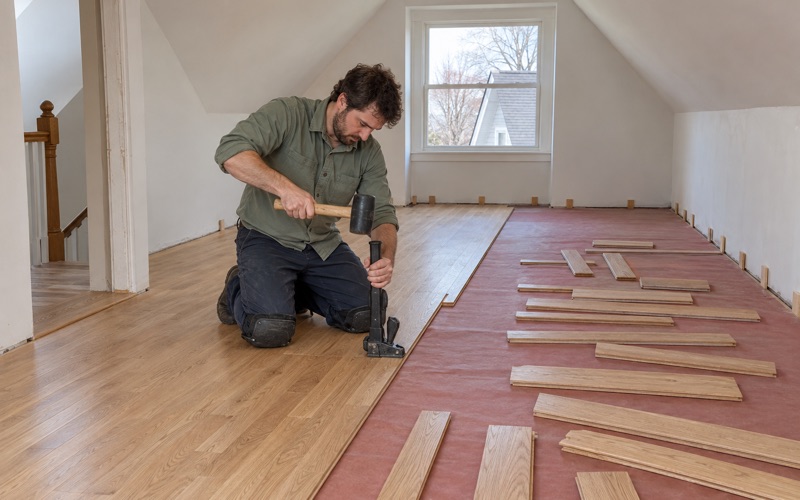
When we replace flooring in an upper-floor apartment, the underlayment is chosen with the building’s own rug-coverage or sound rules in mind, and the owner or manager supplies those rules before we order material. Acoustic underlayment under a floating installation behaves differently from a glue-down installation or a nail-down installation over plywood, and the choice follows the building rather than a default.
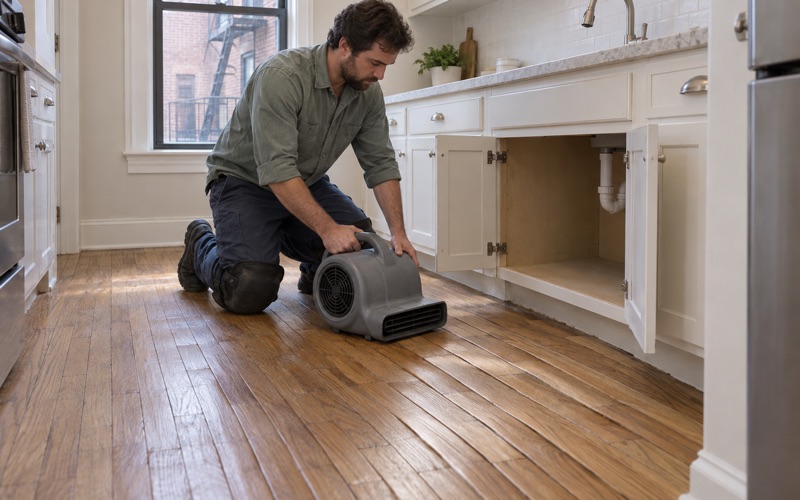
Leaks are the other upstairs problem. When water comes through from a unit above or seeps under a steam radiator, we find the source, dry the boards and read them with a moisture meter before anything is torn out. Cupping and crowning often settle once the wood dries, and new boards laid over a wet subfloor can buckle as they take up that moisture.
Older Houses in Saxonville and South Framingham
The Prewar Share of the Housing
Not everything in Framingham is postwar. The ACS count places 4,728 units in 1939 or earlier and another 938 in the 1940s, and units built before 1940 make up 16.9 percent of the housing stock. Those older floors often carry decades of patching, old nails and layers of finish that call for a slower, more careful sanding.
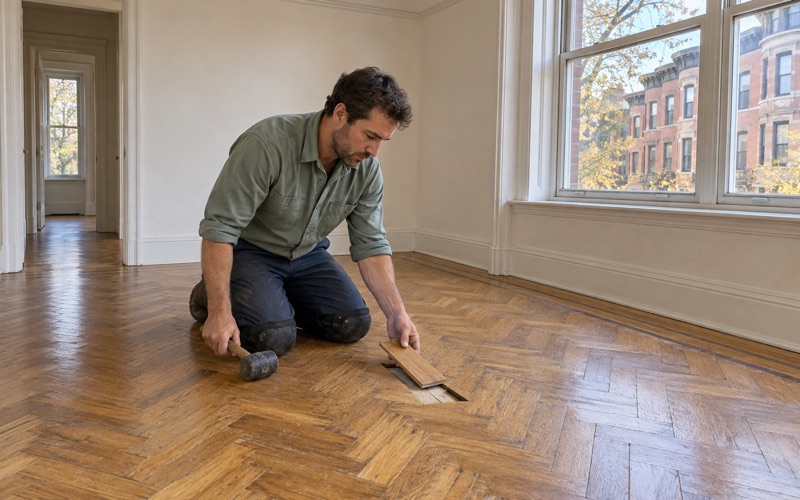
In these houses we repair and match original boards rather than tear them out, whether the floor is oak, maple or eastern white pine. Prewar parquet gets re-glued and refinished piece by piece instead of being covered, and we watch for signs of powderpost beetle or carpenter ants in an older plank subfloor and the floor joists before recommending anything.
Saxonville and South Framingham
Saxonville holds the former Roxbury Carpet Company mill complex and is one of the city’s historical districts. South Framingham, by Wikipedia’s account, became the commercial center of the town with the arrival of the railroad in the 1880s. When a job in either neighborhood turns out to be an older house, we plan extra time for repairs and board matching.
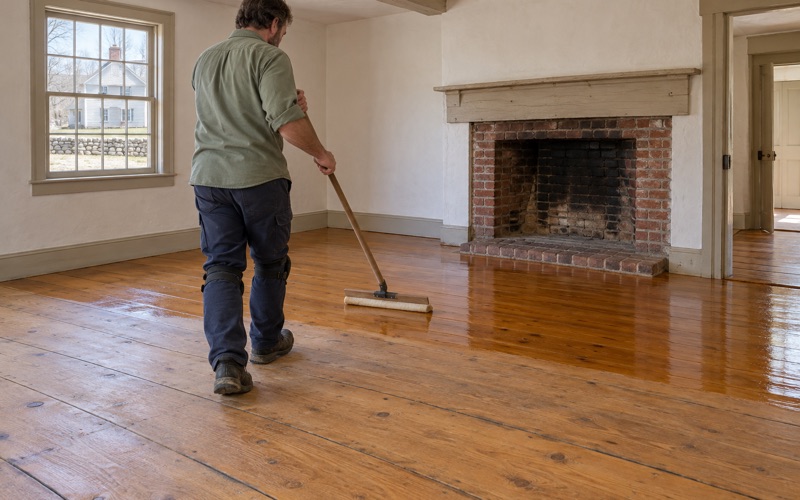
Wide plank pine, heart pine and old tongue and groove oak each sand differently, and an aggressive drum sander pass can take away more than an old floor can spare. We start with gentler grits, fill with wood filler matched to the species, and use water popping only where an even stain is the goal. Finish choices come after we see how the wood takes a test patch.
What the Historic District Commission Covers
Framingham has six local historic districts, among them Centre Common, designated in 1978, and Jonathan Maynard, designated in 1994. The Framingham Historic District Commission reviews changes to the exterior of a designated building that are visible from a public way, and the city states that interior modifications fall outside its jurisdiction. Floor work inside a house in one of these districts is not part of that review.
Planning a Floor Project in Framingham
Build Year and Lead Checks
With 72.6 percent of Framingham’s units built before 1980, the build year is the first thing we ask about, because Massachusetts runs its own lead-safe renovation rules for homes built before 1978. We look for painted surfaces on baseboard, stair risers and trim before any sanding starts, and the Massachusetts Lead Law shapes how that work is planned.
The same planning covers the finish. Massachusetts limits VOC content in wood coatings more strictly than the federal rules do, so we select waterborne polyurethane, oil-modified polyurethane or hardwax oil products that fit those limits. We talk through sheen level and floor stain color with the owner before the first coat goes down, using a sample board where the choice is close.
Seasons, Moisture and Acclimation
Framingham sits in National Weather Service forecast zone MAZ005, Central Middlesex County, and the seasonal swing in indoor humidity shows up in its floors. Winter gaps open between boards when the heat runs, and damp summer air can push boards into cupping. We read moisture in the boards and the subfloor before an install or a refinish, not after.
New flooring is given time for acclimation in the rooms where it will be laid, and we leave a proper expansion gap at walls and thresholds so the floor can move without buckling. Where a house has radiant heat or radiators, we plan the product and fastening around them, using flooring cleats or flooring staples following the NWFA Installation Guidelines and the manufacturer’s instructions.
Water Damage and Scheduling
When a floor has been damaged by a leak, we document it room by room for the adjuster, with moisture readings and photographs, before any boards come out. That record helps the owner separate what can be dried and sanded from what needs replacement, and it keeps the repair from being scoped larger or smaller than the damage really is.
Every job ends with a written plan for the days after the last coat. The cure schedule lists when socks, then shoes, then rugs and furniture can return, so an owner in a ranch or split-level can decide which rooms to live in and a landlord can set the next move-in. We keep dust contained throughout, so the rest of the home stays usable.
- 20+ Years on Wood Floors
- Free In-Home Estimates
- Dust-Contained Sanding