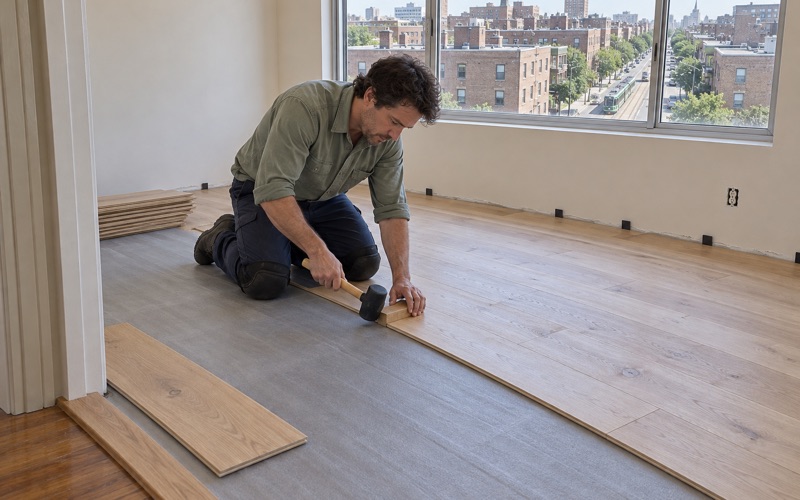
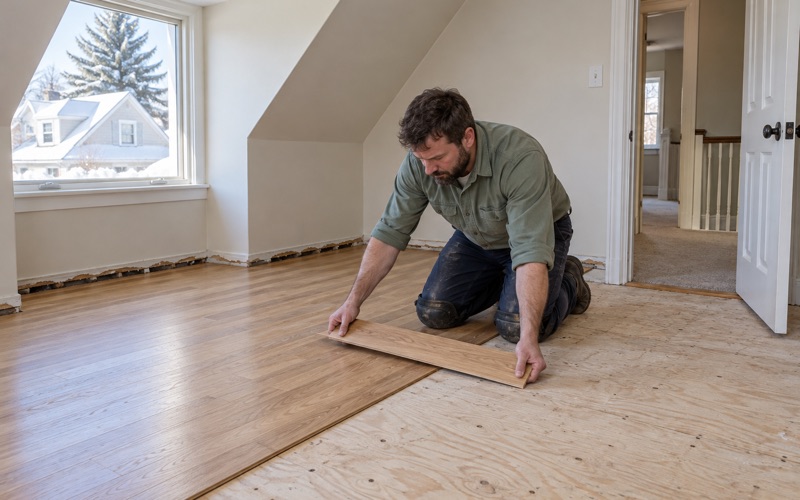
Brookline Wood Flooring brings more than 20 years of experience to wood-flooring in Hingham, refinishing, repairing and installing floors in houses of every age across the town. We sand and refinish worn boards, patch in matching stock where a section has failed, and lay new solid hardwood or engineered floors where the old one cannot be saved. Each project starts with a walk-through and a written scope, so you know what we found before any machine is turned on.
The first thing we look at is the age of the house. Massachusetts keeps its own lead-safe renovation rules for homes built before 1978, so we confirm the build year and check painted surfaces such as baseboards and thresholds before sanding begins. We also plan dust containment and hand you a written cure schedule, so the household knows which rooms are off limits and for how long.
Finish choice matters here too. Massachusetts caps the VOC content of wood coatings more tightly than federal rules do, so the waterborne polyurethanes, oil-modified products and hardwax oils we use are selected to meet those limits. For engineered floors, we measure the wear layer before promising a sanding, because a thin veneer can only take so much.
Floors Inside Hingham’s Historic Districts
Hingham has operated local historic districts for decades. The first one, the Lincoln Historic District, and the town’s Historic Districts Commission were both established through a 1966 Town Meeting vote and Chapter 502 of the Acts of 1966. In 1987 the town adopted Chapter 40C, the state law that governs local historic districts.
The districts on the town’s maps
The town’s maps page lists a set of local districts rather than a single one. Among them are Lincoln and its extensions, Hingham Centre, Glad Tidings, Liberty Plain, Bachelor’s Row-Pear Tree Hill and Tower-Wilder. The districts are mapped along parts of Main, Lincoln, North and South streets, where many of the town’s prewar houses stand.
When a call comes from one of these streets, we treat the floor the way we treat any older floor. Older boards tend to carry layered finishes, earlier patch repairs and a history of being sanded more than once, so we check how much wood remains above the tongue before choosing a grit sequence.
What the commission reviews, and what it does not
The commission’s review covers exterior architectural features, and those features are subject to review only if they are visible from a public street or other public area. Its own by-law summary puts the limit plainly: the commission may not look at interior arrangements, except where interior alterations would have an impact on the exterior of the building.
For a floor project, that means refinishing or replacing boards inside the house sits outside the commission’s review. It is not an answer to every approval question, though. The Building Department at 210 Central Street administers the state building code separately, and we point owners there for anything code-related rather than guessing on their behalf.
Rebuilding after a storm or fire
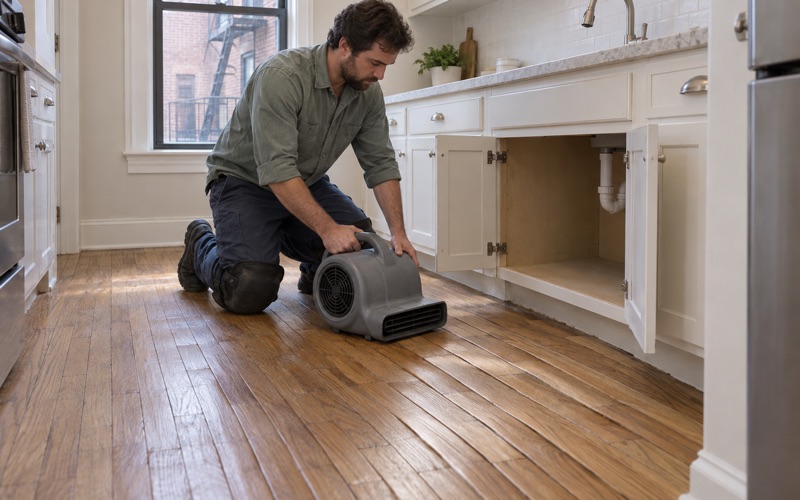
The by-law also leaves the commission without authority over reconstruction after a fire, storm or other disaster, provided the work is substantially similar and begins within one year. That clause concerns the outside of the building. Inside, a water-damaged floor needs its own sequence: find the source, dry the boards, read them with a moisture meter, and only then decide what gets replaced.
We document the damage room by room for the insurance adjuster, with photos and meter readings tied to each space. Cupped boards that dry back flat can often be sanded and kept, while buckled or delaminated sections usually cannot. Having that record in hand makes the claim conversation far simpler for everyone involved.
Looking for wood-flooring closer to Holbrook? See Wood-Flooring in Holbrook.
Hingham Houses Built Before 1940
According to the Census Bureau’s ACS 2024 five-year estimates, 1,981 of Hingham’s 10,144 housing units, or 19.5 percent, were built in 1939 or earlier. That is roughly one home in five, and it includes houses both inside and outside the mapped districts. Floors of that age reward patience far more than speed.
Matching and repairing original boards
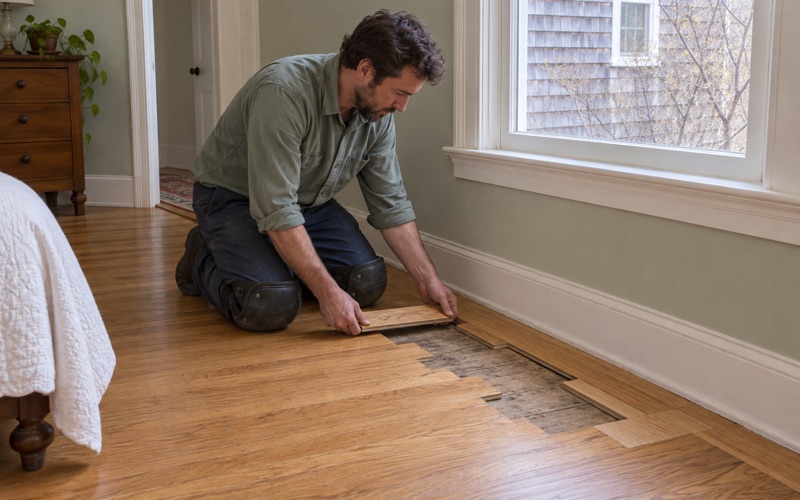
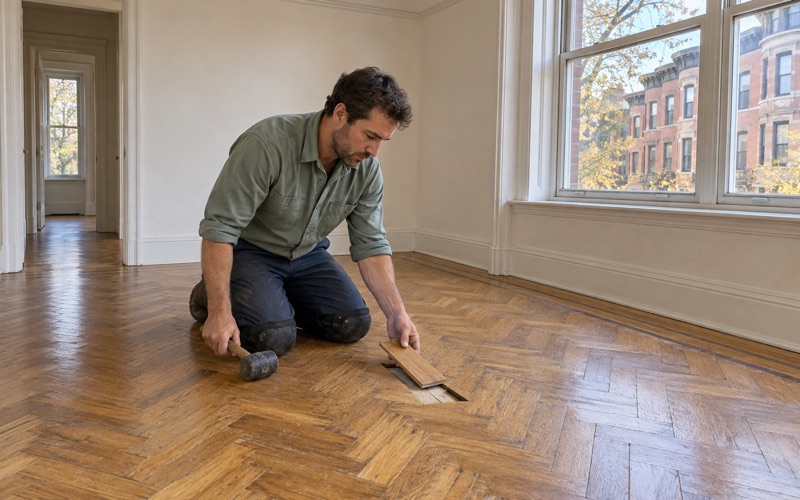
We would rather repair an old floor than tear it out. Damaged boards in red oak, white oak, maple or pine can be removed and replaced with matched stock using a weave-in repair, so the new pieces stagger into the existing pattern instead of forming a visible patch. Board width, grain and color all get compared before a replacement goes in.
Wide plank pine and heart pine need particular care because the wood is softer and dents easily. We set nails below the surface, fill carefully, and use an orbital sander or buffer where a drum sander would remove too much. Winter gaps between boards are normal in heated older houses and usually close again as humidity returns in summer.
Parquet, stairs and painted trim
Prewar parquet and herringbone floors get re-glued and refinished piece by piece rather than covered with a new layer. Loose blocks come up, old adhesive is cleaned off, and each block is reset before the whole field is sanded flat. If black mastic turns up under a later covering, we stop and discuss it with you before disturbing it.
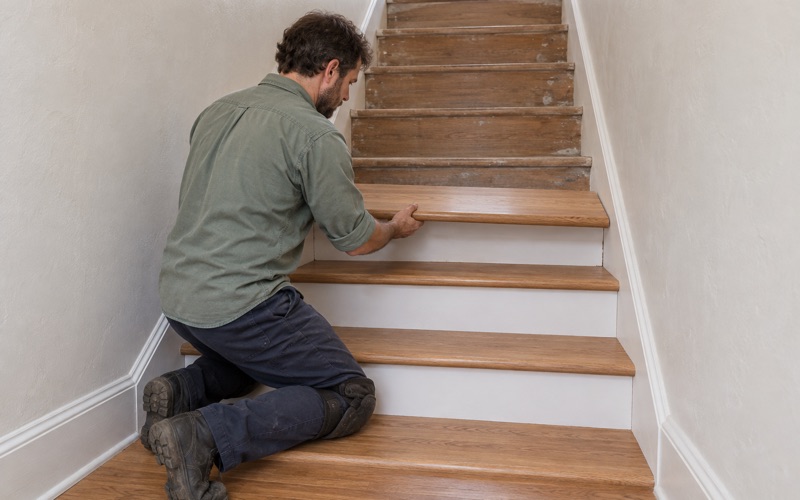
Staircases in older houses are quoted by the tread and riser, not buried in a square-foot price, because each step is its own sanding and finishing job. Painted risers, stair nosing and baseboards also bring the lead question back, so we confirm the build year and check those painted surfaces before any sanding near them.
Hollow spots and insect damage
Older floors move, and hollow spots underfoot usually mean a board has lost contact with the plank subfloor or floor joists below. We locate them, fasten or shim where access allows, and quiet squeaks before finishing. Soft, powdery wood near an exterior wall can point to powderpost beetles or carpenter ants, which we flag for the owner before replacing anything.
Homes Built in Hingham Since 2000
Hingham is not only an old town. The same census estimates show 3,073 units, or 30.3 percent of the housing stock, built in 2000 or later, including 1,173 from 2010 to 2019 and 139 from 2020 on. These newer homes bring a different set of floor questions.
Prefinished and engineered floors
Floors in newer houses are often prefinished solid hardwood or engineered boards with a plywood core. A prefinished factory coating often responds better to a screen and recoat than a full sanding, at least for the first refresh. With engineered floors we measure the wear layer first, because some can take one or two sandings and others none at all.
Where a newer floor has been damaged, we match the brand, width and finish as closely as the market still allows, and we tell you honestly when a discontinued product means a wider replacement. Board gapping, crowning and cupping in a newer house usually trace back to moisture during installation or a skipped acclimation step.
Radiant heat and new installations
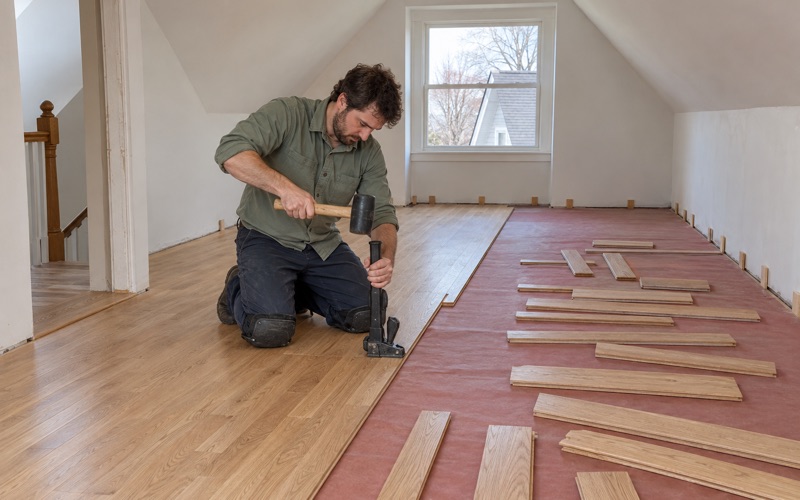
When we install a new floor, the method follows the subfloor and the heating system. Nail-down installation with flooring cleats or staples suits solid boards over a wood subfloor, while glue-down or floating installation is more common over radiant heat. We leave the expansion gap the NWFA Installation Guidelines call for and let the wood acclimate before a single board goes down.
Radiant systems also call for a species and width that tolerate heat cycling, which usually points to narrower boards or an engineered product. We check the manufacturer’s approval for use over radiant heat before recommending a floor, and we ask how the system is controlled. A steady, gradual warm-up protects the boards far better than sudden temperature swings.
Apartment and condominium buildings
Hingham also has larger multifamily buildings, with 1,573 units in buildings of fifty or more units. Before we schedule work in one, we confirm the condo association’s flooring rules, permitted work hours and elevator booking. Where the floor sits over a neighbor, we choose acoustic underlayment with the building’s rug-coverage or sound rules in mind.
Owner occupancy is high across town, at 80.7 percent of occupied homes, but renters are part of the picture too. In rented units, we coordinate access with both the owner and the tenant so the work window and the cure time are clear to everyone before the first day.
Planning a Floor Project in Hingham
Most owners start with a simple question: refinish or replace? The answer comes from the boards themselves, not the age of the finish. Solid hardwood with enough wood above the tongue can usually be sanded again, while a floor with repeated water damage or a worn-through wear layer may need new material.
Timing and moisture
Humidity changes through the year affect how wood behaves, so we read boards with a moisture meter before sanding or installing. In winter, heated air opens gaps between boards, and in humid months the same floor can swell tight. Setting a schedule around those swings keeps a new finish or a fresh installation from surprising you later.
Stain, sheen and finish choice
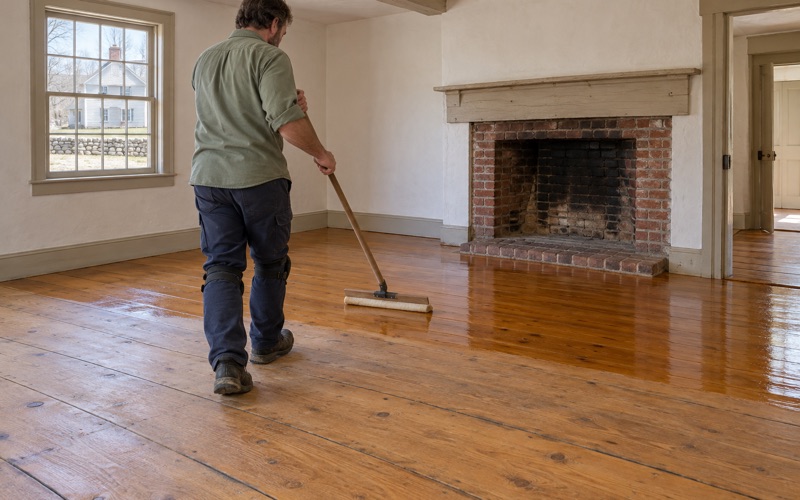
Floor stain goes on after water popping when we want an even, deeper color on oak, and we test samples on the actual floor before committing. Sheen level is its own decision, since matte hides wear and gloss shows it. Waterborne polyurethane dries clear and fast, oil-modified polyurethane ambers over time, and hardwax oil can be spot-repaired later.
What to expect on the day
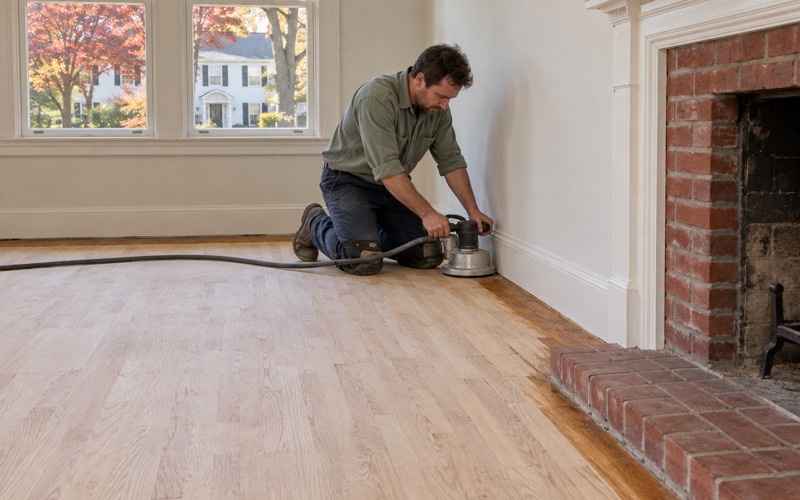
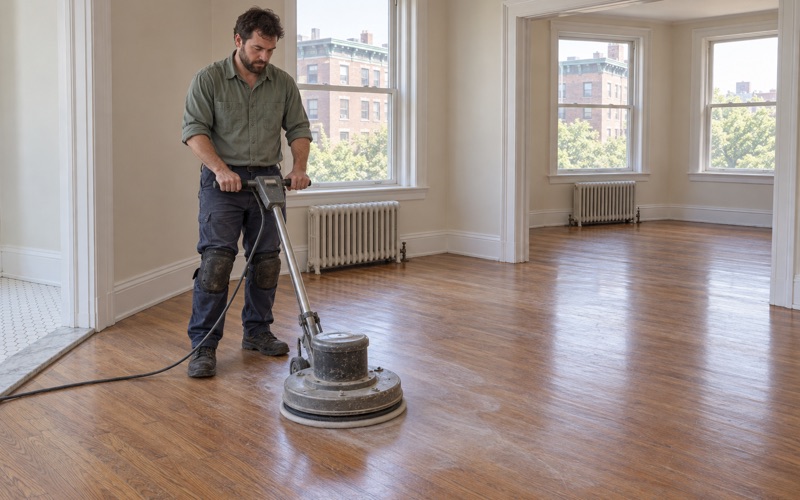
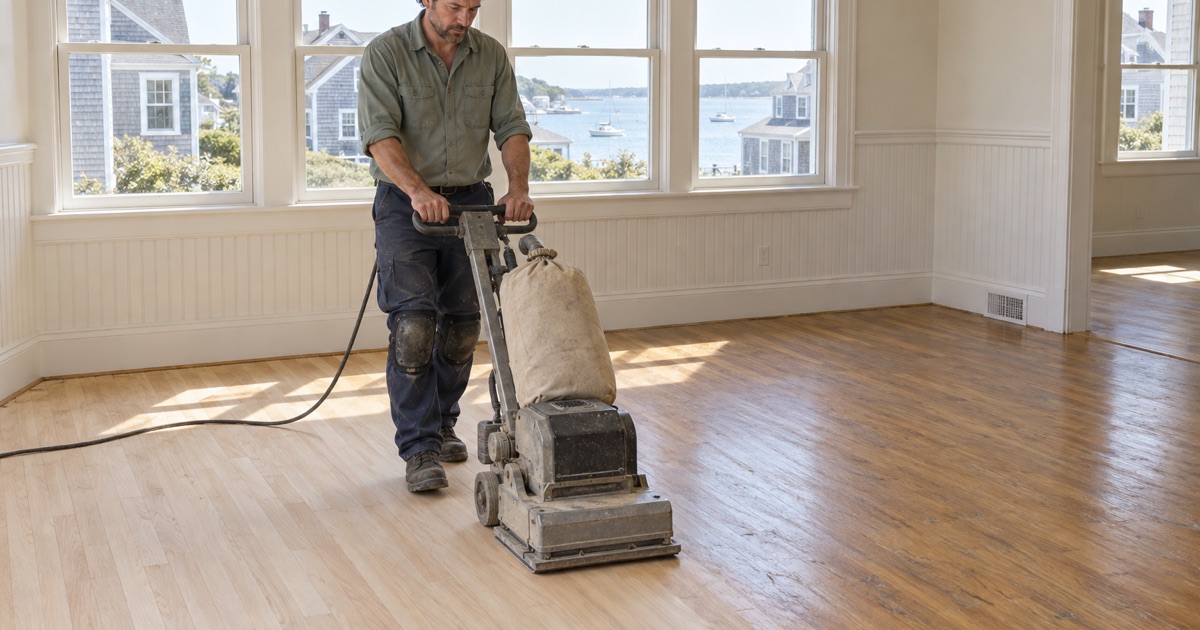
We run dustless sanding with HEPA vacuum extraction, seal off doorways and vents, and move through a planned grit sequence from coarse to fine. Wood filler goes into gaps and nail holes between passes. At the end, you get the written cure schedule showing when socks, furniture and rugs can return.
Transitions matter too, so reducers, thresholds and quarter round are refit or replaced to sit cleanly against the finished floor. If pet urine stains or deep water stains did not sand out, we show you and discuss board replacement rather than hiding them under a darker stain.
- 20+ Years on Wood Floors
- Free In-Home Estimates
- Dust-Contained Sanding