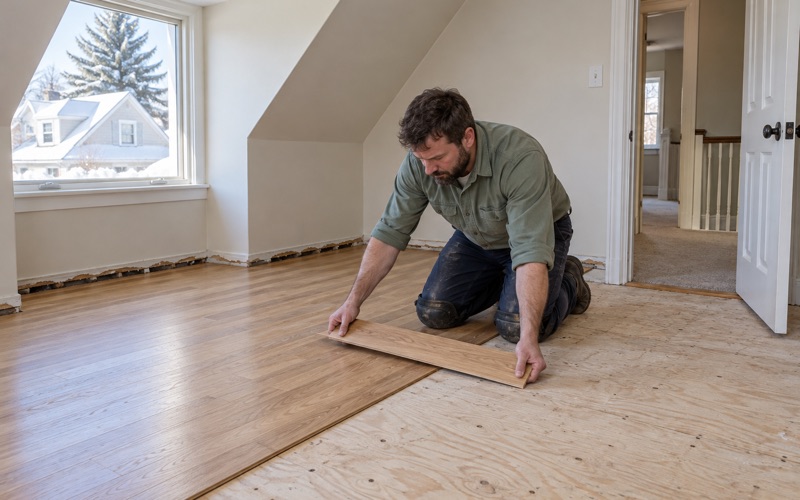
Brookline Wood Flooring handles wood flooring in Holbrook for homeowners who want their floors sanded, repaired, refinished or replaced without guesswork, and we bring more than 20 years of work on Massachusetts floors to every visit. We read the boards first, take moisture readings and quote what the floor actually needs rather than a package price. That habit matters in a town where most floors belong to the people standing on them.
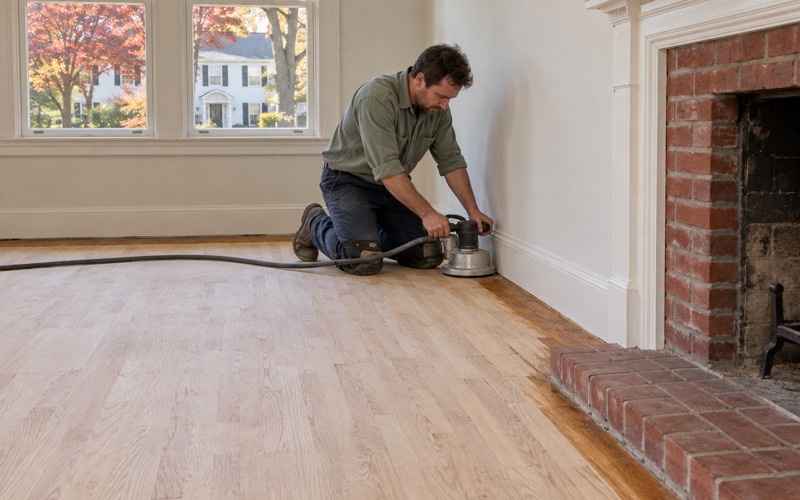
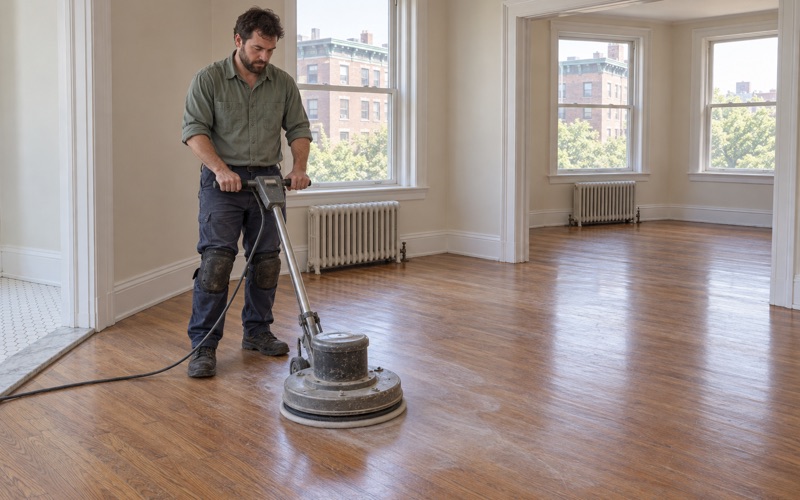
Our crews sand with dustless equipment connected to HEPA vacuums, so the fine dust that used to settle on every shelf in the house is pulled away at the drum. The finishes we apply are chosen to sit inside the Massachusetts limits on VOC content in wood coatings, which are stricter than the federal ones. You get a cleaner job and a finish that meets the state standard.
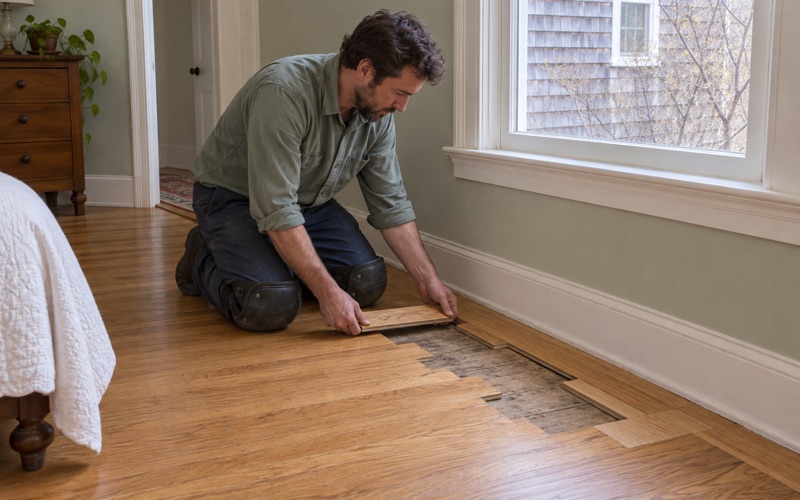
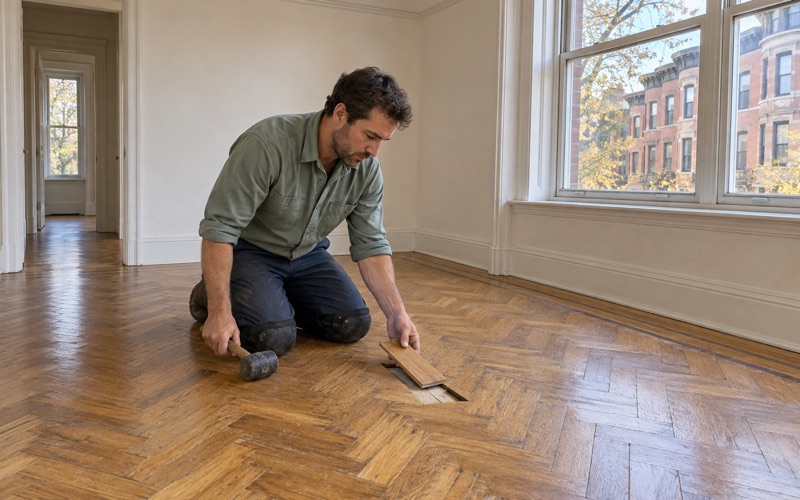
Repair comes before replacement wherever the wood allows it. Worn oak, maple and pine boards are patched and matched with weave-in repairs, and a water-damaged room is documented for the insurance adjuster before anything comes up. We would rather save a sound floor than sell a new one, and we tell you plainly when a floor is past saving.
Floors From Holbrook’s 1950s Housing Boom
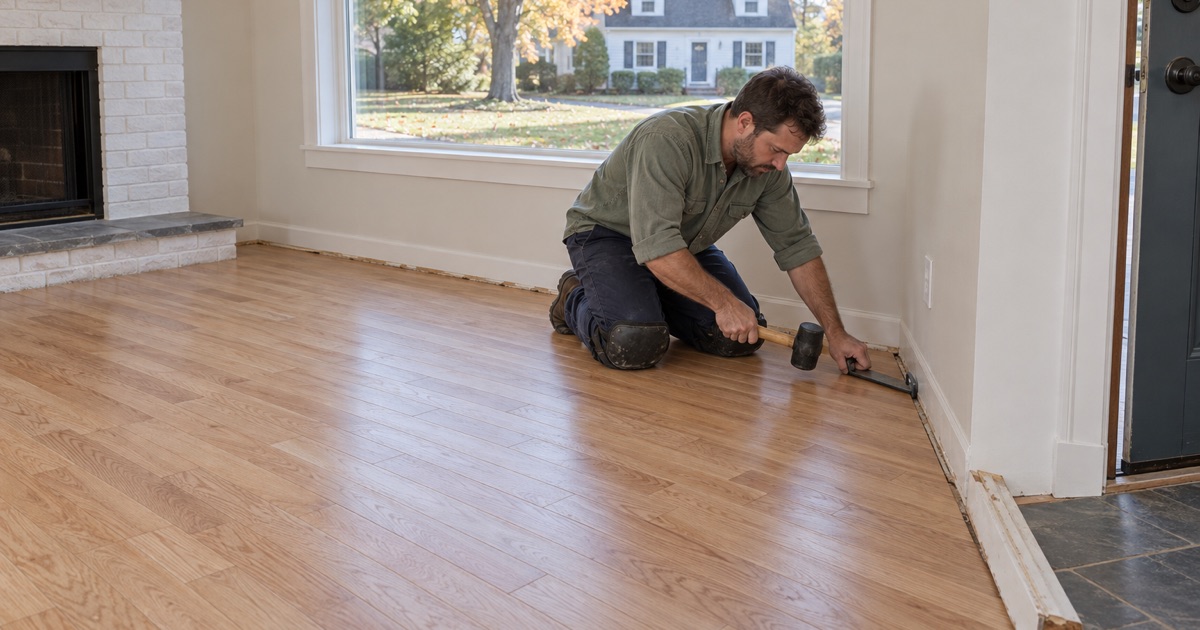
Holbrook’s housing stock has a clear center of gravity. According to ACS 2024 five-year estimates, 1,571 of the town’s 4,398 homes, or 35.7 percent, were built between 1950 and 1959, the largest share of any decade. The population rose from 4,004 in 1950 to 10,104 in 1960, and the houses built for those new residents still make up a large part of what we sand and repair here.
Seventy Years of Wear on One Generation of Floors
A floor laid in the 1950s has had roughly seven decades to collect sandings, finish coats, patches and coverings. Some of those floors have already been sanded several times, and each pass takes wood off the top of the board above the tongue and groove. Before we promise another full sanding, we check how much wood is left and where earlier crews cut too deep.
Nail heads sitting proud of the surface, board gapping near exterior walls and hollow spots underfoot are common signs on floors this age. We set flooring cleats or face-nail loose boards before any drum sander touches the room, because a sander rides over a loose board and leaves a chatter mark behind it that shows through the finish.
Coverings Added Over the Decades
Many older floors were covered at some point, and what sits beneath carpet, vinyl or tile varies from house to house. Tack strip leaves rows of nail holes along the walls, and black mastic from old tile glue needs careful handling rather than aggressive sanding. We identify what is on the floor before we choose a removal method or promise a result.
Where a covering hid water stains or pet urine stains, we test whether sanding will reach them or whether individual boards have to be replaced. Deep urine stains in red oak often run through the grain, and a board replacement woven into the surrounding field usually looks better than a sanded patch that stays dark.
Houses Built Before 1978
Every home from Holbrook’s boom decade predates 1978, which places it inside the scope of the Massachusetts lead-safe renovation rules. Painted baseboards, quarter round, stair risers and thresholds are the surfaces we check first, because sanding next to lead paint can spread dust through the whole house. Our crews confirm the build year and inspect painted trim before the first grit goes down.
When painted surfaces are in play, we plan the work around containment and HEPA cleanup rather than speed. That can add setup time to the first day, and we put it in the quote instead of surprising a homeowner later. It also decides which trim pieces we remove and which we mask in place.
Looking for wood-flooring closer to Framingham? See Wood-Flooring Services in Framingham.
Detached Homes Owned by the People Living in Them
Holbrook is a town of owners. Of 4,384 occupied homes, 3,681, or 84.0 percent, are owner-occupied, and 96.9 percent of those owner households live in detached houses. That means most of our Holbrook calls come from a homeowner deciding about their own floor, with no condo board, landlord or neighbor below involved in the decision.
Long-Held Houses With Little New Construction
Only 4.7 percent of Holbrook’s homes date from 2000 or later, and the ACS estimate shows none built in 2020 or later. With so little new stock, the typical project here is the renovation of a floor that has been lived on for decades, not an installation in a new build. The condition of the existing boards drives most of the price.
Owners who have held a house for years often ask us to tie a newer addition or kitchen floor into the original rooms. We match species, board width and stain color, then lace new boards into the existing field so the seam does not read as a straight line across the house.
Choosing a Finish You Will Live With
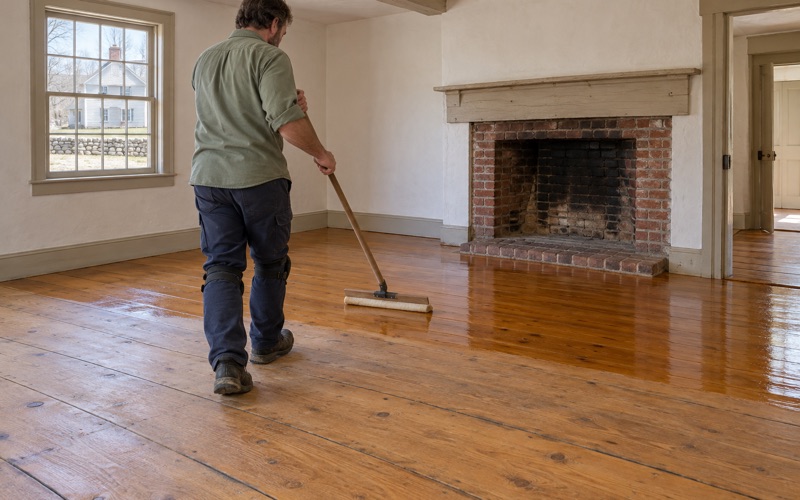
Because the people paying for the floor are the ones walking on it, finish choice tends to be about daily life rather than resale staging. Waterborne polyurethane dries clear and lets a room return to use sooner, oil-modified polyurethane ambers over time and builds a warm tone, and hardwax oil can be spot-repaired without sanding a whole room.
We walk owners through sheen level too, since a satin or matte finish hides the scratches a dog or a busy hallway will add. A screen and recoat every few years can then keep that finish healthy without another full sanding. It is the cheapest way to extend the life of a floor you plan to keep.
Moisture, Seasons and Winter Gaps
Holbrook sits in National Weather Service forecast zone MAZ013, Western Norfolk, and New England homes swing between humid summers and dry, heated winters. Solid hardwood shrinks in the heating season, opening winter gaps between boards, and swells in summer, which can show up as cupping. Most seasonal gapping closes on its own and does not call for repair.
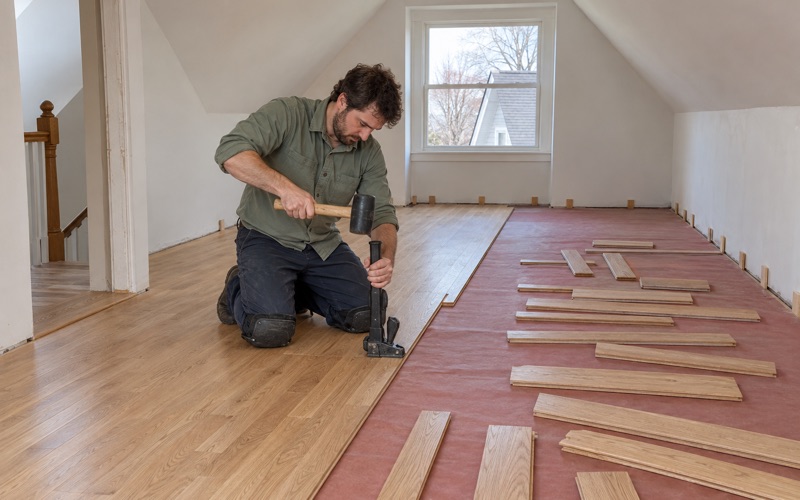
New boards need acclimation before installation, and we check both the flooring and the subfloor with a moisture meter before nailing anything down. If a radiator valve or a plumbing line has been leaking, we find the source, dry the boards and take readings until they settle, because replacing wet wood only moves the problem.
Prewar Houses and Apartment Buildings
Not every Holbrook floor dates from the boom. The ACS counts 843 homes, 19.2 percent of the total, built in 1939 or earlier, and the town itself was incorporated on February 29, 1872, as the last town created from the former lands of Braintree. Those older houses and the town’s small apartment buildings each bring their own kind of work.
Older Boards and Older Repairs
An older floor may be pine, oak or maple, and we identify the species before planning a repair. Soft pine dents easily and sits low on the Janka hardness scale, so it needs a lighter sanding touch and often an orbital sander in place of a drum sander. Where we find prewar parquet, we re-glue and refinish it piece by piece rather than covering it.
Older floors also carry older repairs, from mismatched boards to patches laid in a different direction. We pull poor patches, source boards of matching species and width, and weave them in so the repair disappears after sanding and stain. The goal is a floor that reads as one surface again.
Before any old floor is sanded, we probe for soft wood and look for the small exit holes of powderpost beetle or the galleries carpenter ants leave near damp framing. Damaged boards come out, and we check the plank subfloor and floor joists beneath them before new wood goes in.
Apartment Units in Holbrook’s Smaller Buildings
Holbrook has no buildings of fifty or more units, but 245 homes sit in buildings of twenty to forty-nine units. Renter households make up 16.0 percent of occupied homes, and 337 of them, 47.9 percent, live in buildings of five or more units. Floor work in those buildings runs on different rules than work in a detached house.
For a unit in a condo association, we confirm the association’s flooring rules, permitted work hours and any elevator booking before we put a date on the calendar. Where the floor sits over another unit, we choose acoustic underlayment that fits the building’s rug-coverage or sound requirements, and we leave an expansion gap at the walls so the floor can move without buckling.
Engineered Floors in Units and Additions
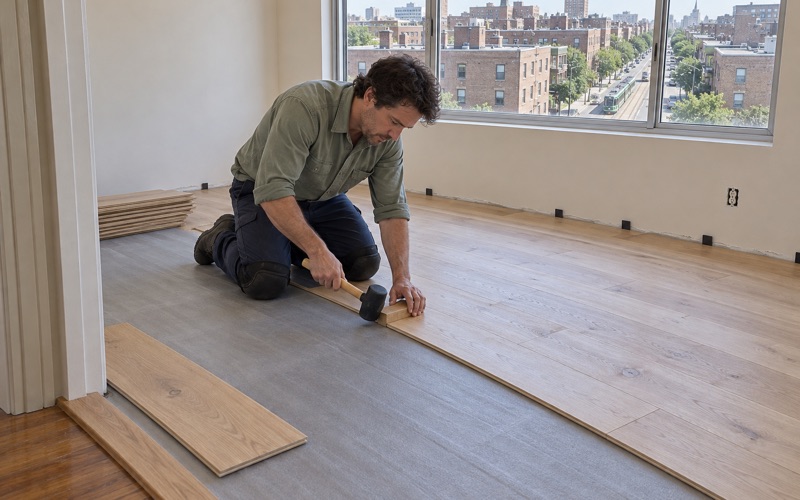
Some units and additions have engineered flooring instead of solid hardwood. We measure the engineered wear layer before promising a sanding, since a thin veneer over a plywood core may take one light pass or none at all. When the wear layer is too thin, a screen and recoat or a board replacement is the honest answer.
Planning a Floor Project in Holbrook
A good floor project starts before the equipment arrives. We visit, measure, take moisture readings and look at the stairs, trim and transitions, then give a written quote that separates each part of the job so you can see what every piece costs. Here is how we plan most Holbrook projects.
Stairs, Transitions and Trim
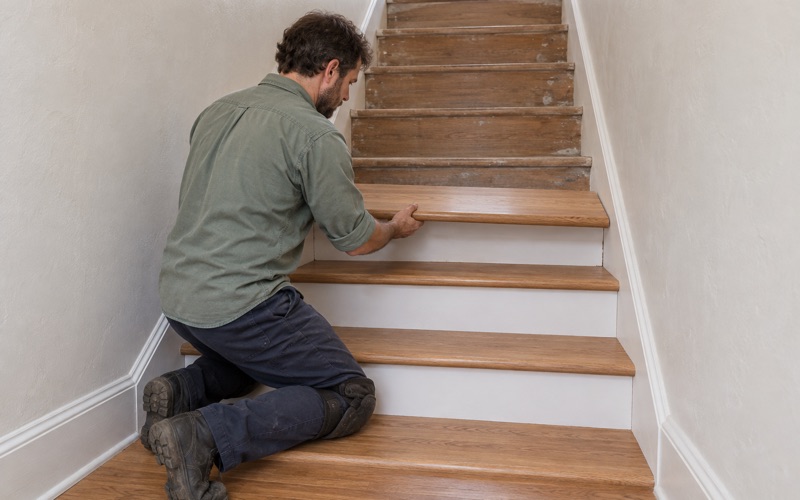
Stairs are quoted by the tread and the riser, not rolled into a square-foot figure, because each step is sanded and finished by hand. We also price reducers, thresholds, stair nosing and new quarter round where a room meets tile or carpet. Seeing those lines separately helps an owner decide what to include now and what can wait.
Scheduling Around a Household
Sanding usually runs over a few days, with more time for stain and multiple finish coats. Our dust containment keeps the rest of the house usable, and a written cure schedule lists when you can walk on the floor in socks, when furniture can return and when rugs can go down.
If you are refinishing before a sale or a family move, tell us the deadline at the first visit. We plan the grit sequence, water popping for stain and the number of coats around the date you need the rooms back. Rushing a cure to meet a closing date is how finishes fail early.
Paperwork and Insurance
The Holbrook Building Department at 50 North Franklin Street has taken building permits online only since January 1, 2020, and paper applications are not accepted. If your project reaches beyond the floor itself, that office is the place to ask what applies. For water damage claims, we document each room with photos, moisture readings and measurements so the adjuster sees the full extent of the loss.
Whether your house went up during the 1950s boom or decades earlier, we start with the same step: reading the floor you already have. Call Brookline Wood Flooring to set up a visit and a written quote for your Holbrook home.
- 20+ Years on Wood Floors
- Free In-Home Estimates
- Dust-Contained Sanding