Brookline Wood Flooring offers wood-flooring in Hull backed by more than 20 years in the trade, covering sanding, refinishing, board replacement and new installs. Much of what we see here comes down to three things: salt water that got where it should not, very old houses, and homes that sit closed for part of the year. We work out which of those is in play before we quote a job.
A floor that has been wet needs a different first visit than one that is simply worn. We read the boards with a moisture meter, look for cupping, crowning and buckling, and document water-damaged rooms one at a time so an adjuster has a clear record. Only then do we talk about whether the boards can be dried and saved or have to come out.
Every plan is written down before work begins. It covers how dust is contained, how the stairs are priced, which is by the tread and riser rather than folded into a square-foot number, and when each room can be used again. That way a household can plan the week around the work instead of guessing.
Floors After Coastal Flooding in Hull

Hull sits on a peninsula at the southern edge of Boston Harbor, with 2.8 square miles of land. CommonWealth Beacon reported in March 2026 that about two-thirds of the town lies in the 100-year floodplain, meaning an area with a 1 percent chance of a significant flood in a given year. For a wood floor, that places much of the town where a single storm can undo years of care.
What Flood Water Does to Hardwood
Wood takes on water from below and at its edges first, so a flooded floor usually shows cupping within days as the undersides of the boards swell. If the water sat long enough, boards can buckle and lift away from the subfloor entirely. Silt and debris carried in with the water can also settle into the joints, and drying alone does not clear them out.
The worst mistake after a flood is sanding too soon. A cupped floor sanded flat while it is still wet will crown once it dries, leaving the centers of the boards lower than the edges for good. We wait for meter readings to come down to a stable level across the room before a drum sander touches it.
Drying, Reading and Deciding
Our first step is finding where the water came from and how far it traveled, which is not always obvious when it runs along floor joists or under a plank subfloor. We take moisture meter readings across the floor and in the subfloor, mark the wet zones, and set up drying. Readings are repeated until they hold, and we share them with you as we go.
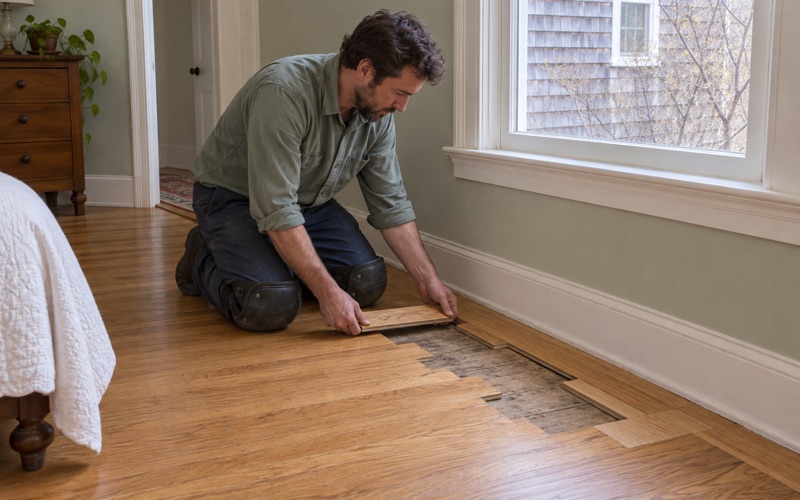
Once the wood has settled, some floors flatten enough to be sanded and refinished, while others have boards that split or stayed buckled. We replace only the damaged boards where we can, weaving new stock into the existing field. Each water-damaged room is documented with photos and readings, so the adjuster sees what that space went through.
Future Flood Risk and Your Floor Choice
The risk is part of long-term planning here. A March 2022 memorandum from the Metropolitan Area Planning Council to the Hull Town Manager projected that with 1.2 feet mean sea level, nearly half of Hull’s properties would have a greater than 10 percent annual chance of flooding. That projection is worth keeping in mind when choosing between solid hardwood and an engineered floor.
Neither type survives standing water well, but they behave differently. An engineered floor with a plywood core resists seasonal movement, while a solid tongue and groove floor can usually be sanded more times over its life. We measure the wear layer of any engineered floor before promising a sanding, and we explain how each option would likely be repaired after a future wet event.
Looking for wood-flooring closer to Walpole? See Wood-Flooring Services in Walpole.
Hull Houses Built Before 1940
Old houses make up a large share of the town. The Census Bureau’s 2024 American Community Survey five-year estimates count 2,550 of Hull’s 5,838 housing units, or 43.7 percent, as built in 1939 or earlier. Hull had become a steamboat summer resort by 1840, with boats making three trips a day to Boston.
Many of these former summer-resort houses have seen generations of repairs, additions and changing floor coverings. The result is often a floor with more history in it than the owner expects once the carpet or vinyl comes up. We plan for that before we quote, not after the first board is lifted.
Original Boards Worth Keeping
An old floor might be red oak, maple, eastern white pine, wide plank pine or something else entirely, and we identify the species in your house before planning any repair. We repair and match original boards instead of tearing them out, sourcing stock that lines up in species, width and grain. Weave-in repairs keep a patched area from reading as a rectangle once the floor is finished.
Prewar parquet deserves its own mention. When the pattern has lifted or loosened, we re-glue and refinish it piece by piece instead of covering it with a new floor. Loose parquet can sit over black mastic, so we identify what is underneath before any scraping or sanding begins.
Lead Paint and Old Problems
Massachusetts runs its own lead-safe renovation rules for homes built before 1978, and in a house built before 1940, painted baseboards, stair risers and old thresholds deserve a close look. We check the build year and look for painted surfaces before any sanding starts. If paint is present, the work plan changes before the first pass, not after.
Old floors also carry old problems. Powderpost beetle damage, carpenter ants near damp framing, hollow spots over a failing subfloor, and deep water stains or pet urine stains can all turn up in floors of this age. We find those before the sanding plan is set, because they decide whether a board is sanded, replaced or reinforced.
Stairs and Winter Gaps
Older houses often keep original stair treads and risers worn by decades of use. We sand, repair or replace them individually, matching the stair nosing and stain to the floor they meet.
Old pine and oak floors in rooms heated by a steam radiator often open winter gaps between boards and close them again in summer. We explain which gaps are seasonal and should be left alone, and which point to a loose board, a failing flooring cleat or a subfloor problem worth fixing.
Seasonal Homes, Condos and Hull’s Floodplain Rules
Hull also has a substantial part-year population. The same ACS estimates count 750 housing units, 12.8 percent of the total, as held for seasonal, recreational or occasional use. A house that sits closed through the winter or empty for weeks at a time behaves differently from one lived in year-round, and its floor needs to be scheduled with that in mind.
Closed Houses, Heat and Humidity
When a house is shut up, indoor humidity can swing well outside the range a floor was installed in. Boards shrink and gap through a dry heated winter, then swell in damp summer air, and the movement can go unnoticed in a house nobody is checking. A slow leak can also run for weeks before anyone sees it.
For a new install or a refinish in a seasonal home, we pay close attention to acclimation and to the conditions the floor will actually live in, not the conditions on the day we arrive. Where the owner is away, we agree on the schedule and a written cure plan in advance. That way the finish has cured before the house fills up again.
Nantasket Beach Condominiums
Not every Hull home is a single-family house. Of the town’s 5,838 units, the ACS counts 431 in buildings of five to nine units and a further 540 in buildings of ten or more. Nantasket Beach condominiums are part of that picture, and the Paragon Park property was sold for condominium development when the park closed in 1984.
For a condo unit, we confirm the association’s flooring rules, permitted work hours and elevator booking before the job goes on the calendar. When the floor sits over a neighbor, we choose acoustic underlayment with the building’s rug-coverage or sound rules in mind. We also check for a leak from an upstairs unit as the source of any water damage before replacing a single board.
What the Floodplain Rule Means for Floor Work
The Town of Hull’s Build Responsibly guidance states that floodplain building additions, improvements and repairs equal to or greater than 50 percent of the value of the existing building must meet the same requirements as new buildings. That is a building-wide rule, and it looks at the whole project rather than any one trade. The town also notes that many projects in a flood zone need a permit from the Building Department, the Conservation Commission, or both.
We do not decide whether a given floor job needs a permit or how it counts toward that threshold. If your floor is part of a larger repair after flooding, those questions belong with the Town of Hull Building Department at Town Hall, 253 Atlantic Avenue, and we can provide our scope and pricing so the whole project can be reviewed together.
Planning a Floor Project in Hull
Most Hull jobs start with a visit rather than a phone quote. We look at the species and condition of the boards, check moisture, note the build year and any painted surfaces, and ask how the house is used through the year. That tells us whether a screen and recoat will do or the floor needs a full sanding.
Sanding and Finishing
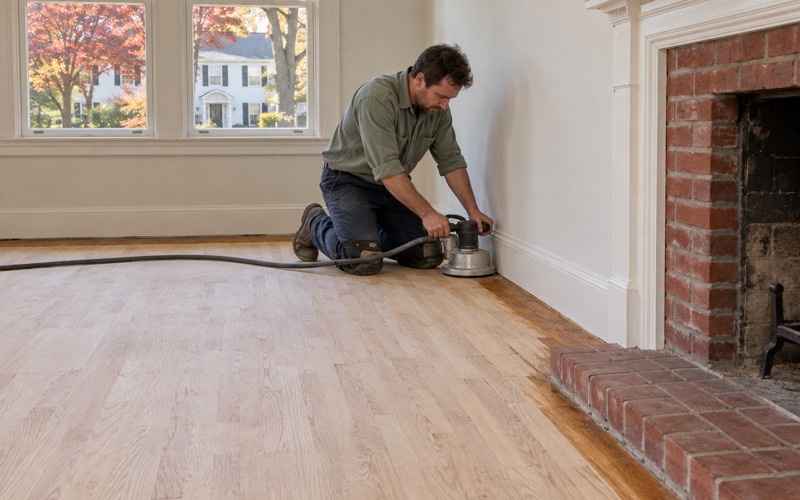
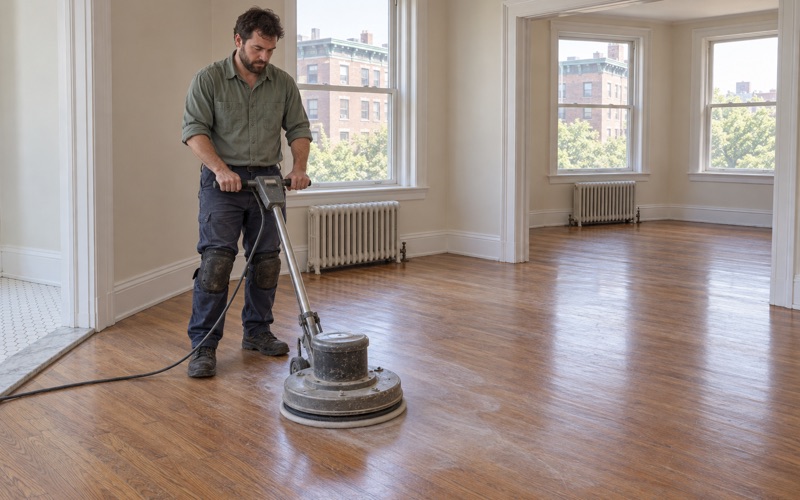
For a full refinish, we work through a grit sequence with a drum sander on the field and an orbital sander near the walls, then use a buffer for an even final surface. Dustless sanding with HEPA vacuum extraction keeps most of the dust out of the rest of the house. Water popping before a floor stain helps darker colors take evenly on oak.
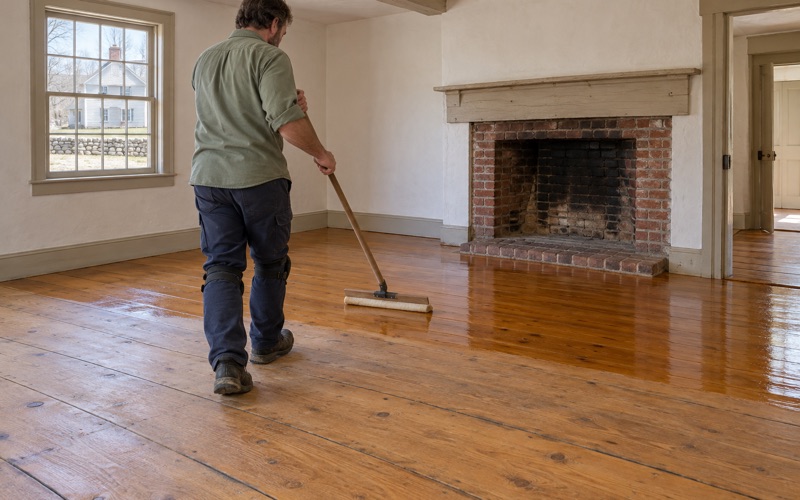
Finishes are chosen to meet the Massachusetts limits on VOC content in wood coatings, which are stricter than the federal ones. Waterborne polyurethane, oil-modified polyurethane and hardwax oil each wear, smell and cure differently, and we match the product and sheen level to how the room is used.
Timing Around Weather and the Season
Hull falls in the National Weather Service forecast zone MAZ019, Eastern Plymouth, and we watch that forecast before scheduling a finish coat. Damp weather slows curing, so the written cure schedule tells you when the floor can take socks, furniture and rugs. For part-year owners, we can work the calendar so the house is ready before the season starts.
What to Have Ready
Before we arrive, clear the rooms and tell us about any past water events, pets or earlier refinishing. If you have photos from a flood, bring them to the first visit, since they help us read the floor and document it. Mention any radiant heat or steam radiators in the work area as well.
- 20+ Years on Wood Floors
- Free In-Home Estimates
- Dust-Contained Sanding