
Brookline Wood Flooring offers screen and recoat hardwood floor service in Brookline, MA, serving surrounding cities including Jamaica Plain, Forest Hills, West Roxbury, Watertown and Back Bay. With 20+ years on wood floors, we renew dull, scuffed finishes by buffing the existing topcoat and laying fresh polyurethane over it, without sanding to bare wood. It is the fastest and least disruptive way to bring back a floor whose finish is tired but intact.
A recoat suits a floor where the wear is in the finish rather than in the wood. It is the right call for rentals between tenants, condos where a full sanding would be hard to schedule, and well-kept floors that were refinished a few years ago and just need their protection topped up. Done at the right time, it can put off a full sanding for years and preserve the wood for later.
The one thing a recoat depends on is adhesion. A new coat laid over wax, polish or an incompatible finish looks fine for a few weeks and then peels. That is why every recoat we do starts with a test, and why we will tell you when a floor needs sanding instead.
When a Screen and Recoat Is the Right Choice
Dull, Scuffed Finish With No Bare Wood
The ideal floor for a recoat looks tired but sealed: light scratches in the finish, dull traffic lanes, a loss of sheen in the kitchen or hallway, but no gray bare wood. Water still beads on the surface. At that stage, screening and adding a coat restores both the look and the protection at a fraction of the cost of a full refinish.
The longer a worn finish goes without attention, the more likely it is to wear through. Recoating while it is still intact is what keeps the wood from ever needing to be sanded as deeply.
When a Full Sanding Is Needed Instead
A recoat cannot fix damage that has reached the wood. Gray worn areas, deep scratches, dents, water stains, pet stains and a finish that is peeling or flaking all need a full sanding to bare wood. Changing the color of the floor also requires sanding, since stain cannot be applied over finish.
We look at the whole floor during the estimate and recommend a recoat only where it will genuinely hold up. Where the floor needs sanding in one area, we explain the options for blending it with a recoat elsewhere.
How a Screen and Recoat Works
Adhesion Testing Before Any Work
Floors that have been waxed, treated with acrylic polish or cleaned with oil soaps can reject a new coat of polyurethane. Some factory finishes on prefinished flooring are also hard to bond to. We clean a test area and apply a small amount of finish to check adhesion before quoting a full recoat.
If the test fails, we explain what can be done. Sometimes a special cleaning restores adhesion; often the honest answer is a full sanding, and we say so rather than recoating a floor we expect to peel.
Screening With a Buffer
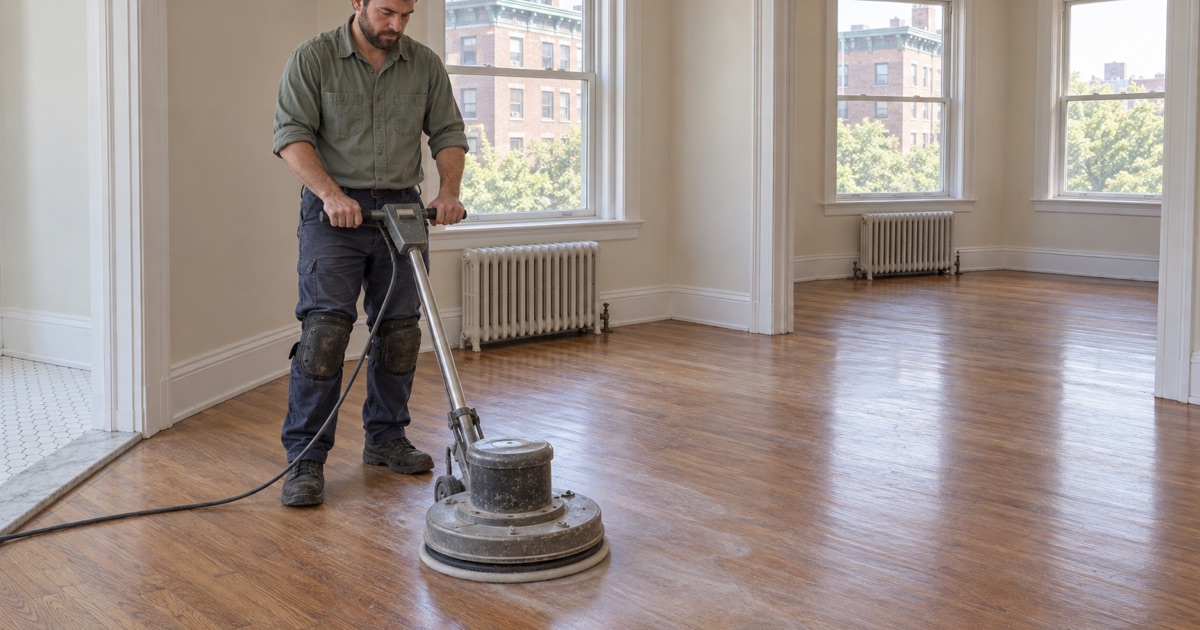
The floor is deep cleaned, then abraded with a buffer fitted with a fine screen or pad. This scuffs the existing finish evenly so the new coat can grip it, without cutting into the wood. Edges and corners are hand abraded. The dust from screening is light, and we remove it with a HEPA vacuum and a tack cloth before finishing.
Applying the New Topcoat
A fresh coat of polyurethane goes on over the screened finish, matched to the existing sheen level or changed if you want a different look. Most recoats use waterborne polyurethane, which dries fast and has little odor, and every product we apply stays within the Massachusetts limits on VOC content in wood coatings under 310 CMR 7.25.
Recoats for Rentals, Condos and Sellers
Rental Turnover Before September 1
Much of the Boston-area rental market turns over on September 1, leaving landlords a short window to freshen floors between tenants. A screen and recoat fits that window where a full sanding often does not. We book late-August recoats early and tell landlords which units can be recoated and which need a full sanding.
Condo Units With Strict Work Hours
In condo buildings with limited work hours, elevator bookings and neighbors close by, a recoat is far less disruptive than sanding. There is no heavy drum sander, very little dust and a short odor window with waterborne finish. We confirm the association’s hours and elevator use before scheduling, as with any job.
Refreshing Floors Before a Sale
A recoat can make a sound floor look much better in listing photos for a modest cost. We schedule it around staging and photography and pick a sheen that hides everyday wear. For floors with deeper damage, we explain whether a partial sanding in the worst room plus a recoat elsewhere would work.
Keeping a Recoated Floor Looking Good
Cleaning Products to Avoid
Oil soaps, wax-based cleaners and polishes that promise to restore shine leave residue that makes the next recoat harder or impossible. A pH-neutral cleaner made for polyurethane floors and a dry microfiber mop are all a finished floor needs. We leave you with care instructions for the specific finish we applied.
Planning the Next Recoat
The best time for the next recoat is before the main paths wear through again. Checking whether water still beads in the busiest areas is a simple test. Recoating on that schedule can keep a floor going for many years before it needs to be sanded again.
- 20+ Years on Wood Floors
- Free In-Home Estimates
- Dust-Contained Sanding