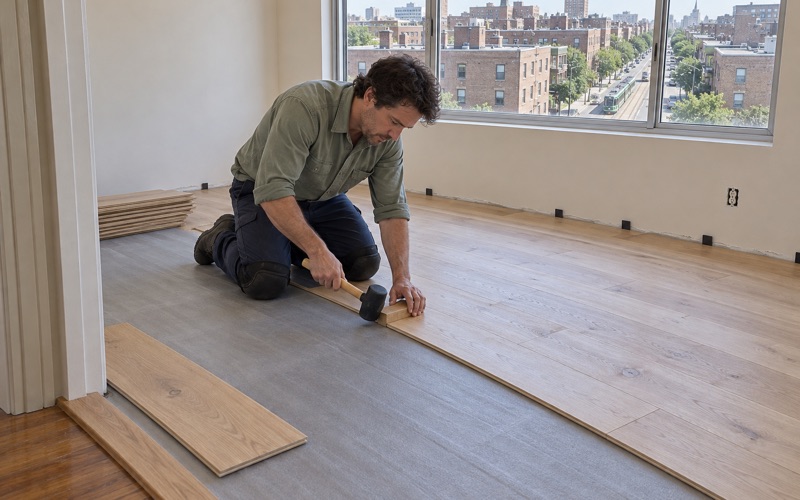
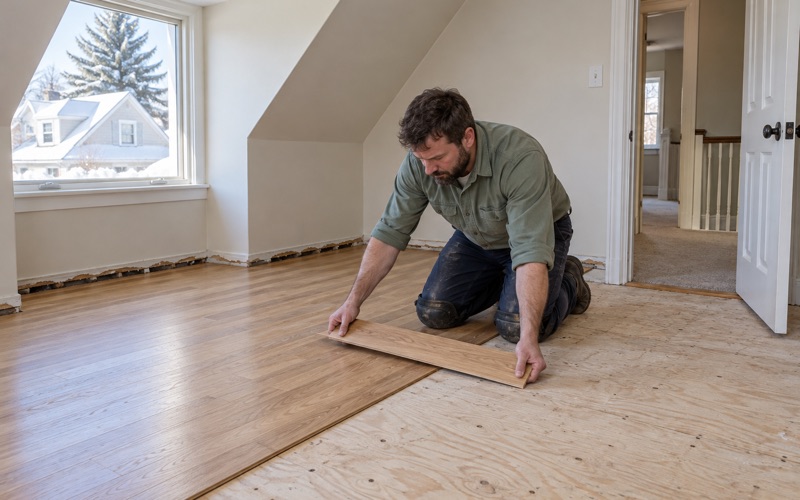
Brookline Wood Flooring handles wood flooring in Wakefield with more than 20 years of sanding, repair and installation behind us, and much of that work here happens inside houses that are shared. A floor might belong to the owner’s unit of a two-family, to a rented flat upstairs, or to a single house old enough to have been sanded several times already. Each of those changes how we plan the job before a sander comes off the truck.
We refinish worn oak and maple, weave in new boards where old ones have failed, install solid and engineered floors, and rebuild stairs. Before any quote, we look at who lives above and below the floor, how old the building is, and whether a painted surface or an old finish needs checking first. That short walk-through saves days of rework later.
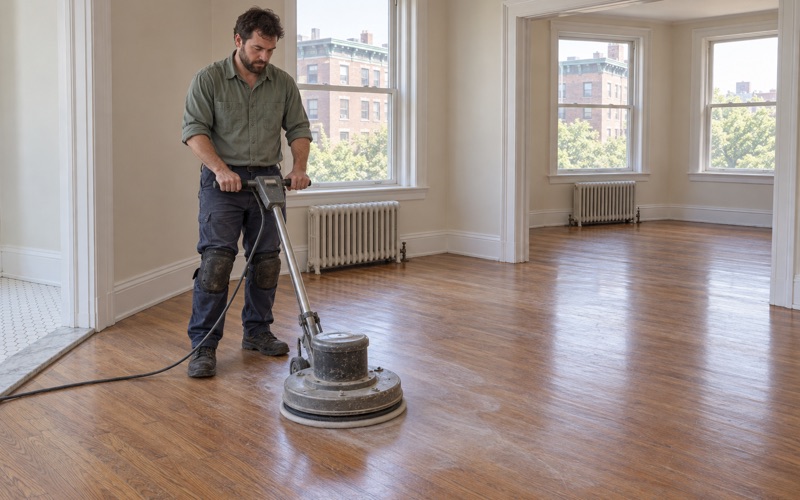
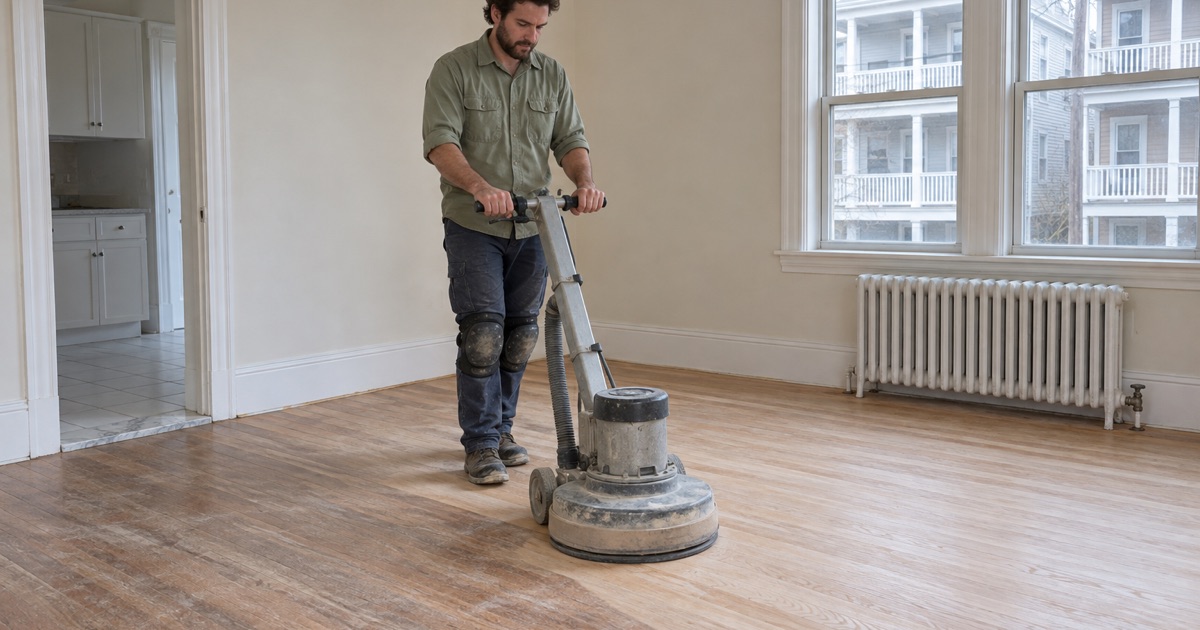
Our crews contain dust with HEPA vacuums attached to the sanders, and every household gets a written cure schedule showing when rooms can take socks, furniture and rugs again. When a floor is engineered, we measure the wear layer before we promise a sanding, so nobody pays for a refinish the boards cannot survive.
Floors in Wakefield’s Two-Family Houses
Wakefield is governed as a town in Middlesex County, and its housing leans harder toward small multi-unit buildings than a quick drive down a residential street suggests. According to the ACS 2024 five-year estimates, two-unit buildings account for 1,654 of the town’s 11,750 housing units, or 14.1 percent. Another 811 units, 6.9 percent, sit in three-or-four-unit buildings.
The owner’s unit
Many of those two-family houses have the owner living on one floor, and the same estimates count 659 owner households in two-unit buildings. For those owners, the floor is both a home and part of an income property, so decisions about species, stain and sheen level tend to weigh durability as much as looks. We talk through that trade-off plainly before a sample board is ever stained.
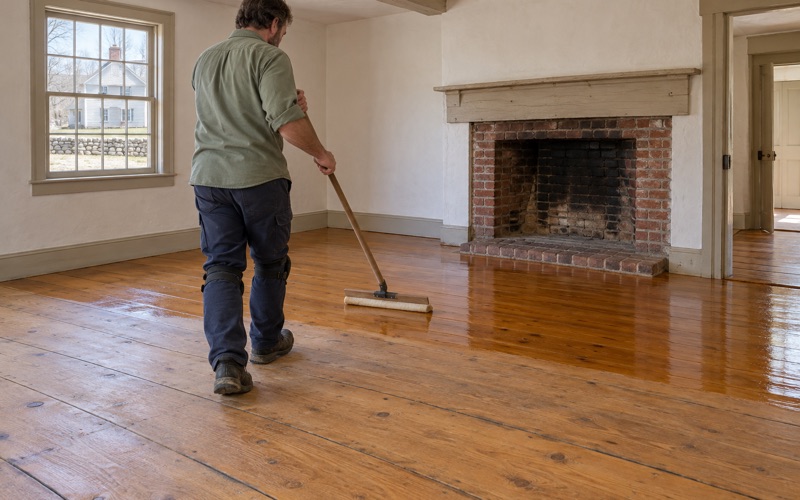
Red oak takes floor stain evenly when we water pop the surface first, and it hides daily wear well at a satin sheen. Where an owner wants a lighter, cooler tone, a clear waterborne polyurethane over existing oak, or new white oak in a kitchen addition, usually gets there without replacing sound boards.
Sound and floors over a neighbor
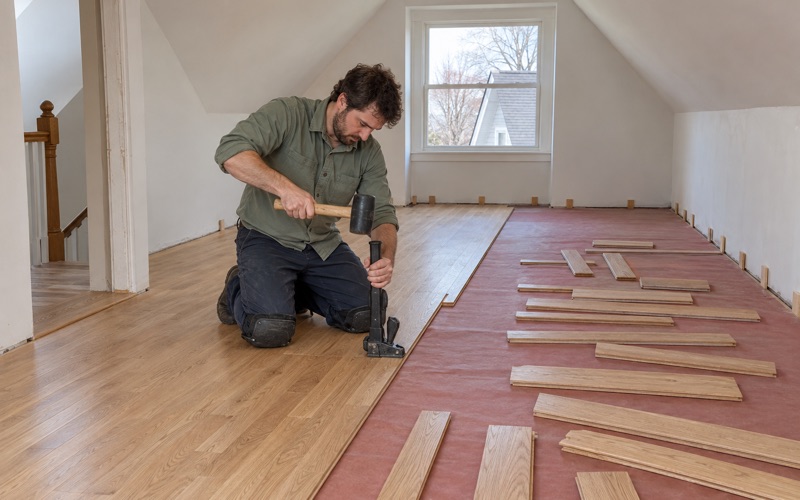
In a two-family, one unit’s floor is the other unit’s ceiling. When we install new flooring over an occupied unit, we choose the acoustic underlayment with that neighbor in mind and follow any rug-coverage or sound rules the building already has. Nail-down solid hardwood and glue-down engineered planks behave differently here, and we explain which one suits the joists and subfloor we actually find.
Coordinating two households
Sanding one unit affects the other through shared entries, shared stairwells and sometimes shared heat. We give both households the schedule, seal the doorways, and run dust containment so the upstairs tenant is not living with fine dust for a week. Finish odor is also a shared concern, which is one reason we lean toward waterborne systems.
Massachusetts limits the VOC content of wood coatings more tightly than federal rules do, and we choose finishes that fit those limits. That matters more in a building where the people breathing the air during cure may not be the people who hired us.
Looking for wood-flooring closer to Hull? See Wood-Flooring in Hull.
Refinishing a Rented Flat Between Tenants
Renters in Wakefield are heavily concentrated in small buildings. The ACS counts 871 renter households in two-unit buildings and 675 in three-or-four-unit buildings, which together make up 1,546 of the town’s 3,302 renter households, or 46.8 percent. For a landlord, that means the floor in a vacant flat is usually a turnover job with a firm deadline.
Working to a turnover date
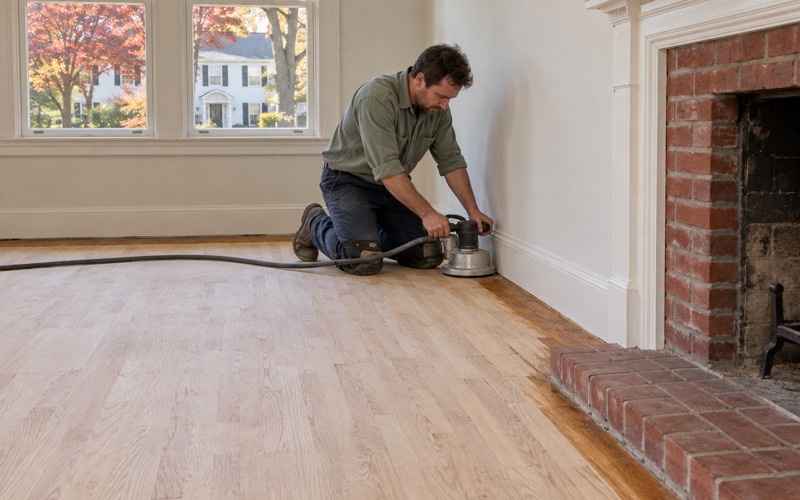
Between leases, the question is rarely whether the floor needs work and more often how much can be done before the next move-in. A full sand through the grit sequence with a drum sander and orbital sander gives the most durable result, but a screen and recoat can refresh a sound finish in a fraction of the time. We tell the owner honestly which one the existing finish can take.
Our written cure schedule is especially useful here, because it lets a landlord book the move-in date around the finish rather than guessing. Oil-modified polyurethane, waterborne polyurethane and hardwax oil each carry different wait times before furniture and rugs go back down.
Common damage in rental units
Rented flats collect a particular kind of wear: pet urine stains near doorways, water stains under plants and around radiators, and deep scratches where furniture was dragged out. Some stains sand out, but urine that has soaked into the grain usually does not, and we replace those boards rather than bleaching and hoping.
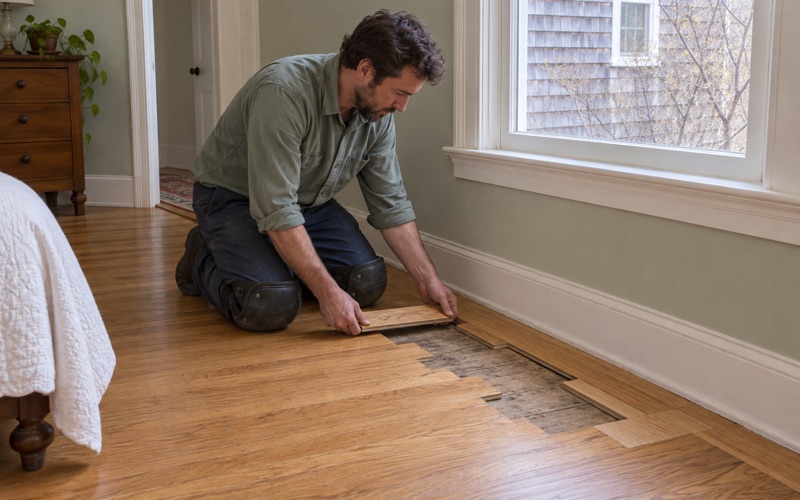
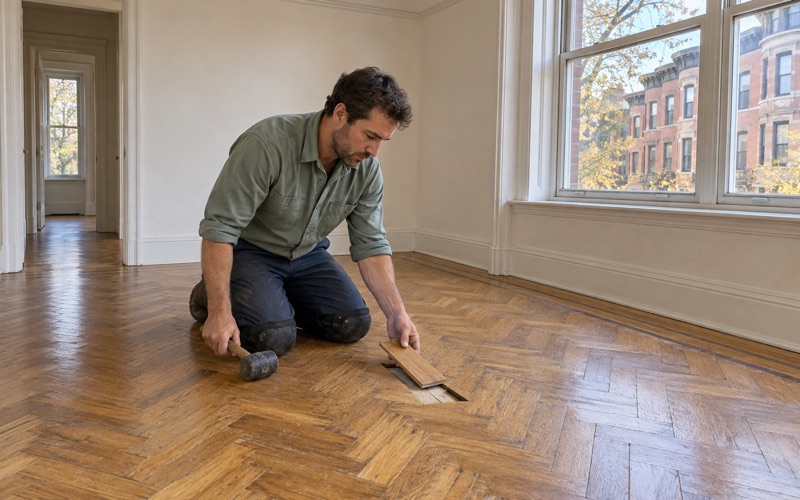
Board replacement in an older flat is done by weaving in new tongue and groove pieces so the repair follows the existing pattern instead of leaving a straight seam across the room. We match species and, where we can, grain, then sand the patch with the surrounding floor so it disappears under the new finish.
Leaks from the unit above
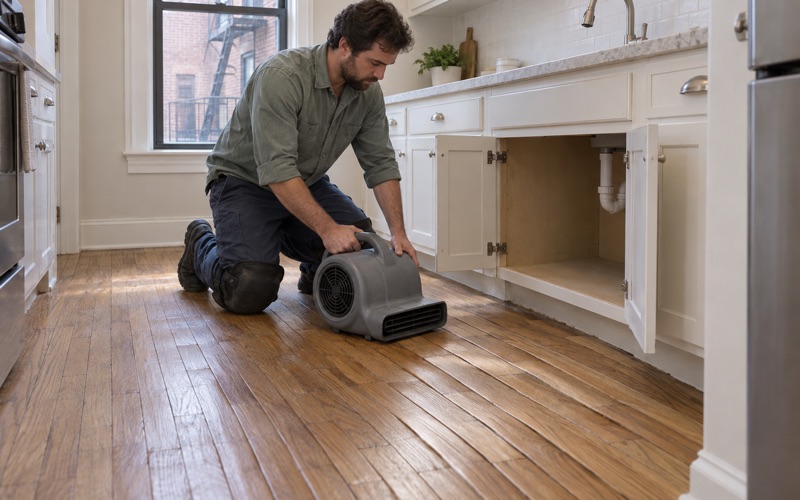
When a ceiling stain in one unit lines up with cupping in the floor above, the source is often a leak under a radiator, a sink or an upstairs bathroom. We find the leak first, dry the boards, and read them with a moisture meter before deciding what to replace. Cupped boards often flatten once they dry, while buckled ones usually need to come out.
For insurance claims, we document water damage room by room with photos and moisture readings, which gives the adjuster a clear record and the owner a defensible scope. That record also helps when the upstairs and downstairs owners are dealing with different carriers.
Prewar and Postwar Houses in Wakefield
Age runs deep in Wakefield’s housing. The same census tables count 3,731 units built in 1939 or earlier, 31.8 percent of the town’s housing, and another 1,930 units went up between 1950 and 1959. The town itself was incorporated in 1812 as South Reading.
In 1868 the town voted to change its name to Wakefield, in thanks to Cyrus Wakefield for donating land and money for a new town hall. His rattan business later grew into the Wakefield Rattan Company, which at one time had a thousand employees.
Floors in houses built before 1940
Prewar floors have usually been sanded before, sometimes more than once, and the first thing we check is how much wood is left above the tongue. We lift a floor register or a threshold to look at a board edge before promising another full sanding. When the boards are thin, a lighter sand or a screen and recoat protects what remains.
Original oak, maple and pine in these houses is worth keeping, and we repair and match it instead of tearing it out. Old wood filler, painted borders and patches from earlier renovations are common, and each is handled board by board. Where prewar parquet or herringbone survives, we re-glue loose pieces and refinish it piece by piece rather than covering it.
Lead-era finishes and painted surfaces
Most of Wakefield’s houses are old enough for lead to matter, since 70.8 percent of units were built before 1980. Massachusetts runs its own lead-safe renovation rules for homes built before 1978, so we confirm the build year and look at painted baseboards, stair risers and floor borders before sanding begins.
That check shapes the containment, the cleanup and sometimes the scope itself. A painted stair riser is sometimes better replaced than run under a sander, and we say so in the written quote.
Houses from the 1950s
The 1950s produced more of Wakefield’s current housing than any other single decade on the census count. When wall-to-wall carpet comes up in a house from that era, we pull the tack strip, fill the staple and nail holes, and check for hollow spots and loose boards before sanding.
If a floor under old carpet or tile was glued rather than nailed, black mastic can turn up. Older mastic can contain asbestos, so it is tested before anyone sands or scrapes it, and the plan waits for the result.
Planning a Floor Project in Wakefield
Most Wakefield floor projects follow the same order: inspection, a written scope, a schedule that fits the household or the lease, then the work and the cure. The details inside that order change with the house, the season and who shares the building.
Season, heat and moisture
New England heating seasons dry wood out, and board gapping, often called winter gaps, is normal in older floors near steam radiators. We do not fill seasonal gaps that will close again in summer, because filler crushes out when the boards swell.
Before installing new flooring, we allow for acclimation and take moisture meter readings of both the boards and the subfloor. For site-finished work, we also watch the National Weather Service forecast for Wakefield’s zone, Southeast Middlesex, since humid or wet stretches slow finish drying.
Stairs, thresholds and trim
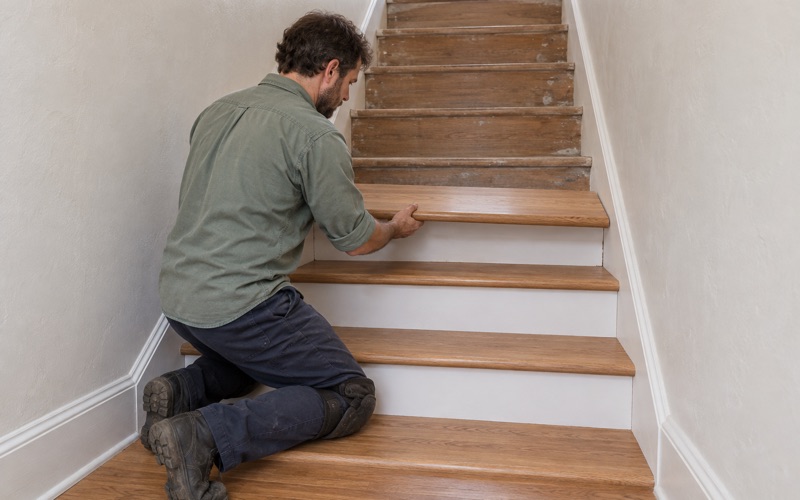
Stairs are quoted by the tread and riser rather than folded into a square-foot price, because a staircase takes more hand work per foot than any room. In a two-family, a shared stair is often the most-used surface in the building, and new stair treads or refinished nosing can change how the whole entry reads.
We also plan the transitions: reducers and thresholds between rooms, quarter round and baseboard where a new floor meets old trim, and the expansion gap every new installation needs at the walls. Getting those right is what keeps a new floor from looking like an afterthought.
Condos, associations and the first visit
Some Wakefield flats are condominiums, including units in the town’s larger buildings, and associations often set flooring rules, work hours and elevator booking. We confirm those rules with the association before a unit’s floor is scheduled, so the job is not stopped on its first morning.
Wherever the house sits, whether near Lake Quannapowitt, in Greenwood or Montrose, or on the West Side, the process starts with a visit. We look at the floor, measure the wear layer or the wood left above the tongue, and leave a written scope you can compare against any other quote.
- 20+ Years on Wood Floors
- Free In-Home Estimates
- Dust-Contained Sanding