Brookline Wood Flooring has spent more than 20 years on wood-flooring in Waltham and the towns around Boston, covering sanding, refinishing, board repair, stairs and new installation. Every job starts with a plain question: what is this floor, and what does it still have left in it? The answer decides whether a room gets a screen and recoat, a full sanding or new boards.
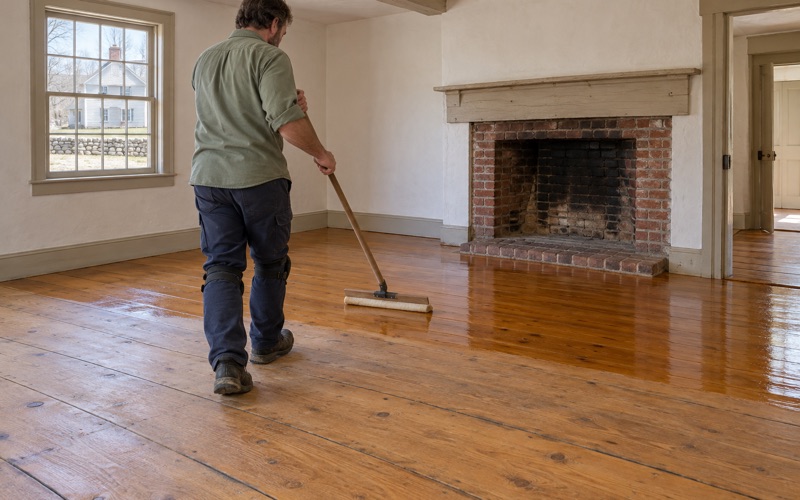
Finish choice gets the same attention. We use coatings that fit the Massachusetts limits on VOC content in wood coatings, which are stricter than the federal ones, and we lay out the difference between waterborne polyurethane, oil-modified polyurethane and hardwax oil before anything is ordered. Odor, color change over time and durability all differ, and the owner should choose with that in front of them.
Our quotes are written to be read. Stairs are priced by the tread and riser rather than buried in a square-foot figure, and when water has damaged a floor we document it room by room so the adjuster has what an insurance claim needs. The sections below cover how the work changes across the very different homes in this city.
Floors Across a Century of Waltham Homes
Waltham’s housing is not concentrated in a single era. According to the 2024 five-year American Community Survey, only 28.3 percent of the city’s units were built before 1940, while 15.2 percent date from the 1950s and 31.0 percent from 1980 or later. For floor work, that spread means the next job could be a prewar house, a postwar home or an apartment built within the last forty years.
The city has a long industrial record behind it. The Boston Manufacturing Company, established here in 1813, was the first integrated textile mill in the United States, and the Waltham Watch Company opened its factory in 1854, which is where the Watch City nickname comes from. The houses and apartments that followed were built across many decades, and the census counts show it.
Reading the Floor Before Quoting It
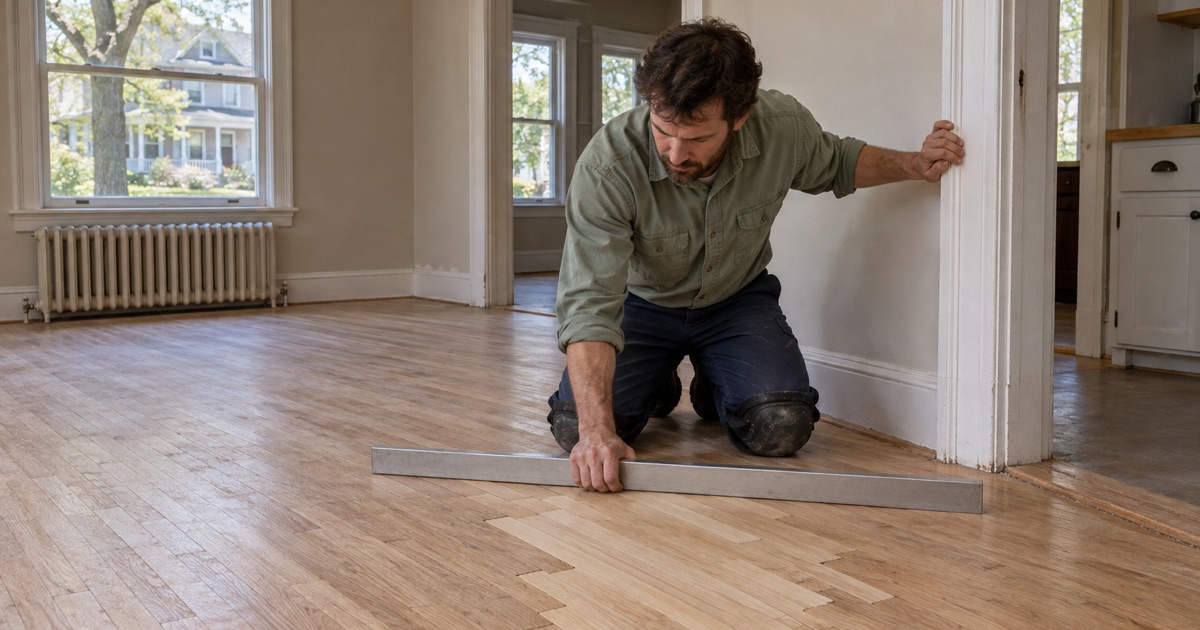
Our first visit is diagnostic. We check whether the boards are tongue and groove solid hardwood or a prefinished engineered product, look for cupping, crowning, buckling and hollow spots, and take moisture meter readings in more than one room. A single reading tells us little, so we compare rooms and compare the floor against the subfloor wherever a register or threshold lets us see it.
Season matters to what we find. Winter gaps and board gapping that close again in humid months are normal wood movement, while cupping that stays put through the year points to moisture coming from below. Where boards bounce or squeak, we look at the plank subfloor and floor joists before recommending anything, because a new finish will not fix a structural complaint.
Most Owners Live in Detached Houses
Among Waltham’s owner households, 68.4 percent live in detached houses, according to census table B25032. That makes the whole-house refinish a common request: several connected rooms, a hallway and often a staircase that all need to match in color and sheen level. We plan the grit sequence and floor stain so the transitions at thresholds and reducers read as one continuous floor.
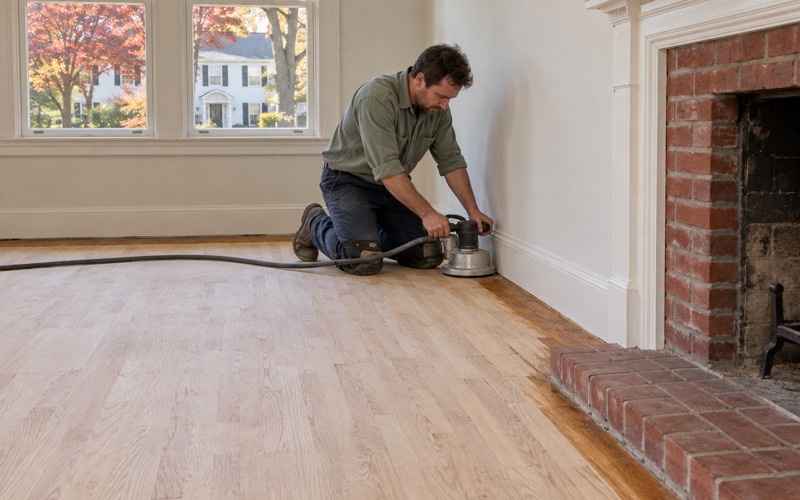
A detached house also lets us schedule on the family’s terms rather than a building’s. We set up dust containment, run a HEPA vacuum between passes and hand over a written cure schedule that says when socks, furniture and rugs can go back. Households that stay in the house during the work can plan their week around it room by room.
Looking for wood-flooring closer to Everett? See Everett Wood-Flooring.
Waltham’s 1950s Houses
Houses built in the 1950s account for 15.2 percent of Waltham’s units, more than any single decade that followed. They sit between the city’s prewar stock and its newer apartments, and after decades of family use their floors often show it in traffic lanes, pet urine stains and water stains near kitchens and baths. Most of that damage is repairable once we know what the boards are.
Floors That Spent Years Under Carpet
When a house of this age has carpet over wood, pulling it up usually leaves tack strip holes along the walls and staples across the field. We fill or patch those with wood filler or matching boards, then sand with a grit sequence that removes the old finish without taking more wood than necessary. Water popping before stain helps the color take evenly on a floor that has been covered for years.
Where a floor was glued down over black mastic, we stop and assess before any sanding or scraping. Older black mastic adhesives can contain asbestos, so we do not grind or sand it, and we talk through testing with the owner first. That conversation happens before a date is set, not after the room has been opened up.
Lead Checks Before Sanding
Every 1950s house predates 1978, the line Massachusetts uses for its own lead-safe renovation rules. Before sanding starts, we confirm the build year and look at painted baseboards, quarter round, stair risers and door casings, since those surfaces sit right beside the floor. What we find shapes the setup, the cleanup and which trim comes off before work begins.
The same check applies well beyond this decade. Census counts put 69.0 percent of Waltham’s units before 1980, so the build year matters on a large share of our jobs here. When painted surfaces are involved, containment and a careful final clean are part of the plan from the first day, not an extra added at the end.
Repairing Instead of Replacing
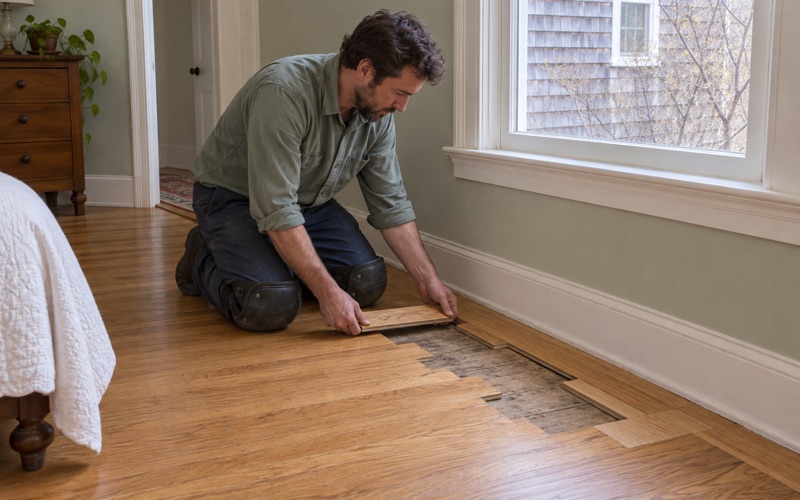
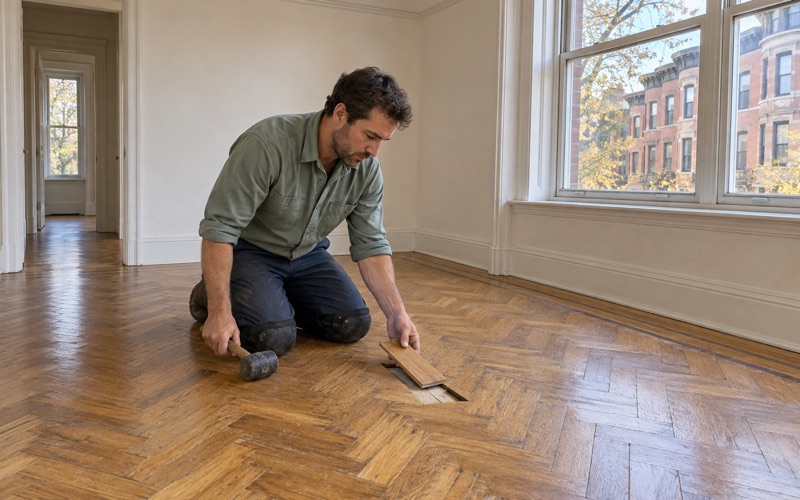
Pet damage and water stains in a floor of this age are often local, which suits a weave-in repair rather than a new floor. We pull the damaged boards, check the subfloor beneath for soft spots, and lace in replacement boards matched to the existing oak, maple or pine in species and width. After sanding and finish, the repair should disappear into the room.
Floors in Apartments and Condos Built Since 1980
Waltham’s newer housing is a large part of the city: 31.0 percent of units were built in 1980 or later, and 15.1 percent since 2000. Renters here lean toward larger buildings, with 53.8 percent of renter households living in buildings of five or more units. That puts many floor projects inside multi-unit buildings, with rules and neighbors a detached house never has.
Association Rules, Hours and Elevators
Before a unit’s floor goes on the calendar, we confirm the condo association’s flooring rules, permitted work hours and elevator booking. Associations can limit noise, deliveries and the flooring types allowed, and those limits differ from one building to the next. Getting the answer first keeps a sanding day from being stopped at the lobby door.
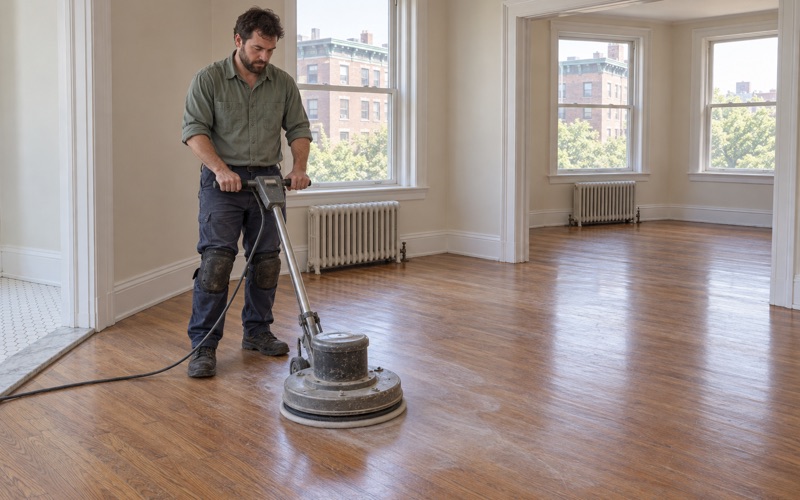
A shared building also changes how we handle dust and odor. Dustless sanding with a HEPA vacuum keeps debris out of common hallways, and a waterborne finish keeps smell in neighboring units lower than an oil-based coat would. The cure schedule we leave tells the owner or tenant exactly when the unit can be walked on and furnished again.
Underlayment Over a Neighbor
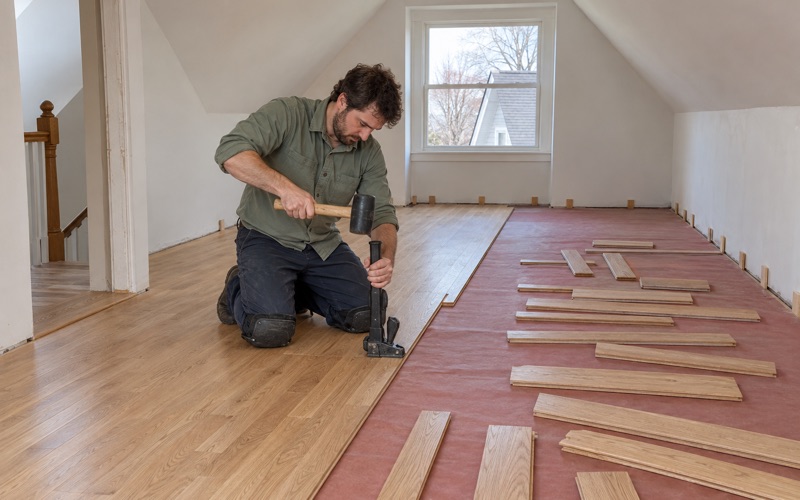
When a new floor sits over someone else’s ceiling, we choose acoustic underlayment with the building’s rug-coverage or sound rules in mind. Floating installation, glue-down installation and nail-down installation each behave differently over concrete or wood framing, and an association’s rules may favor one of them. We read those rules before choosing a product rather than after the boxes arrive.
Engineered Floors and Hidden Leaks
When a newer unit has prefinished engineered planks on a plywood core, we measure the engineered wear layer before promising any sanding. Some products can take a full refinish and others can only be screened and recoated. Telling the owner that at the estimate is far better than discovering it halfway through the first pass.
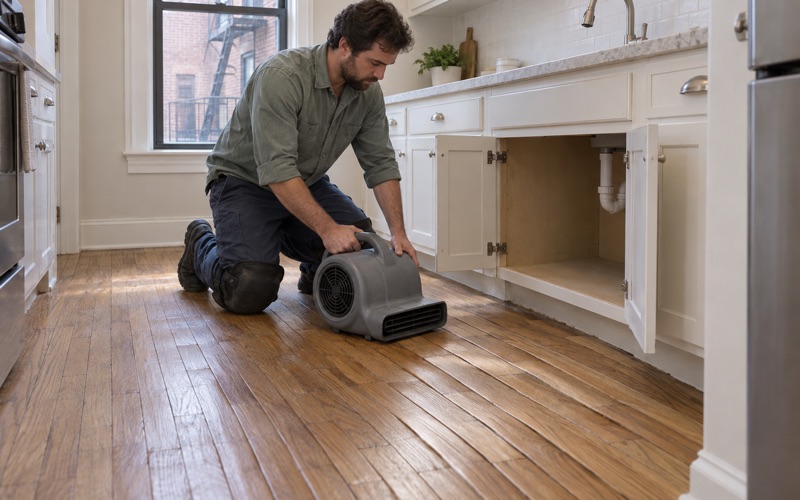
Leaks are the other frequent call in stacked units. Water from an upstairs unit can travel under boards well before a stain shows, so we find the source, dry the floor and read it with a moisture meter before any board replacement. Replacing wet boards too early only moves the problem, and the meter tells us when the floor is ready.
Prewar Houses and Planning Your Waltham Project
The 28.3 percent of Waltham’s units built before 1940 hold the oldest floors we see in the city. Those floors usually carry the most history, from old patches and heat register cutouts to boards worn thin near doorways by generations of traffic. They reward patience, and they punish a crew that sands first and asks questions later.
Original Boards Worth Keeping
In a prewar house, we repair and match original oak, maple or pine boards rather than tearing them out. Boards thinned by earlier sandings need a gentle approach, so we check thickness at a register or threshold before choosing a drum sander or a lighter pass with an orbital sander. Loose boards are refastened, and damaged sections are replaced with stock milled to match.
Where a house has parquet, we re-glue loose pieces and refinish them piece by piece instead of covering the pattern with new flooring. Careful hand sanding at the edges and a finish chosen for the room’s traffic keep the pattern crisp. It takes longer than laying a floating floor over the top, and it keeps a floor the house has had for generations.
Radiators and Seasonal Movement
A steam radiator with a slow drip at its valve can stain and cup the boards around it for years before anyone notices. We trace the leak, dry the area and confirm dry readings with a moisture meter before replacing a single board. Only then do we sand, so the repair and the surrounding floor finish together.
Planning the Work
We work throughout Waltham, from the South Side and Warrendale to Piety Corner, The Highlands and Lakeview. A project starts with a walk-through and a written scope that separates sanding, repairs and any new installation, along with the finish, sheen level and color we agreed on. Acclimation time for new boards is built into the schedule rather than skipped to save a day.
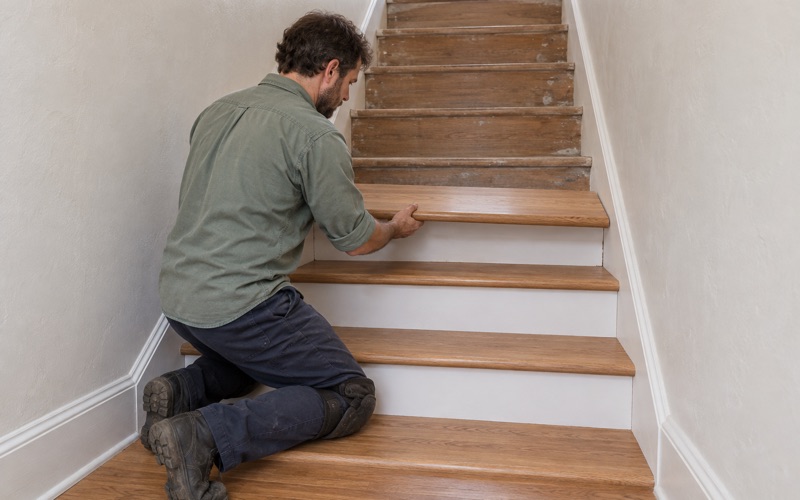
Scheduling in an occupied home is mostly about sequence. We finish upstairs rooms before the stairs, and the stairs before the hallway that leads out, so nobody is trapped behind wet finish. When the last coat has cured, we walk the floor with the owner and point out anything we would touch up before calling the job finished.
- 20+ Years on Wood Floors
- Free In-Home Estimates
- Dust-Contained Sanding