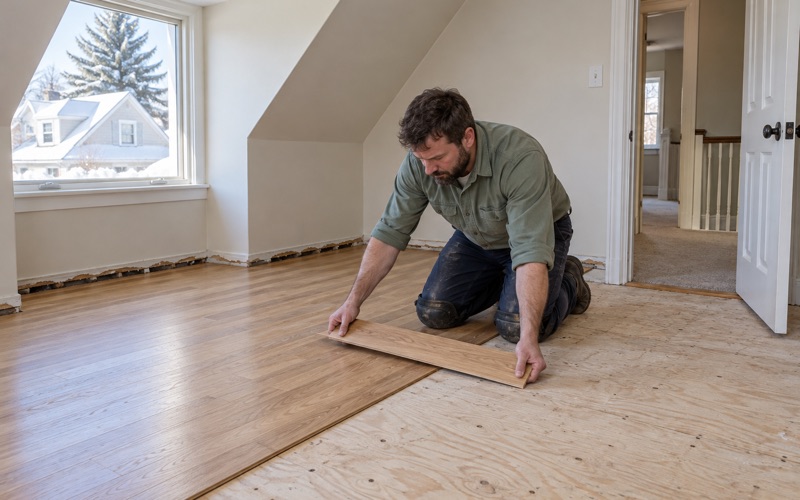
Brookline Wood Flooring has handled wood-flooring in Winchester for more than 20 years, and most of that work lands on floors laid long before anyone now living in the house was born. We sand, repair and refinish solid hardwood, rebuild damaged sections board by board, and install new floors where an old one cannot be saved. Every job starts with a look at what the floor is and what it has been through.
Before a drum sander touches an older floor, we confirm the build year and check for painted surfaces nearby, since Massachusetts keeps its own lead-safe renovation rules for homes built before 1978. On an engineered floor we measure the wear layer first, so a sanding is only promised when there is enough wood on top to take one. Those two checks shape the job more than any sample board does.
The finish is the last decision and often the one people spend the most time on. We work with waterborne polyurethane, oil-modified polyurethane and hardwax oil, each chosen to fit the Massachusetts limits on VOC content in wood coatings, which are tighter than the federal ones. You get a written cure schedule and a dust containment plan before we start, so the household knows which rooms are out of use and for how long.
Refinishing Floors in Winchester’s Prewar Houses
Winchester’s housing leans old in a way few suburbs match. The ACS 2024 five-year estimates count 3,359 of the town’s 8,521 housing units as built in 1939 or earlier, which is 39.4 percent and the largest single age bracket in town. Taken together, 58.8 percent of units predate 1960, and only 8.1 percent date from 2000 or later.
That means the typical floor we see here has been sanded before, sometimes more than once, and has lived through decades of radiator heat and New England winters. The work is less about making a floor look new and more about judging how much of the original wood is left and how to keep it.
Reading an Old Floor Before Sanding
On a floor that is 85 years old or more, the first job is inspection rather than sanding. We look at the tongue and groove edges at a floor register or threshold to judge how much wood remains above the tongue, and we note any cupping, crowning or hollow spots that point to moisture or a loose subfloor. Moisture meter readings across several rooms tell us whether a problem is active or long finished.
Face nails that have worked up, patches from earlier renovations and boards cut around long-gone fixtures all show up at this stage. Finding them before the sanding starts is what keeps a refinish from turning into a surprise repair halfway through.
Winter Gaps and Seasonal Movement
Board gapping in January that closes up by August is normal seasonal movement in a heated house, not a defect. Winchester sits in the National Weather Service forecast zone MAZ014, Southeast Middlesex, and the swing between dry heated winter air and humid summers is what opens and closes those seams. We fill only gaps that stay open year round, because wood filler pressed into a winter gap gets squeezed out when the boards swell again.
Where gaps are wide and permanent, a board replacement or a sliver repair usually lasts longer than filler. We time that work for a season when the wood sits closer to its average moisture level, so the repair does not open or tighten against its neighbors.
Painted Trim and Dust Control
In a house this old, painted baseboard, quarter round and stair risers are the usual concern, since sanding near them can put old paint into the air. That is why the build-year check comes first on every prewar job. We run dustless sanding with HEPA vacuum collection and seal off the work area so fine dust stays out of the rest of the house.
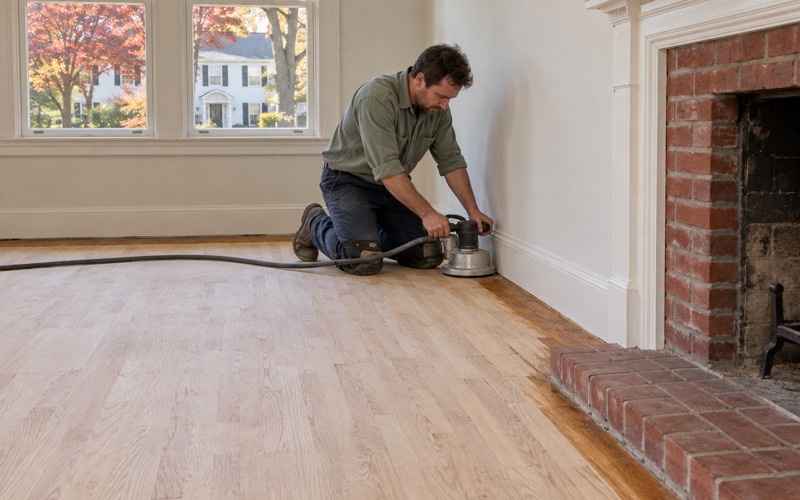
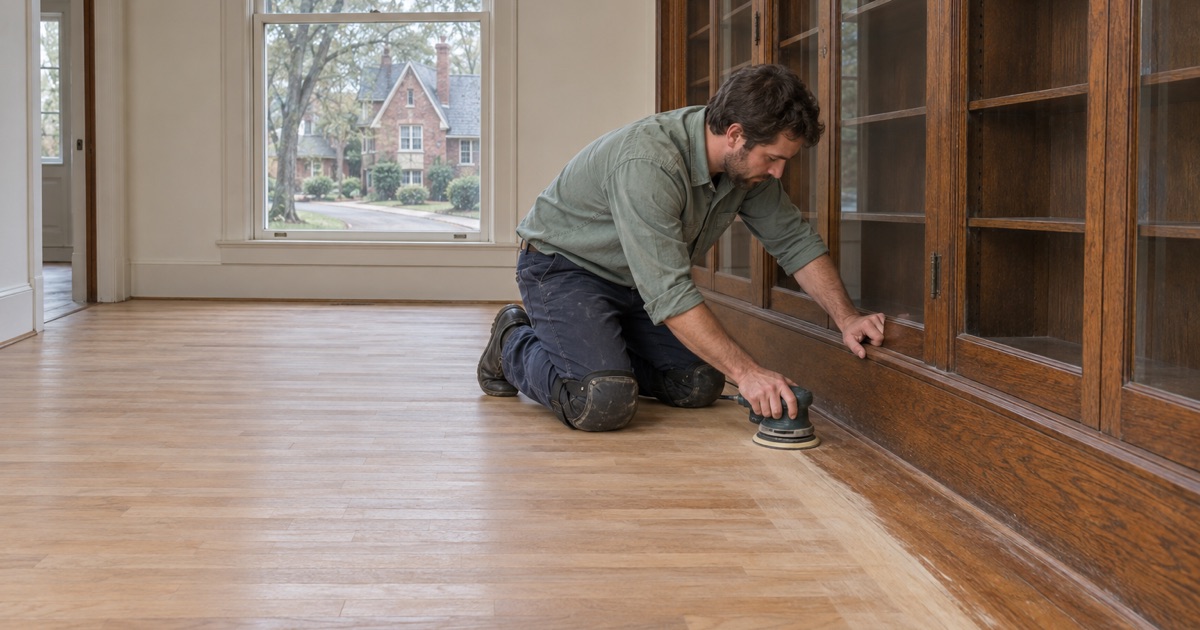
The edges and corners that a big machine cannot reach get an orbital sander and hand scraping rather than an aggressive edger. It takes longer, but it keeps the dust down and avoids gouging boards that have little wood left to give.
Looking for wood-flooring closer to Winthrop Town? See Wood-Flooring Services in Winthrop Town.
Rangeley and Winchester’s Oldest Planned Houses
Winchester’s oldest planned neighborhood predates much of that prewar stock. In 1875, David Skillings, a Winchester resident and successful Boston lumber dealer, began turning his estate into a romantically planned residential enclave, working with the architect George Rand. The Rangeley houses were built in brick, an unusual and expensive choice for the Boston suburbs at the time.
Rangeley is now the Rangeley Park Heritage District, with its own seven-member commission and a Heritage District Bylaw and Handbook dated March 2020. The district includes 18 properties, and its commission draws members appointed by the Planning Board, the Winchester Historical Commission and the Design Review Committee.
Checking With the Commission First
We do not assume what the bylaw and handbook say about any particular kind of work, and we do not guess on an owner’s behalf. Before scheduling a job at a Rangeley address, we ask the owner to confirm with the Rangeley Park Heritage District Commission whether anything about the project needs its attention. That question costs a phone call, and it is far easier to settle before a floor is opened up than after.
Matching Old Boards Instead of Replacing Them
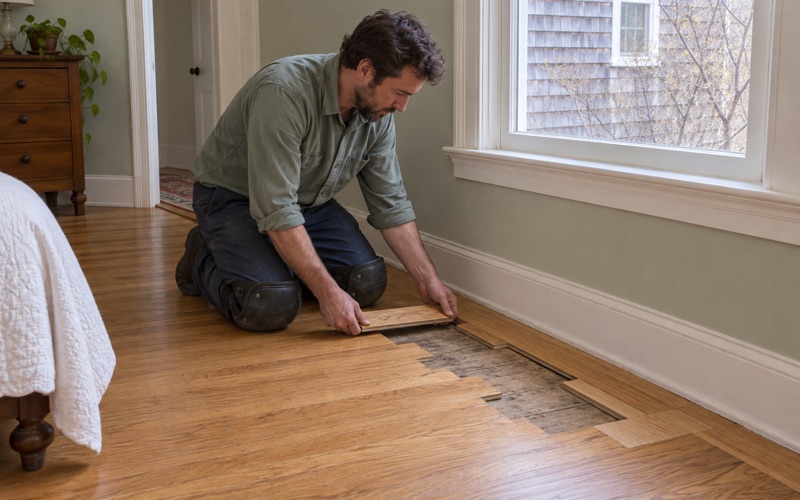
In Winchester’s older houses, the existing floor is often worth keeping. We repair and match original oak, maple and pine rather than tearing it out, finding boards of the same species, width and grain and weaving them into the floor so the repair does not read as a patch. Where a floor is quartersawn or laid in herringbone, the match has to follow the cut and the layout, not just the species.
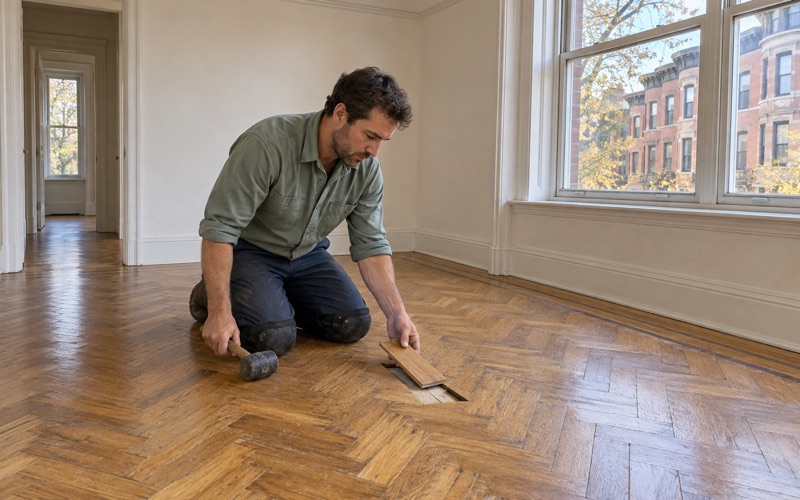
Prewar parquet gets the same care. Loose blocks are lifted, cleaned of old adhesive and re-glued piece by piece, then the whole field is sanded and refinished as one surface instead of being buried under a new floor.
Old Finishes and Stain Color
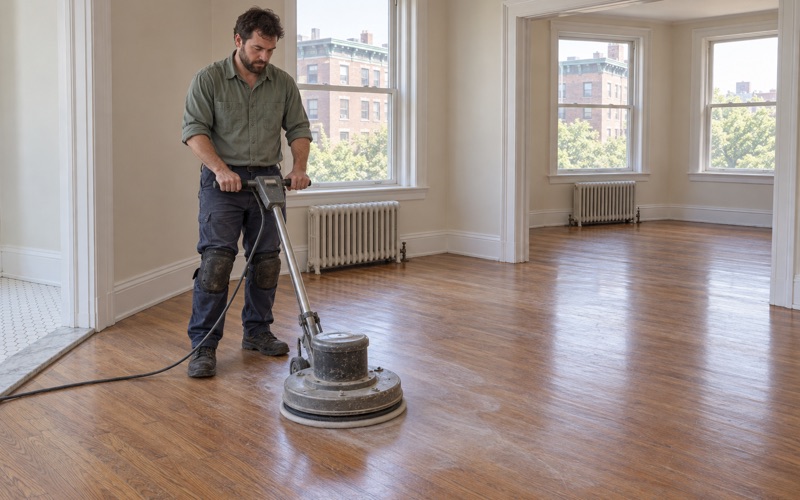
Floors in older houses have often been refinished with several different products, and a new coat has to bond to bare wood rather than a leftover layer. We sand through the old finish with a grit sequence matched to the wood, then water pop the surface when a darker floor stain is chosen so the color takes evenly. Sample patches on the actual floor show how red oak or white oak takes a given stain before a whole room is committed.
Sheen level matters as much as color in an older room. A satin or matte finish softens the small dents and wear marks a century-old floor carries, while a high gloss shows every one of them.
Postwar Houses, Two-Families and Attached Homes
Not every floor in town is prewar. The census counts 1,160 units built in the 1950s and 1,013 in the 1960s, and those decades bring a different set of floor problems than the older stock.
Floors in 1950s and 1960s Houses
Many houses from these decades have spent years under wall-to-wall carpet, which protects the wood surface but hides what happened underneath. When the carpet comes up we deal with tack strip holes along the walls, staples, pet urine stains and water stains that soaked in under the pad. Light stains often sand out, while dark ones that have gone through the board call for a board replacement.
Some rooms from this era were covered with tile set in black mastic, which has to be identified and handled correctly before anyone sands or grinds near it. We check the layers under a floor covering before quoting, so the price reflects what is actually there.
Two-Family and Attached Homes
Two-unit buildings make up 6.2 percent of Winchester’s housing units and one-unit attached houses 8.5 percent, and floors in these buildings often sit directly over a neighbor or a tenant. When we install over another living space, the underlayment is chosen with sound transfer and any rules the owners have agreed to in mind. In an occupied two-family, we also plan work hours and dust containment around the people downstairs.
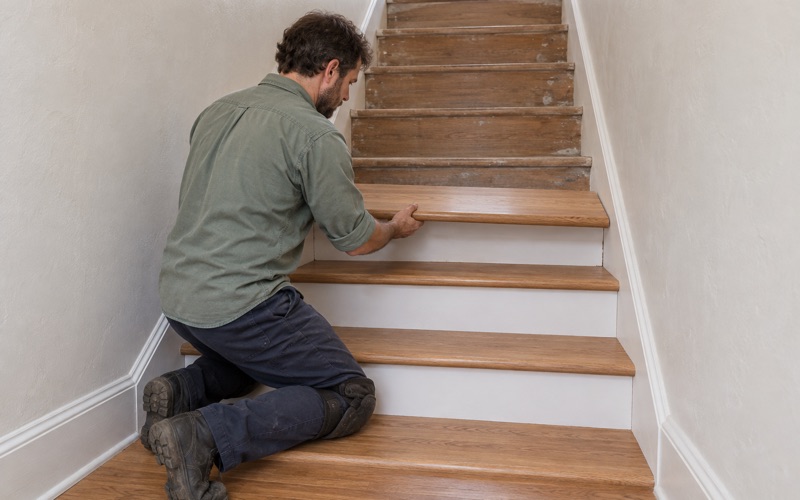
Stairs in these houses tend to see heavy use from two households. We quote stairs by the tread and riser rather than folding them into a square-foot price, and we replace worn stair nosing and stair treads where sanding alone will not bring them back.
Condo Units and Larger Buildings
Winchester also has 620 units in buildings of fifty or more, and 31.9 percent of renter households live in buildings that size. In a condo, we confirm the association’s flooring rules, work hours and elevator booking before a unit goes on the schedule, and we read any rug-coverage or sound requirement before choosing an underlayment. M.G.L. c.183A sets the framework for condominiums, but the practical rules come from each association’s own documents.
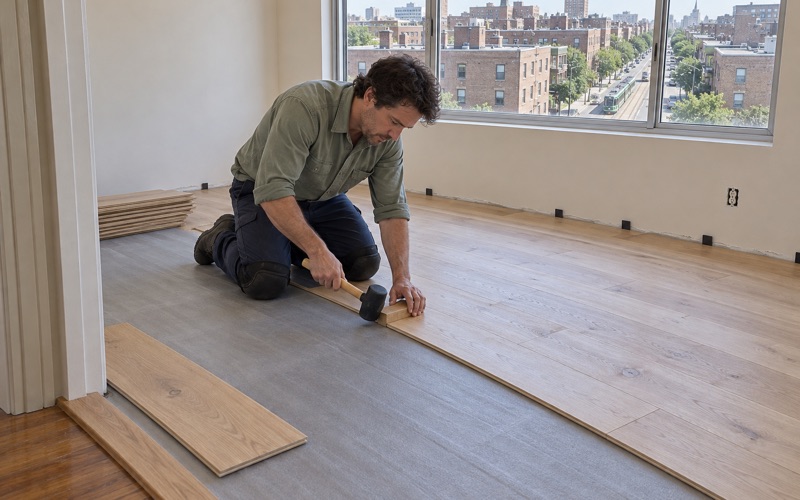
Floating installation over acoustic underlayment and glue-down installation are both common choices in these buildings. Which one fits depends on what sits underneath the floor and what the association allows.
Planning a Floor Project in Winchester
About 81.7 percent of Winchester’s occupied homes are owner-occupied, so most of our projects here are planned around a family living in the house while the work happens. A clear schedule matters more than speed, and the plan below is how we build one.
Water Damage and Leaks
A leak from a steam radiator or an upstairs bathroom is one of the most common reasons we are called to an older house. We find the source first, dry the boards and read them with a moisture meter over several days before anything is replaced, because cupped boards often settle once they dry. Replacing wood that is still wet only moves the problem.
If insurance is involved, we document the damage room by room with photos and meter readings for the adjuster. That record also helps later, when you need to show what was repaired and what was original.
Pests in Old Wood
Powderpost beetle holes and carpenter ant damage turn up in older floors and sometimes in the floor joists underneath. We note what we find, replace the affected boards, and tell you plainly when the framing needs a closer look from the right tradesperson before a new finish goes down.
Scheduling Around the Cure
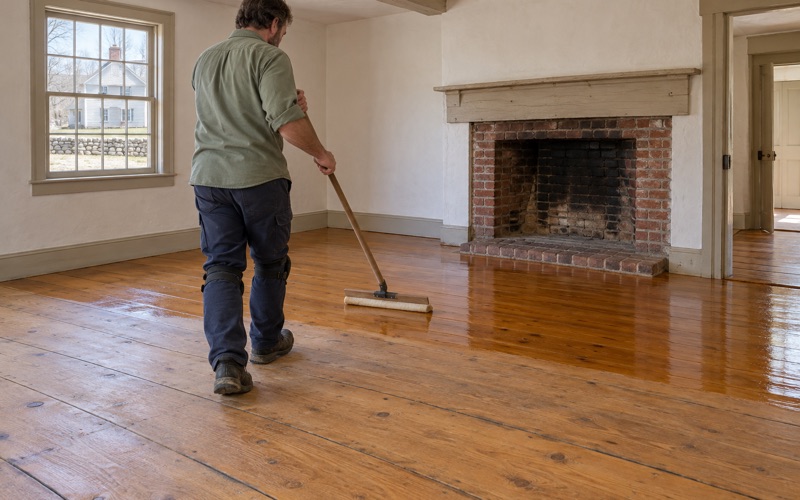
A typical refinish runs through sanding, stain if chosen, and several coats of finish, and each product has its own dry and cure time. Waterborne polyurethane lets furniture return sooner than oil-modified, while hardwax oil can be spot repaired later without sanding the whole room. We put the cure schedule in writing, including when light foot traffic, furniture and rugs can go back.
For a floor that is worn but not damaged, a screen and recoat with a buffer can extend the life of the finish without a full sanding. It is a cheaper, faster option when the existing finish is intact and only the top coat is tired.
- 20+ Years on Wood Floors
- Free In-Home Estimates
- Dust-Contained Sanding