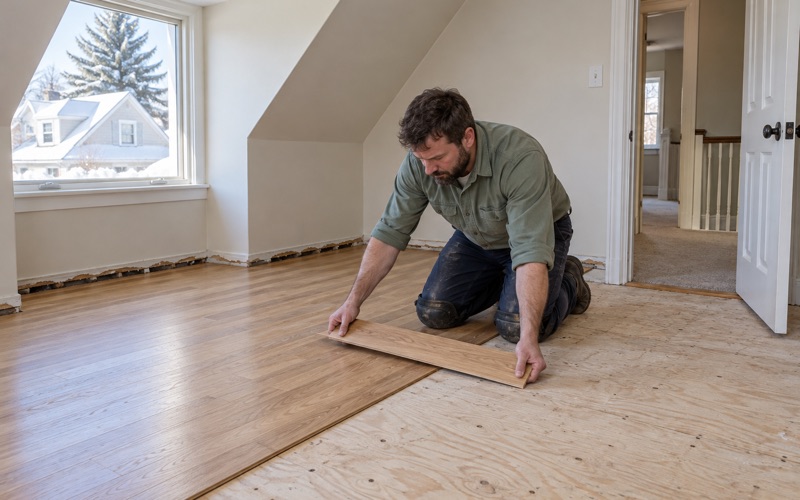
Brookline Wood Flooring brings more than 20 years of sanding, repair and installation to wood-flooring in Woburn, working for homeowners, landlords and tenants alike. The job rarely looks the same from one address to the next. A floor in an owner-occupied house, a rented upstairs unit and a large apartment building each needs its own plan, built around who lives on it and when it can be empty.
Most of our jobs start with a walk-through and a moisture meter rather than a price per square foot. We check the build year and any painted trim before a sander comes off the truck, measure the wear layer on an engineered floor before we promise a sanding, and quote stairs by the tread and riser. That keeps an estimate honest when a floor turns out thinner or wetter than it looks.
Dust containment, a HEPA vacuum and a written cure schedule come with every refinishing job we take on. A family can plan which rooms stay usable, and a landlord can tell the next tenant exactly when the unit will be ready. The sections below cover how that plays out across the kinds of housing Woburn actually has.
Floors in Woburn’s Two-Family Houses
Woburn is split close to evenly between owners and renters. Of 16,432 occupied units, 9,146 are owner-occupied, or 55.7 percent, and 7,286 are renter-occupied, or 44.3 percent, according to the ACS 2024 five-year estimates. That split shows up in the calls we get, since the person asking for a quote is nearly as likely to be a landlord as a homeowner.
An Owner on One Floor, a Tenant on the Other
Two-unit buildings make up 13.0 percent of Woburn’s housing units, 2,212 of 17,045. The census counts 662 owner households and 1,322 renter households living in two-unit buildings, so in many of these houses an owner and a tenant share one roof and one front door.
Refinishing in that setup means planning around two households instead of one. We sequence the rooms so each unit keeps a usable path in and out, and each household gets its own copy of the cure schedule. Nobody has to guess when the shared entry can be walked on again.
Stairs and Shared Halls
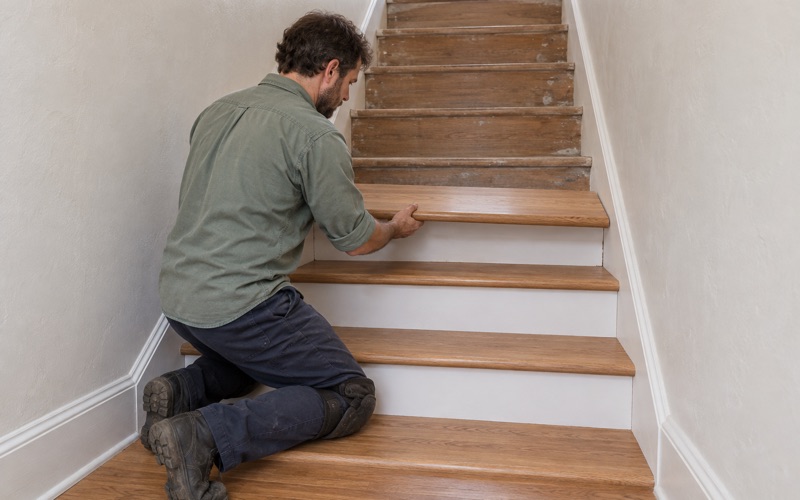
The stairs in a two-family house take more traffic than any other floor in the building. We price stair treads and stair risers by the piece, so the quote reflects the hand sanding and nosing repair each step actually needs. A split stair nosing can usually be replaced without pulling the whole run.
Shared halls tend to collect board gapping near the entry and water stains where wet boots sit through the winter. We read those boards with a meter before deciding between a weave-in repair and a straight refinish. Replacing sound wood just because it is stained is money a landlord does not need to spend.
Finishes With Someone Living Next Door
When one unit is finished while the other is occupied, odor and cure time matter as much as looks. We use coatings that meet the Massachusetts limits on VOC content in wood finishes under 310 CMR 7.25, which are stricter than the federal ones. A waterborne polyurethane is often the practical choice when a tenant is living on the other side of the ceiling.
Looking for wood-flooring closer to Burlington? See Wood-Flooring in Burlington.
Refinishing Between Tenants in Woburn Rentals
Rental floors run on the calendar more than anything else. A unit that sits empty between leases costs the owner money, so the floor work has to fit the gap. We settle the grit sequence, the stain question and the number of finish coats around the move-out and move-in dates before we start.
Screen and Recoat or a Full Sanding
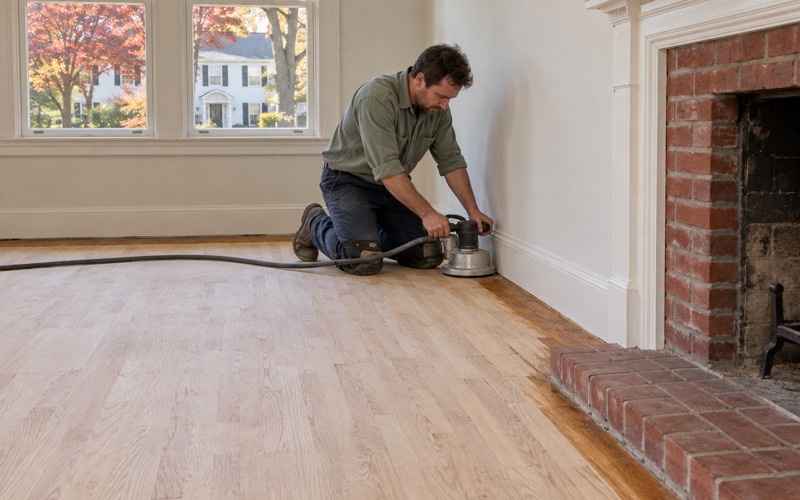
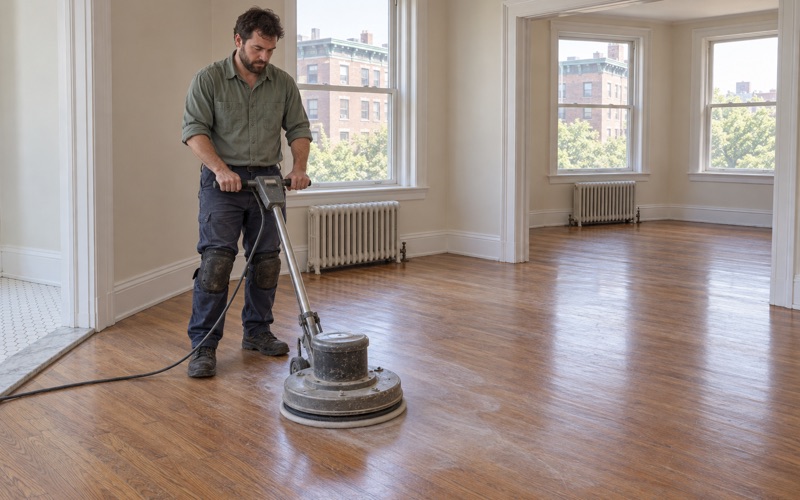
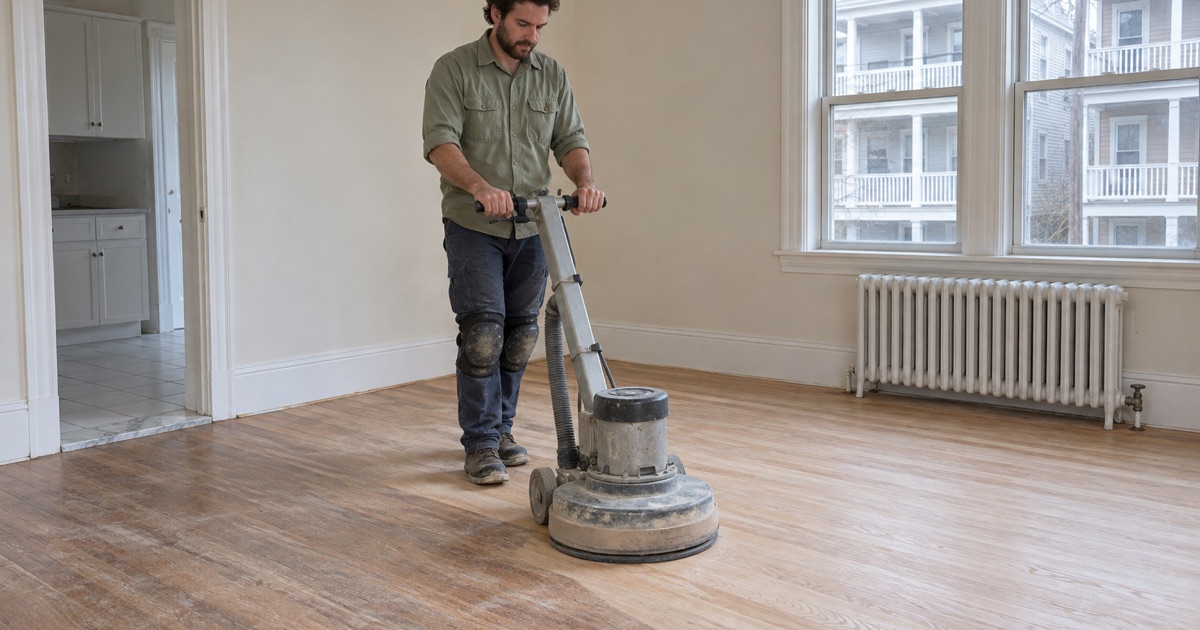
Not every turnover needs bare wood. If the finish is worn but the color is intact and nothing has cut through to raw wood, a screen and recoat with a buffer can refresh the floor in far less time than a full sanding. Where pet urine stains, gray water marks or deep gouges have gone through the finish, sanding back with a drum sander is the only real fix.
We tell the owner which one the floor needs before the last tenant moves out. That way the turnover plan does not change halfway through the week, and the listing date holds.
Large Apartment Buildings
Woburn has more large buildings than many people expect. Buildings of fifty or more units hold 1,896 of the city’s housing units, or 11.1 percent, and 1,517 renter households live in them, which is 20.8 percent of all renter households in the city.
Work inside those buildings comes with its own logistics, from elevator time to where the sanding equipment can be staged. We confirm work hours and booking with management before a unit goes on our schedule. Dustless sanding with a HEPA vacuum keeps the hallway clean for the neighbors who are still living there.
Leaks, Drying and the Adjuster
A leak from an upstairs unit or a steam radiator valve is one of the most common rental floor calls. We find the source, dry the boards and read them with a moisture meter before anything is replaced, because cupping from a wet subfloor can settle once the moisture is gone.
When insurance is involved, we document the damage room by room so the adjuster sees what was wet and what was not. The owner gets a clear record, and the repair covers the boards that actually failed rather than the whole unit.
Woburn’s 1950s and Prewar Houses
Woburn’s housing has no single dominant era. Units built in the 1950s number 3,206, or 18.8 percent, and units built in 1939 or earlier number 3,181, or 18.7 percent, a near tie. Counting the 1940s as well, 41.3 percent of the city’s housing was built before 1960.
Postwar Houses From the 1950s
In a 1950s house we often find solid hardwood hiding under wall-to-wall carpet that went down decades later. Pulling that carpet leaves tack strip holes along the baseboard and staple marks across the field, and on a solid floor both can usually be filled and sanded out. We check board thickness at a floor register before saying how many sandings a floor has left.
Some of these houses also have tile or sheet flooring laid over the wood, sometimes set in black mastic. We do not grind through an unknown adhesive, and we talk through testing before any removal starts.
Older Houses in the Former Tannery City
Woburn became famous for leather tanning in the mid 1860s, and by 1884, 26 large tanneries employed 1,500 people. Houses built in 1939 or earlier are the oldest part of the city’s stock, and their floors have often seen the most patches, sandings and changes of owner.
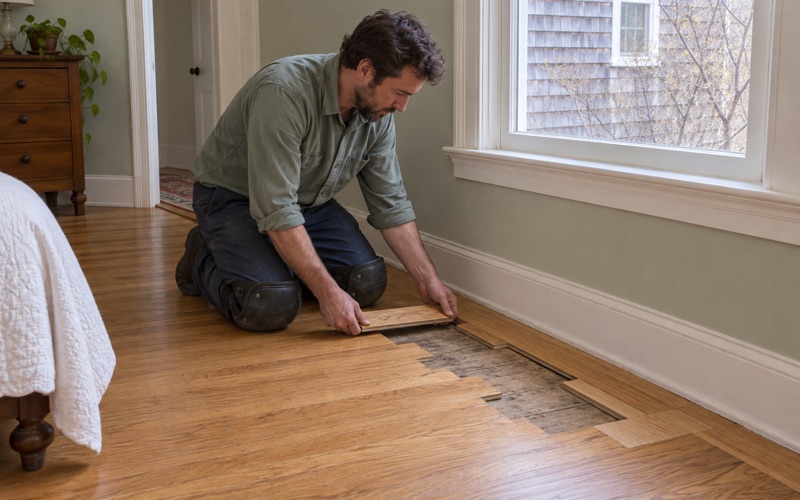
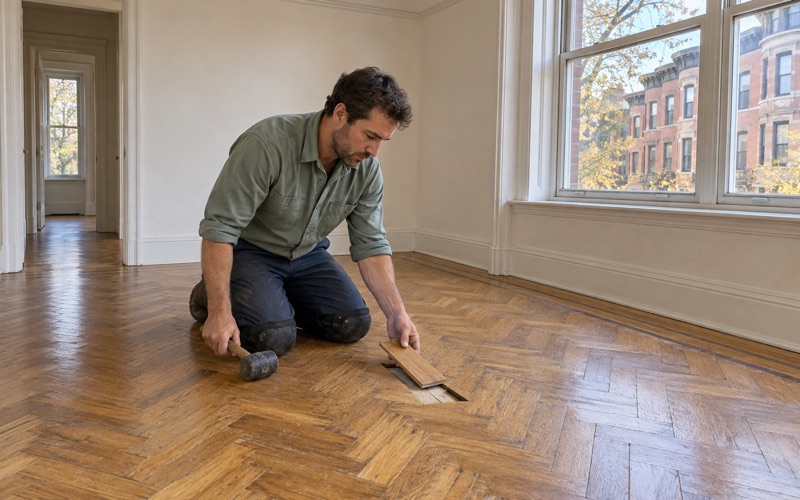
Those floors can show wide gaps, hollow spots and boards face-nailed during an earlier repair. We repair and match original oak, maple or pine boards rather than tearing a floor out, and where old parquet has come loose, we re-glue and refinish it piece by piece instead of covering it over.
Lead Rules Before Sanding
Massachusetts runs its own lead-safe renovation rules for homes built before 1978, set out in 454 CMR 22.00 alongside the Massachusetts Lead Law. Given how much of Woburn was built before 1960, most of the older houses we see fall well inside that line.
We check the build year and look for paint on baseboard, quarter round and stair risers before sanding starts. Where paint is present, containment and cleanup are planned first, not after the dust is already in the air.
Planning a Floor Project in Woburn
Woburn is a city with a mayor-council government, and it was the last of Massachusetts’ 351 municipalities to call its city council members aldermen. For questions about a specific job, the City of Woburn Building Department is the office to ask, and we suggest owners check with it before work begins.
1980s Houses and Condominiums
The 1980s added 2,387 units to Woburn, 14.0 percent of today’s housing. Floors in houses and condominiums from that decade range from solid hardwood to engineered planks, and the difference decides the work. An engineered floor can only be sanded as far as its wear layer allows, so we measure it before promising a refinish.
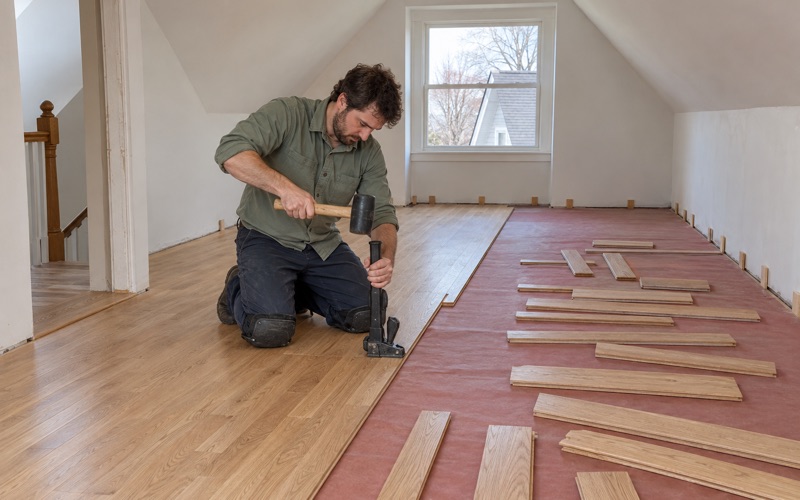
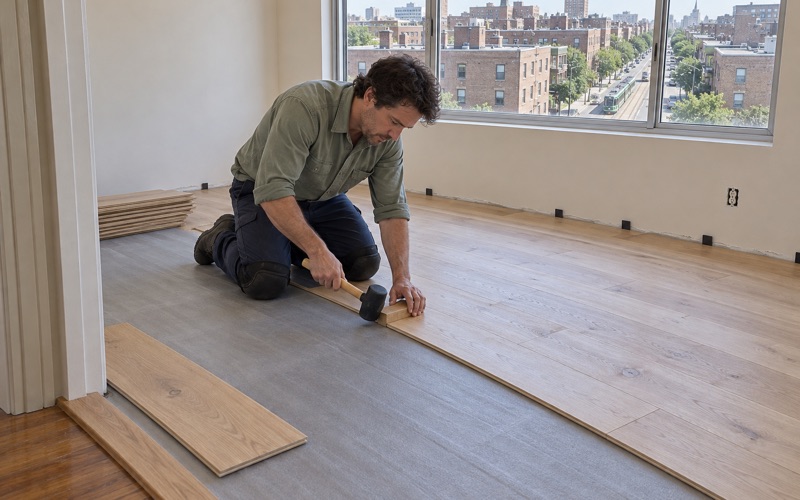
When a condominium floor sits over a neighbor, we confirm the association’s flooring rules, work hours and elevator booking before scheduling. Acoustic underlayment is chosen with the building’s rug-coverage or sound rules in mind, whether the new floor goes down as a nail-down, glue-down or floating installation.
Seasons and Board Movement
Woburn sits in National Weather Service forecast zone MAZ014, Southeast Middlesex. When the heat runs through the winter, indoor air dries out and winter gaps open between boards, while humid summers can push a floor toward cupping or crowning.
We let new flooring go through acclimation on site, leave the expansion gap the NWFA Installation Guidelines call for, and time finish coats so they cure under steady conditions. A gap that opens in January and closes in July is normal movement, not a failed floor.
What the Schedule Looks Like
Whether the house is in North Woburn, East Woburn, Montvale or near Horn Pond, a refinish runs in stages. Sanding moves through the grit sequence, water popping follows if the floor will take a stain, and then come the stain and finish coats.
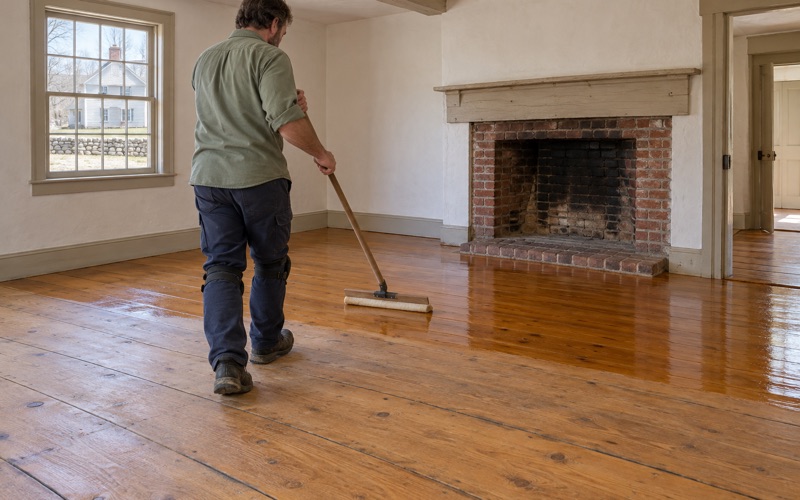
Every household gets a written schedule showing when each room is off-limits, when furniture can return and when rugs can go back down. Choices such as sheen level, waterborne polyurethane, oil-modified polyurethane or hardwax oil change that timeline, so we settle them at the estimate rather than on the day.
- 20+ Years on Wood Floors
- Free In-Home Estimates
- Dust-Contained Sanding